Basel Self-Guided Walking Tour: Old Town, Rhine and Minster
A self-guided Basel walking route from the station to Kleinbasel, with the Minster, Rathaus, Spalentor and bridges in order, plus free stops and timing.
On this page
Basel suits a self-guided walk because the center is compact and the main sights sit close together, with bikes and trams replacing most car traffic in the old town. A single day covers the core of the city on foot, and two days give you room for a museum and a slower stretch along the Rhine.
The route below runs in one direction: Basel SBB, Markthalle, Spalentor, the Botanical Garden, the Minster, the Rhine and the Mittlere Brücke, the Rathaus, then Kleinbasel. Everything before the bridge stays on the left bank, so you can cut the walk short at any point and still end near a tram.
Why Basel Works Well on Foot
Basel is very walkable, and the tourist sights cluster within a short radius of each other, which makes an unguided day easy to plan. Bikes and trams dominate the streets, and the old town has little car traffic, so you spend your attention on facades and fountains rather than dodging vehicles.
Allow a day for the essentials and two days if you want a proper feel for the place, since the museums alone could absorb half a day. The city can feel quiet even in high summer, so treat the walk as a look at architecture and riverside life rather than a busy sightseeing circuit.
Route Overview and Time Budget
Start at Basel SBB and walk to Markthalle Basel, a few minutes away, before heading into the old town. From there the order is Spalentor, the Botanical Garden, Münsterplatz and the Minster, then downhill to the Rhine and across the Mittlere Brücke into Kleinbasel.
Budget roughly four to six hours for the walk itself, plus whatever time you give a museum or a riverside stop. The stretch from the Minster down to the bridge is short, so the main variables are the garden, the tower climb and lunch rather than distance.
If you want a single reference for everything else worth seeing in the city, the guide to things to do in Basel lists the sights beyond this route. Keep it as a backup for a second day rather than trying to bolt extra stops onto this walk.
Stop 1: Markthalle Basel for Lunch
Markthalle Basel sits a few minutes from the station, which makes it a sensible first stop if you arrive around midday. Stalls sell international food at prices below most restaurants, so it is the cheapest sit-down option on this route and a good place to start with a full stomach.
Eating here rather than in the old town keeps the day's food cost down and leaves more room in the budget for a museum ticket or the Minster tower. The hall also has clean public washrooms, a small practical detail that matters at the start of a long walk.
Stop 2: Spalentor and the Old City Gate
Spalentor is one of three surviving city gates and the most spectacular, with carvings, turrets and a tiled roof that echoes the Minster. Walk under the arch and then step back to look at the ornament higher up, which most people miss while passing through.
Remains of the old city walls survive in this part of Basel, so the gate is a natural marker between the modern city around the station and the older streets inside. It costs nothing and takes only a few minutes, which makes it an easy first architectural stop.
Stop 3: The Botanical Garden
The University of Basel's Botanical Garden sits close to Spalentor and is free to enter, which makes it one of the best value stops on the route. Half an hour covers the outdoor beds, and the greenhouses are the reason to linger if the weather turns.
The garden opens from 8am on most days and the greenhouses from 9am, so an early start works in your favor here. Pair it with the gate rather than treating it as a separate trip, since the two are within a few minutes of each other.
Stop 4: Basel Minster and Münsterplatz
Basel Minster is the visual anchor of the walk, and the roof is the detail to look up for: a mosaic of dark green, maroon and burnt yellow covering the surface. Entry to the cathedral is free, and you pay extra only if you want to climb the tower stairs.
The Minster rarely stays open past 4pm or 5pm depending on the season, and the crypt can be seen only in the summer months, so place it before the afternoon slips away. Münsterplatz outside is a large square that can be nearly deserted even in summer, which makes the terrace above the Rhine a calm place to sit.
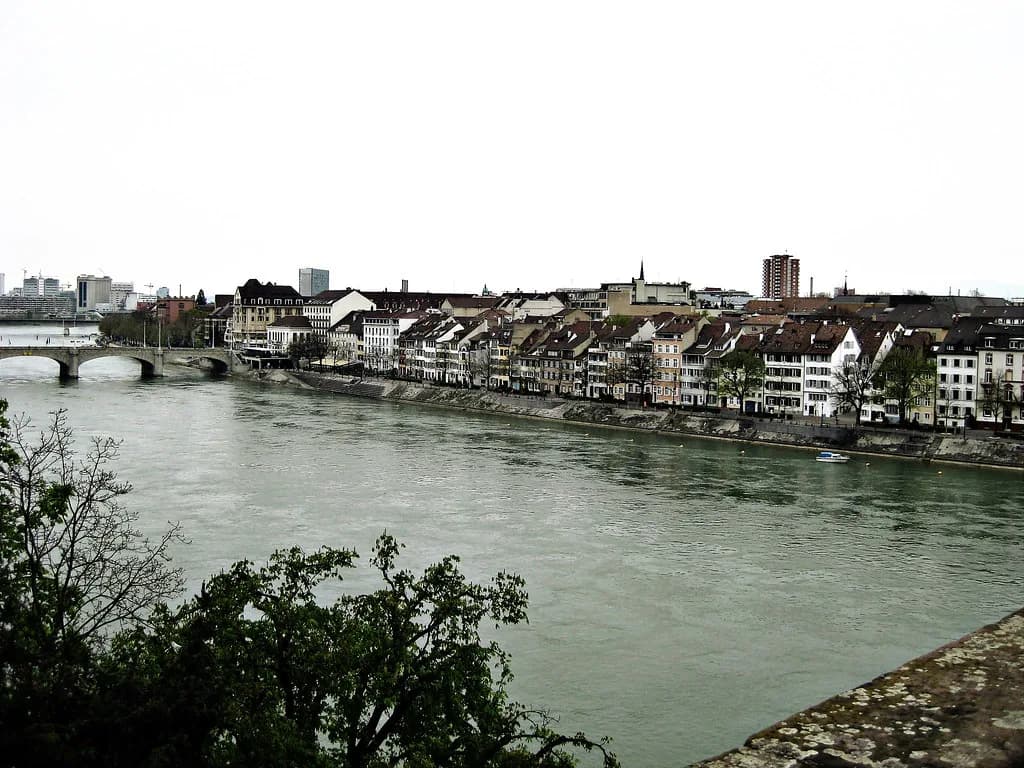
The terrace behind the Minster gives you the classic view over the Rhine and across to Kleinbasel, and it is free. If views are the point of your trip, the best views in Basel round up the other high points without adding much walking.
The Minster is also the centerpiece of the city's free sights, which is worth knowing if you are balancing this walk against paid attractions. Free things to do in Basel collects the no-ticket stops so you can decide where the budget goes.
Stop 5: Down to the Rhine and the Mittlere Brücke
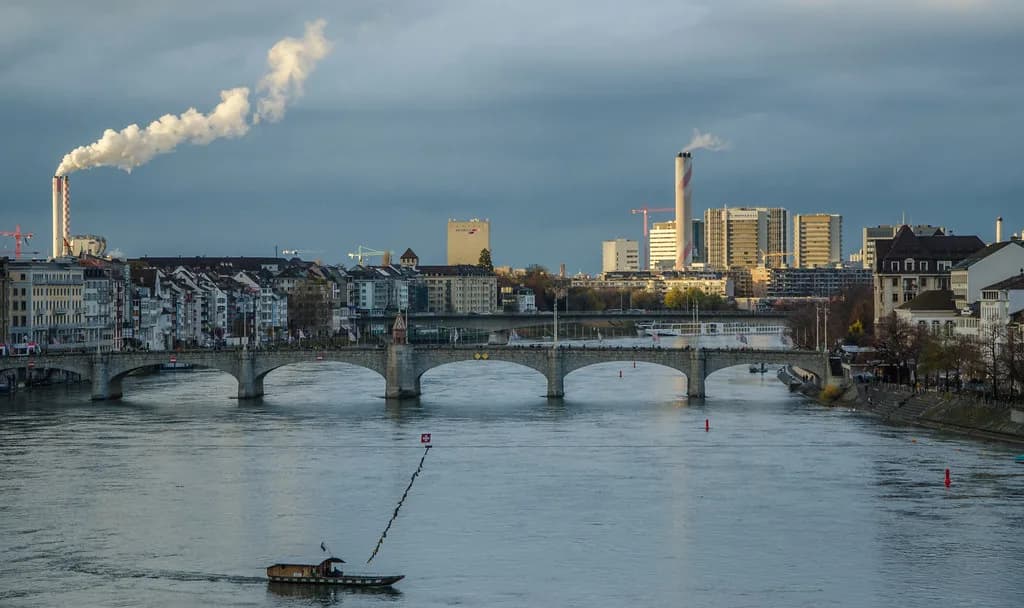
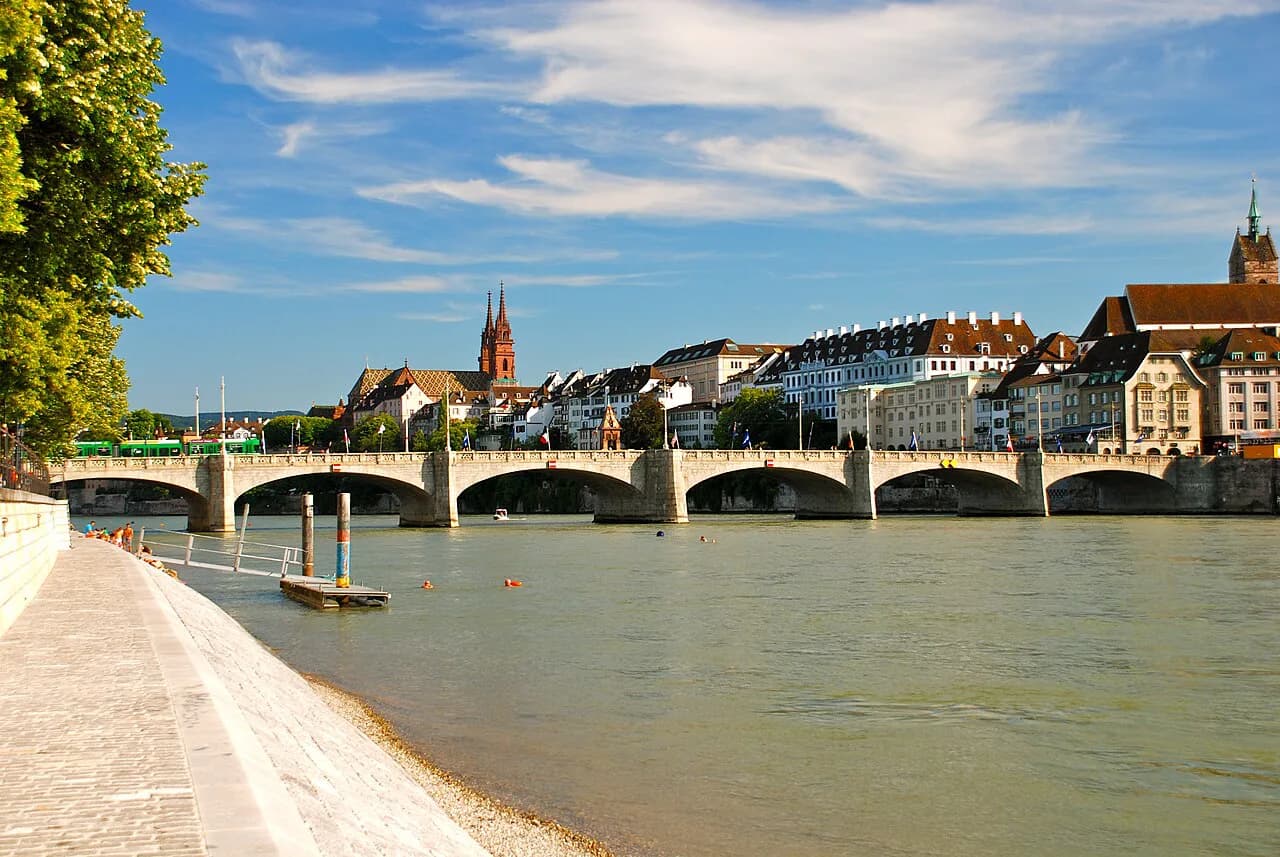
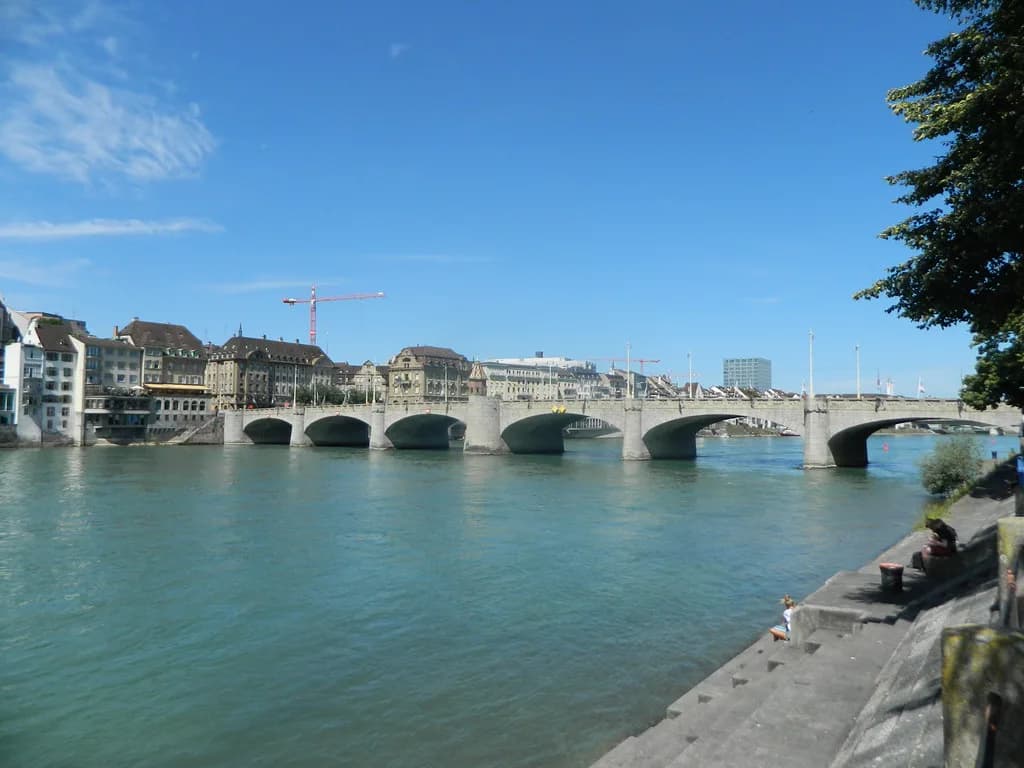
From the Minster, walk downhill to the river and follow the bank to the Mittlere Brücke, the city's most historic crossing. The current bridge has stood for over 120 years, and a bridge has crossed here for more than 800, and only bikes, buses and trams are allowed on it.
Look up at the small tower at the middle of the bridge for the same tile mosaic you saw on the Minster and Spalentor. The bridge is a natural halfway point, so decide here whether to continue into Kleinbasel or loop back through the old town.
The Rhine bank on the Kleinbasel side is where riverside bars and cafes set out seating in warm weather. It is the obvious place to pause at the end of the walk rather than mid-route, when you still have the Rathaus to see.
Stop 6: Basel Rathaus and Its Courtyard
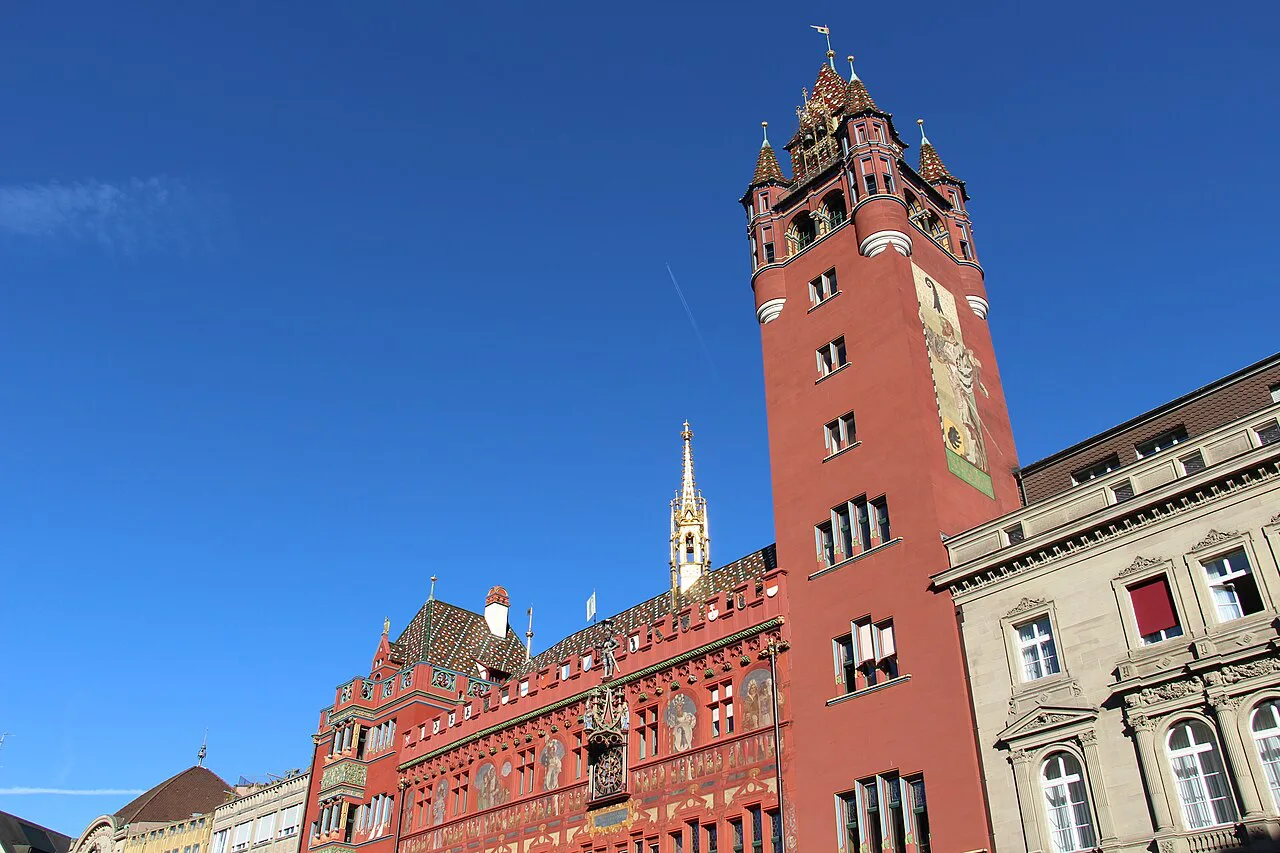
Basel's Rathaus, or Town Hall, is hard to miss: a large red building with more decoration than anything else in the city and more than 500 years of history behind it. Signs in the old town point to Rathaus, so you can find it without a map.
Walk through one of the three arched doorways into the inner courtyard, which is more ornate than the facade, then take the steps up to see the decoration close up. The building is free to look at and takes fifteen minutes, but it is the stop most visitors remember.
Time the walk so the Rathaus falls on a weekday, since it closes on weekends and you will see only the exterior. If your only full day is a Saturday or Sunday, put the Minster and the bridge first and treat the courtyard as optional.
Stop 7: Fountains, Street Art and Theaterplatz
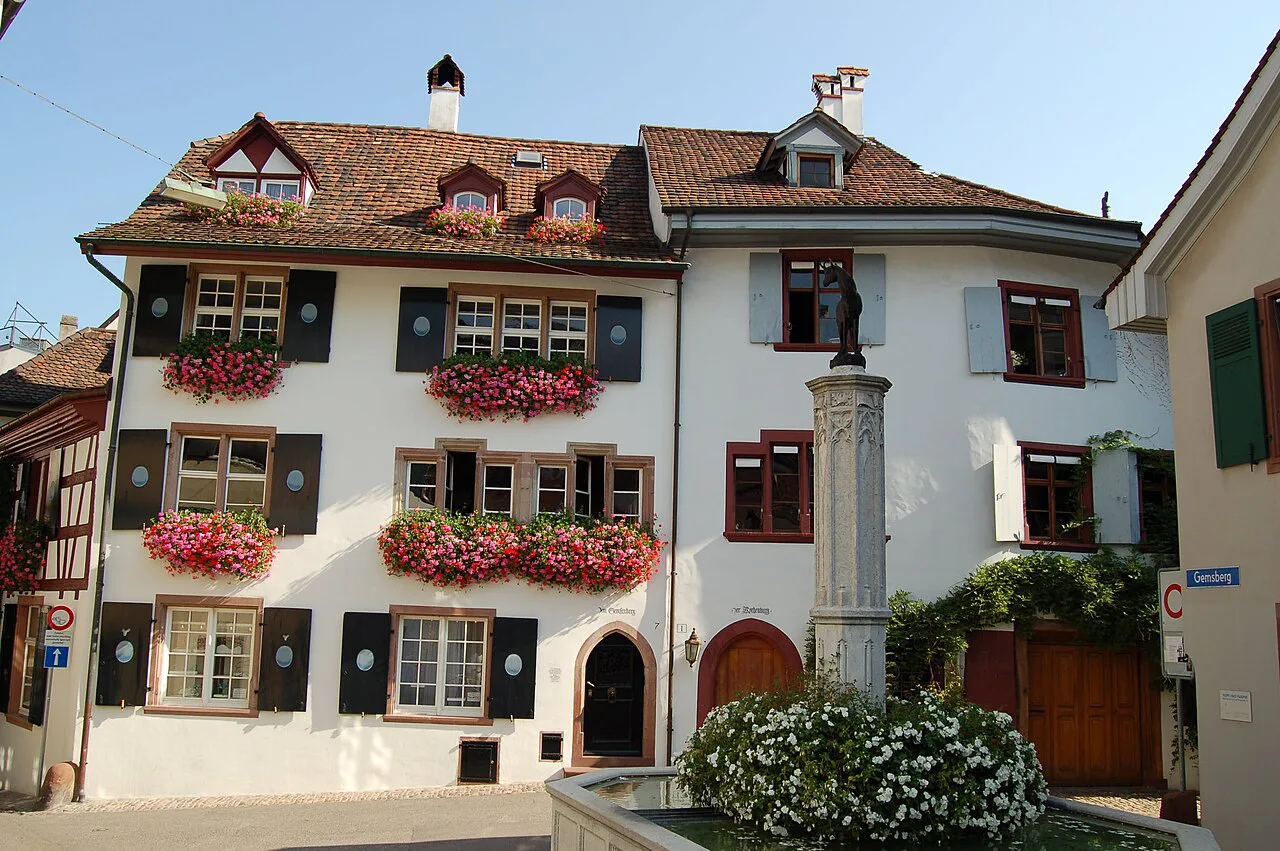
Between the Minster and the Rathaus you pass public fountains in a range of designs, some worth a detour for the carving alone. Jean Tinguely's fountain on Theaterplatz is the liveliest, with metal figures moving in the water, and it sits right in the middle of the route.
Basel treats art as part of the street rather than something confined to galleries, and a walk through the center turns up murals and installations alongside the historic facades. Keep your eyes above shop level, where much of it sits.
If shopping is on your list, the old town streets around the route hold the main concentration of shops, and Sunday is not the day for it. The shopping in Basel guide covers the streets worth adding to the end of the walk.
The Dreiländereck Detour
Dreiländereck, the point where Switzerland, France and Germany meet, sits at the end of a long pier in northern Basel with a monument and seats at the water. It is a genuine curiosity, but it lies well outside the center and adds real distance to the day.
On a one-day visit, this is the first thing to cut: the walk out and back eats time you could spend in the Minster or a museum. Keep it for a second day or a slow afternoon when the rest of the route is already done.
Choosing One Museum
Basel has close to 40 museums, so pick one or two at most and treat the rest as a reason to return. Most charge somewhere between 10 and 20 CHF per person, which makes a deliberate choice more sensible than wandering into the nearest one.
Museum Tinguely, in Mario Botta's building on the Rhine, is open Tuesday to Sunday from 11am to 6pm, with Thursdays until 9pm, and admission is 18 CHF. The late Thursday opening is the easiest way to fit a museum around a full day of walking.
Kunstmuseum Basel is the other obvious pick, with a collection that reaches back to the 17th century and spreads across three venues. Between the two you cover kinetic sculpture and old-master and modern art, which is a lot of ground for one afternoon indoors.
If you would rather compare options before committing, the museums in Basel guide sets out what each one covers and where it sits on the map. Plan the museum as the last stop of the day, when your legs are done and the weather may have turned.
Half Day or Full Day
For a half day, start at Markthalle, walk to Spalentor and the Minster, then finish at the Mittlere Brücke without crossing. That covers the gate, the garden if you keep it short, the cathedral and the river in a tight loop back to the center.
A full day adds the Rathaus courtyard, a museum and a riverside pause in Kleinbasel, and leaves time to sit rather than march. Two days let you split the left bank and the right bank, with the museum on one morning and the river walk on the other.
What to Skip and Rainy-Day Changes
On a short visit, skip Dreiländereck and cut the museum to one; both eat hours that the compact center uses better. The tower climb at the Minster is optional and worth it only if the day is clear, since the view is the point.
Rain changes the balance: the Botanical Garden's greenhouses, the Minster interior and a museum become the backbone, and the bridge crossing turns into a quick look rather than a linger. The walk still works, because the stops are close enough that you are never far from shelter.
What the Route Costs
The free stops carry the day: Markthalle for cheap food, Spalentor, the Botanical Garden, the Minster interior, the Mittlere Brücke and the Rathaus courtyard all cost nothing. Paid extras are the Minster tower climb and a guided Minster tour on some Saturdays, plus any museum you add.
Restaurant meals in Basel run higher than in neighboring France and Germany, so a market-hall lunch and a supermarket picnic keep the day affordable. Pick up chocolate in a supermarket rather than a tourist shop if you want a souvenir without the markup.
Guest cards issued by Basel accommodation can cover local transport, which matters if you plan to ride a tram back from Kleinbasel instead of walking. Ask where you are staying what the card includes before you buy a ticket.
Plan Your Visit
Run the route in the order above and you cover Basel's core in a day without backtracking, with the option to stop at any point near a tram. Put the Minster before mid-afternoon, the Rathaus on a weekday, and one museum at the end.
If you are building a wider Swiss itinerary, the same walking logic works elsewhere: the Bern Self-Guided Walking Tour and the Zürich Old Town Walking Tour both follow compact centers from a main station.
Explore more Basel guides
Frequently Asked Questions
How long does a self-guided walking tour of Basel take?
Allow four to six hours for the route from Basel SBB to Kleinbasel, including a market-hall lunch, the gate, the garden and the Minster. Add two hours if you visit a museum, and more if you sit by the Rhine at the end.
Is Basel walkable without a guide?
Yes. The center is compact, the sights sit close together, and the old town has little car traffic, with bikes and trams doing most of the work. The route here runs in one direction from the station to the river, so you rarely retrace steps.
Which stops on the Basel route are free?
Spalentor, the Botanical Garden, the Minster interior, the Mittlere Brücke and the Rathaus courtyard cost nothing to visit. The Minster tower climb, a guided Minster tour and museum admission are the paid extras.
Is the Dreiländereck worth the walk?
It is a real curiosity, with a monument at the meeting point of Switzerland, France and Germany, but it sits well outside the center. On a one-day visit it is the first thing to cut; save it for a second day.
When should I visit the Rathaus on the walk?
On a weekday, since it closes at weekends and you would see only the facade. If your only day is a Saturday or Sunday, keep the Minster, the bridge and the riverside and treat the courtyard as optional.
Which museum should I add to the Basel walk?
Museum Tinguely is open Tuesday to Sunday from 11am to 6pm, with Thursdays until 9pm, and admission costs 18 CHF. Kunstmuseum Basel is the other strong pick, and its three venues can absorb a whole afternoon.
Sources
Notes for your Swiss city break
Optional updates to our Swiss city guides.
You might also like
Continue reading
More guides you'll find useful