Best Views in Basel: Terraces, Towers and Riverside Lookouts
The Pfalz terrace behind the Münster gives Basel's classic Rhine panorama, with the cathedral towers and bridges framing the old town. Here is each lookout.
On this page
The best view in Basel is the Pfalz, the viewing terrace directly behind the cathedral, where the ground falls away to the Rhine and the Kleinbasel bank rises on the far side. The red sandstone Münster stands immediately above it, so you get the river bend, the old town roofscape and the twin towers in one frame. Almost everything else in this guide is a variation on that panorama, seen from a bridge, from Kleinbasel's bank, or through a gap in the lanes of the old town.
What makes Basel different from Zürich or Bern is that its viewpoints are low: the city spreads around a broad bend of the Rhine rather than climbing a hill, so the drama comes from the width of the river, the medieval waterfront and the borderlands beyond. Basel's own visitor listings put the Münster, the Pfalz, the Mittlere Brücke and Kleinbasel alongside the Spalenberg and Spalentor among the places worth seeing. That is a good shortlist of where to look from, and it fits into a half day on foot.
Why Basel's best views are low and wide
Basel sits where the Rhine swings north and, rather than giving you a single summit, it gives you a long waterfront: Grossbasel on the left bank, Kleinbasel on the right, joined by bridges that act as viewing platforms. The best strategy is to move between levels rather than hunt for altitude: stand above the river at the Pfalz, cross to Kleinbasel for the waterfront skyline, then look back at the old town from the opposite shore. A short walk delivers three genuinely different pictures of the same bend.
That low profile also makes the views easy to plan around, because the best of them are outdoor and free to reach. Basel's official sightseeing page names the Münster, the Pfalz terrace behind it, the Mittlere Brücke and Kleinbasel as the city's signature places of interest, with the Spalenberg and Spalentor in the same list. Treat that as your backbone and slot in museum time around it, starting with the things to do in Basel overview if you want to build a full day.
The Pfalz terrace behind the Münster: the classic view
The Pfalz is the terrace behind Basel Cathedral, and it is the first viewpoint to seek out because everything you want to see is laid out below you: the Rhine bending away, the Kleinbasel bank opposite, and the old town rooftops behind. It is an outdoor public spot, so it does not depend on museum opening days and can be worked into a morning or an evening without checking a single timetable. Arrive with the river in front of you and the Münster at your back, and you have the postcard.
The classic composition pairs the terrace with the cathedral above it, so give yourself time to walk the length of the Pfalz and look both upstream and down before moving on. Because the terrace sits directly behind the church, it is the natural hinge between a cathedral visit and a wander through the old town lanes. Basel's visitor listings pair the Münster and the Pfalz terrace as a single sight, which reflects how most people experience them: one above the other, sharing the same view. For the surrounding streets and squares, the basel old town guide picks up where the terrace leaves off.
Basel Cathedral (Münster): the red sandstone landmark above the Pfalz
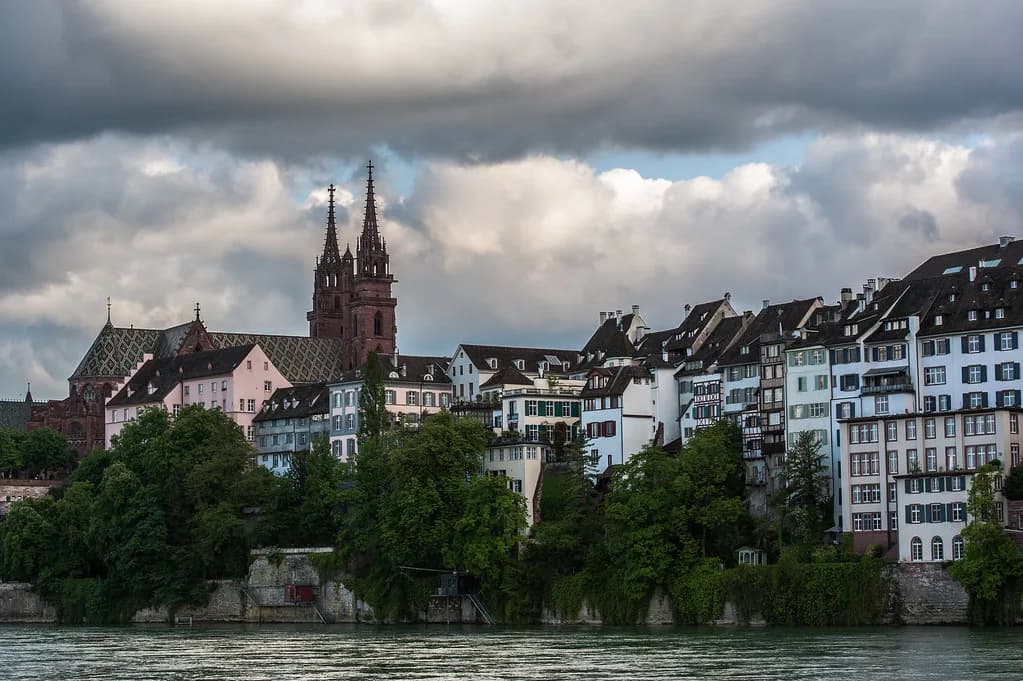
The Münster is Basel's red sandstone cathedral, and even without going inside it shapes every view in the center: its twin towers rise above the Pfalz and give the terrace its frame. The building is the landmark the city's own sightseeing listings lead with, ahead of the other places of interest. Stand on the terrace and look up, then step back into the surrounding square to see the facade whole; the color of the stone is one of the reasons photographs of this corner of Basel look unlike anywhere else in Switzerland.
Treat the cathedral as architecture you look at and walk around rather than a climb with a guaranteed rooftop payoff. Whether the towers are open to visitors, and on what days, changes, so check current access on the city's official visitor pages before planning a tower ascent. If you want viewpoints that need no ticket or timetable at all, the free things to do in basel list is the better place to start.
Crossing the Mittlere Brücke for the upstream view
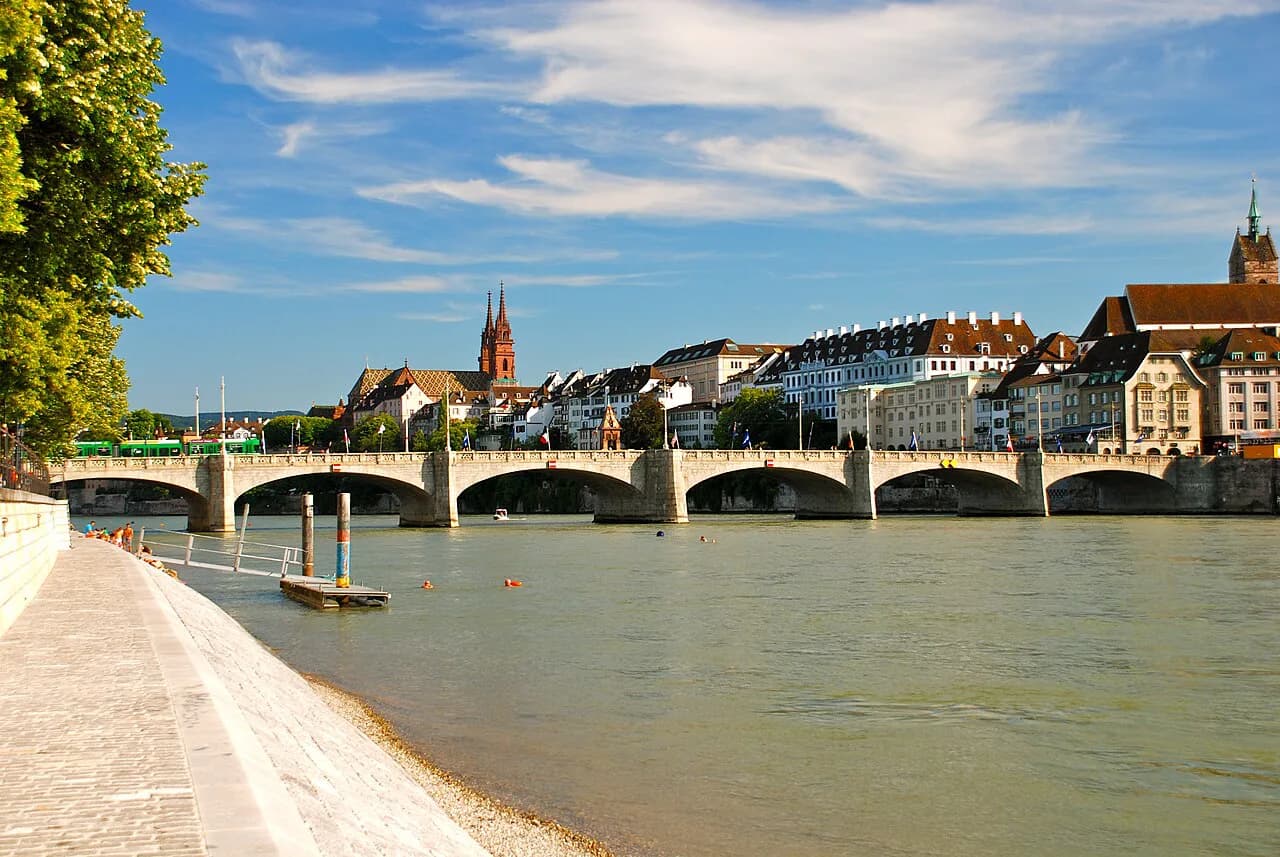
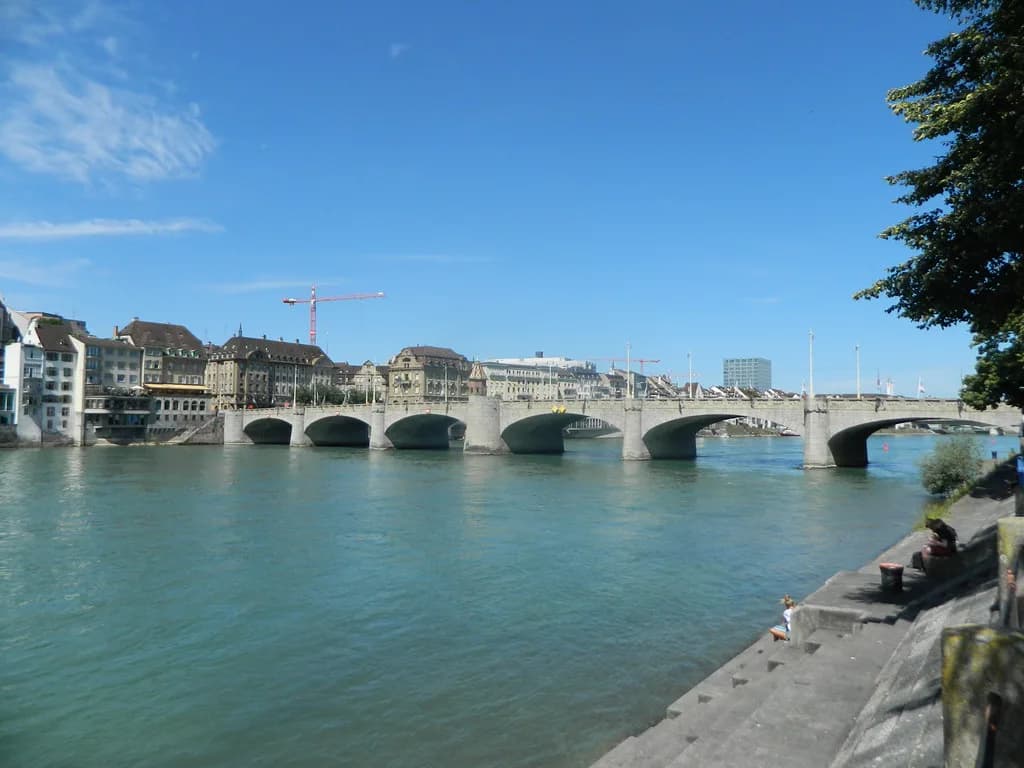
The Mittlere Brücke is the old bridge across the Rhine and, more usefully for a view-hunter, a moving viewpoint: walk out to the middle and look back upstream at the Grossbasel waterfront, with the cathedral and the old town stacked above the river. The bridge is named among Basel's signature places of interest, and it earns that by being both a crossing and a place to stop. Cross slowly, face upstream, and you get the shot that pairs the river with the city's skyline.
The bridge is also the natural link between the two halves of the view, so use it as your route rather than a detour: Pfalz above, bridge in the middle, Kleinbasel bank on the far side. That sequence takes you from the high view to the river-level view without any backtracking. Our Mittlere Brücke and old town coverage fits this crossing into a longer walk if you want company for the route.
Kleinbasel's riverbank and the Grossbasel skyline
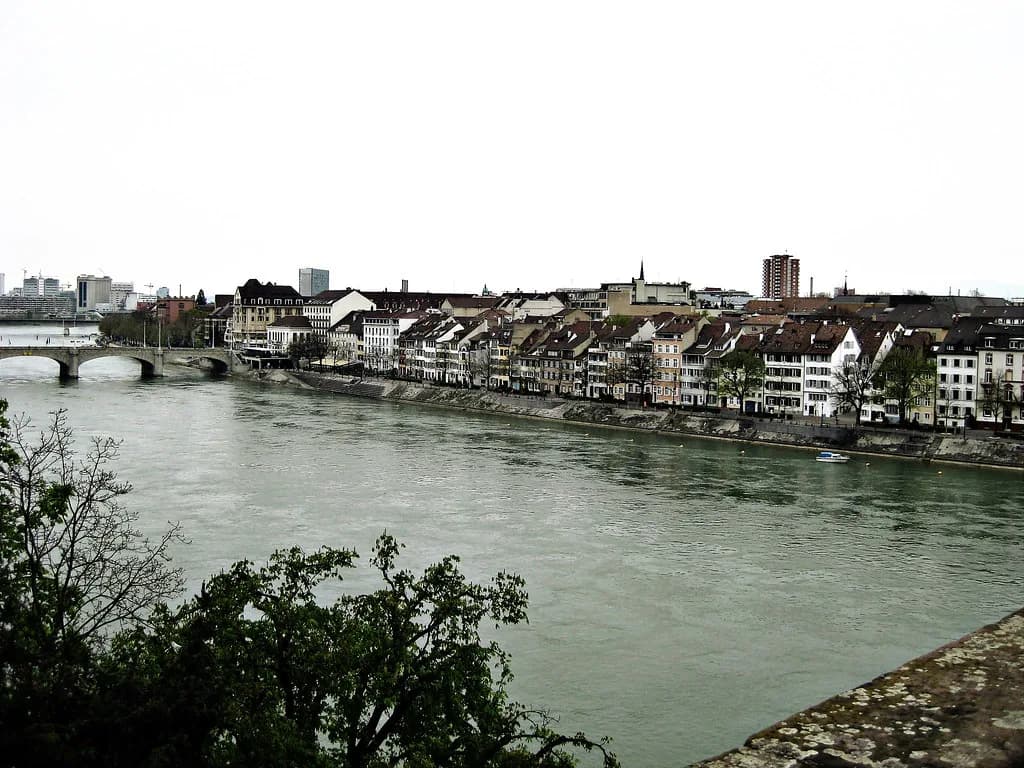
From the Kleinbasel bank on the right side of the Rhine, the view flips: you look across at Grossbasel, with the Münster and the old town above the water and the bridge in the foreground. Kleinbasel is named alongside the Mittlere Brücke on Basel's official sightseeing page, so the opposite shore is a sight in its own right, not just somewhere to stand while looking at the famous bank. Walk the riverside until you find the angle where the cathedral sits directly above the bridge.
This is the view to save for later in the day if you want a different light on the red sandstone, and it is the one that best explains how Basel is laid out. Because both banks are public and open, this pair of views, Pfalz and Kleinbasel waterfront, is the core of any short Basel visit. If you prefer a fixed route with the stops in order, a self guided walking tour keeps the two banks and the bridge in a logical sequence.
Old town streets that frame views: Spalenberg and the Spalentor
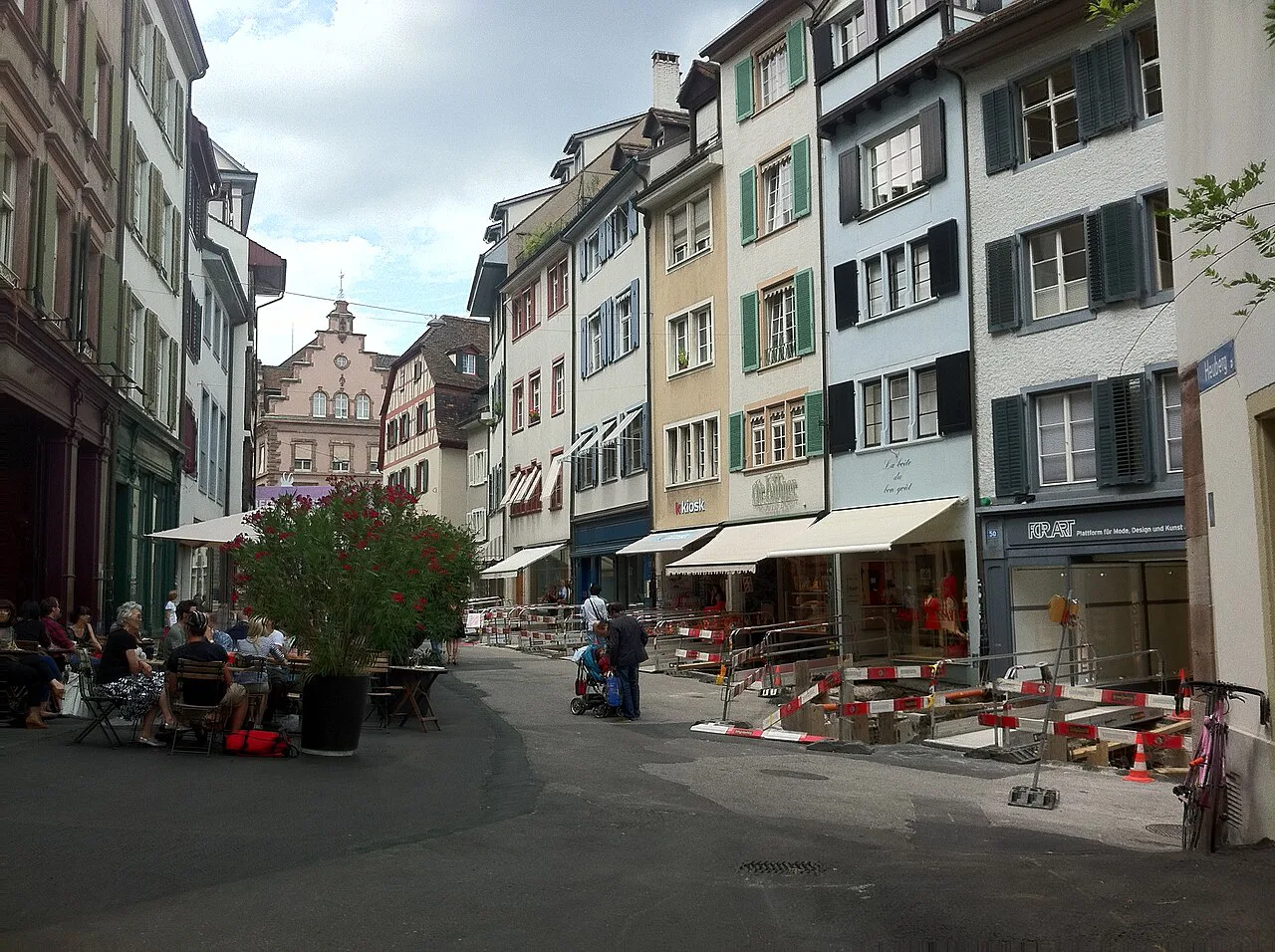
Not every Basel view is a panorama: the old town lanes give framed glimpses of towers, roofs and the Spalentor gate, and the Spalenberg climb is where the streets themselves become the view. Basel's official sightseeing page includes the Spalenberg and Spalentor among the places worth seeing, which is a useful reminder that the city's medieval core is part of the viewpoint circuit. Walk uphill through the lanes and look back downhill for the best framing of the gate and the rooftops.
These are pedestrian streets, so the reward is in the looking rather than in any paid attraction, and they slot neatly between the Pfalz and a museum. They also show you the old town at street level, which is the counterweight to the high view from the terrace. Basel's Old Town rewards slow walking, and the shopping in basel lanes around these streets are where the city's retail life sits.
Rooftop and riverside viewpoints worth a detour
Beyond the Münster and the bridges, Basel's art gives you a few views with a cultural payoff: the Kunstmuseum is one of the oldest public art museums in the world, and its collection is the city's artistic anchor. For a different kind of stop, the Museum Tinguely sits on the Rhine, and its park holds Niki de Saint Phalle's Gwendolyn, a colorful figure against the water. Plan these as indoor stops between outdoor viewpoints rather than as viewpoints themselves.
The city's museums are the natural bad-weather alternative when the river view is lost in cloud, and pairing one with a riverside walk keeps the day balanced. Museum opening days vary, with many Swiss museums closing on Monday, so confirm the day for the specific collection you want before building the day around it. Our museums in basel guide covers what is where, and the Museum Tinguely sits comfortably between the Kleinbasel bank and the river path.
What to expect by season and time of day
Basel has a temperate climate with warm summers and cool, often gray winters, so the Pfalz and the bridges are most reliable in the brighter months, when the river reflects the sky and the rooftops read clearly. In winter the same views are moodier and shorter-lived, and the terrace can be raw in wind coming off the water. Check a reliable climate source for typical temperatures rather than treating any figure as a forecast.
Time of day matters more than season for the classic shots: morning light on the Grossbasel waterfront seen from Kleinbasel, and softer light on the terrace later. Because the viewpoints are outdoor and free, you can return at a different hour without paying twice, which is the practical argument for basing yourself near the river. Use the city's official places-of-interest page to confirm what is currently accessible before a dedicated photo outing.
How much time each viewpoint needs and how to link them
The Pfalz, the Mittlere Brücke and the Kleinbasel bank form a compact circuit: terrace first, then down to the bridge, then across to the far bank, with maybe half an hour of walking between the three if you stop to look. Add the Spalenberg lanes and you have a comfortable half day, leaving room for one museum. None of these stops requires a ticket, which is what makes the circuit so easy to fit around opening hours.
Build the day around the river rather than around a single sight: start at the Münster and Pfalz, cross the bridge, walk the Kleinbasel bank, then return through the old town streets toward the Spalentor. That order keeps you moving downhill and across rather than doubling back. The Basel Attractions: 8 Visitor Guides hub collects the individual sights if you want to swap one stop for another.
Free viewpoints versus paid ones
Basel's best views cost nothing: the Pfalz terrace, the Mittlere Brücke and the Kleinbasel riverbank are public ground, and the old town lanes are free to walk. The paid experiences nearby are the museums, and their value is the collection rather than the panorama. Spend your money on art and keep the viewpoints free, which is also the most flexible way to plan around weather.
If your trip is built around museums, the money-saving question is which pass or discount applies to the specific places you want, and that is worth checking directly with each museum's ticket desk. Some Swiss cities offer guest cards with transport and museum benefits, but the terms vary by town and by stay. Check what is included for your dates before you buy, since free-entry claims can hinge on the exact stay.
Where the views fit into a one-day Basel plan
A one-day plan writes itself around the river: Münster and Pfalz first, the bridge crossing next, Kleinbasel's bank after that, then the old town lanes and one museum in the afternoon. The views need no reservations and no opening hours, so they absorb delays and weather changes better than any ticketed stop. That makes them the safest backbone for a short visit.
If you have only a few hours, do the Pfalz and the bridge and skip the rest: those two give you the cathedral above and the waterfront below, which is the image of Basel most people come for. Add the Kleinbasel bank only if you have time to cross and come back. The rest of the city's sights can wait for a longer stay.
Plan Your Basel Viewpoints
Start at the Pfalz behind the Münster, cross the Mittlere Brücke for the upstream waterfront, and finish on the Kleinbasel bank looking back at Grossbasel. That sequence gives you the classic view, the bridge view and the skyline view in a single walk, all of it free and open air. Keep one museum in reserve for the day the river disappears into cloud.
Basel rewards looking sideways and downstream as much as looking down: the red sandstone cathedral, the old bridge and the opposite bank are the three elements that make every photograph work. Check current access and opening days for anything you plan to enter, then let the river set the route.
Explore more Basel guides
Frequently Asked Questions
Where is the best view in Basel?
The Pfalz, the terrace directly behind Basel Cathedral, gives the classic panorama over the Rhine and the Kleinbasel bank. The Mittlere Brücke and the Kleinbasel riverbank give you the same waterfront from the water and from the far shore.
Is the Pfalz terrace free to visit?
The Pfalz is an outdoor terrace behind the Münster and part of the public riverside setting, so it does not depend on a museum ticket. Confirm access on the city's official visitor pages before a dedicated trip.
Can you climb the Basel Cathedral towers?
The Münster's twin towers are the landmark above the Pfalz. Whether tower access is open on your dates is something to confirm with the cathedral or the city's official visitor information before planning a climb.
How long does it take to see Basel's main viewpoints?
The Pfalz, the Mittlere Brücke and the Kleinbasel bank make a compact circuit of roughly half an hour of walking, leaving room for a museum. Add the Spalenberg lanes and you have a comfortable half day.
Which side of the Rhine gives the best view of Basel?
The Grossbasel side gives you the Pfalz terrace above the river. The Kleinbasel bank on the opposite shore gives you the skyline of Grossbasel, with the cathedral and old town above the water.
Sources
Notes for your Swiss city break
Optional updates to our Swiss city guides.
You might also like
Continue reading
More guides you'll find useful