Free Things to Do in Basel: Sights, Views & Walks
Basel's free draws are the Rhine promenade, Middle Bridge, the old town gates and the Tinguely Fountain. Build a no-cost day and see where the BaselCard helps.
On this page
Basel's free sights cluster tightly around the Rhine, so a no-cost day needs no tickets and very little transport. The riverside promenade, the Mittlere Brücke crossing, the old town lanes, the city gates and the mechanical Tinguely Fountain are all open to anyone walking past. The compact layout is the reason Basel works well on a tight budget: you cover the free highlights on foot in a single loop rather than paying for hop-on transport.
Two things that look free are not. The four small wooden Rhine ferries charge a fare, and climbing the Basler Münster tower requires a ticket, even though the church exterior and courtyard are open to view. The BaselCard, issued with a hotel stay, covers public transport and takes 25% off many museums and the zoo, so it changes the museum maths rather than the walking plan. That distinction is what separates a genuinely free day from a day that only feels free.
How Basel Is Laid Out on the Rhine
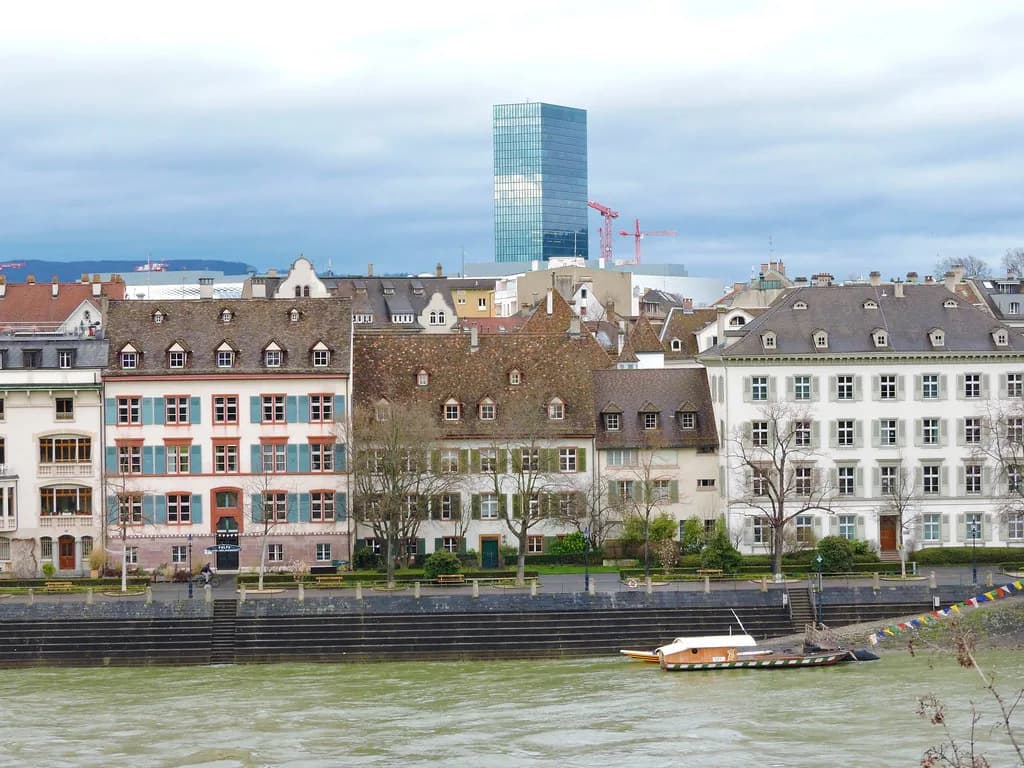
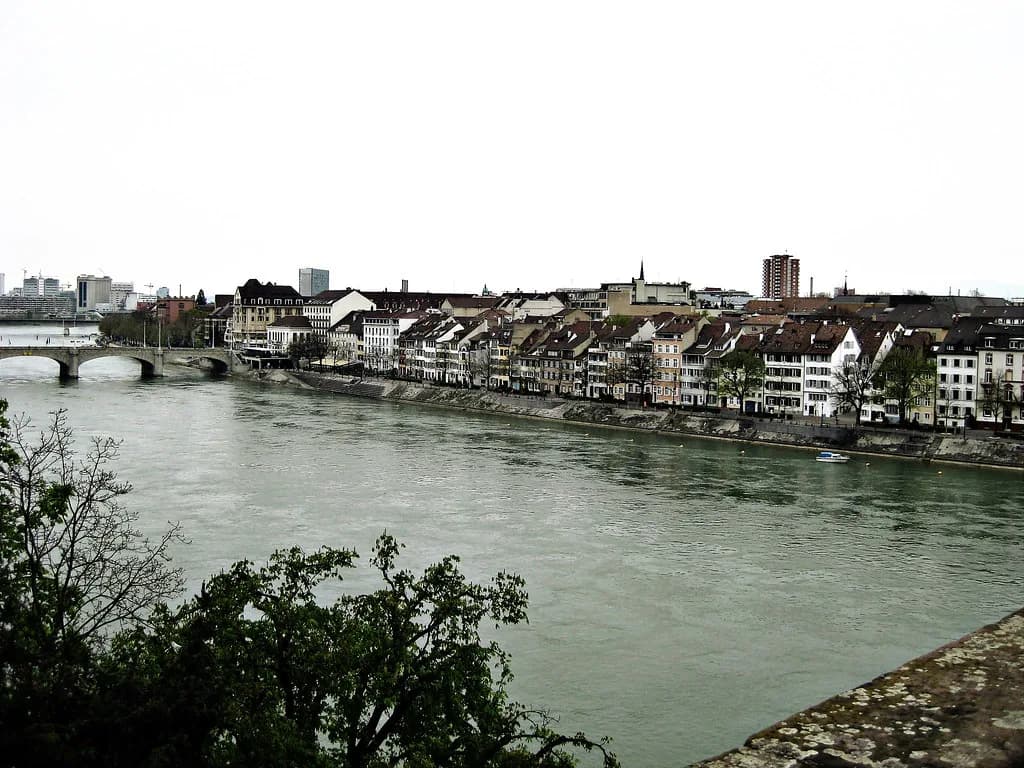
The Rhine splits Basel into Grossbasel on the left bank, the historic old town side, and Kleinbasel on the right bank, which reads as more modern and commercial. Bridges and the small wooden ferries connect the two, and most of the free sights sit on the Grossbasel side within a short walk of each other. Knowing which bank you are on stops you from doubling back across the river between stops.
A sensible free route starts on the Grossbasel bank, works through the old town, crosses to Kleinbasel and returns. That ordering keeps the Basler Münster spires, City Hall and the city gates in one stretch and leaves the river crossing as a viewpoint rather than a detour. For a fuller picture of what sits on each side, the wider set of things to do in Basel helps you slot paid stops into the same walk.
The Rhine Promenade: Basel's Best Free Walk
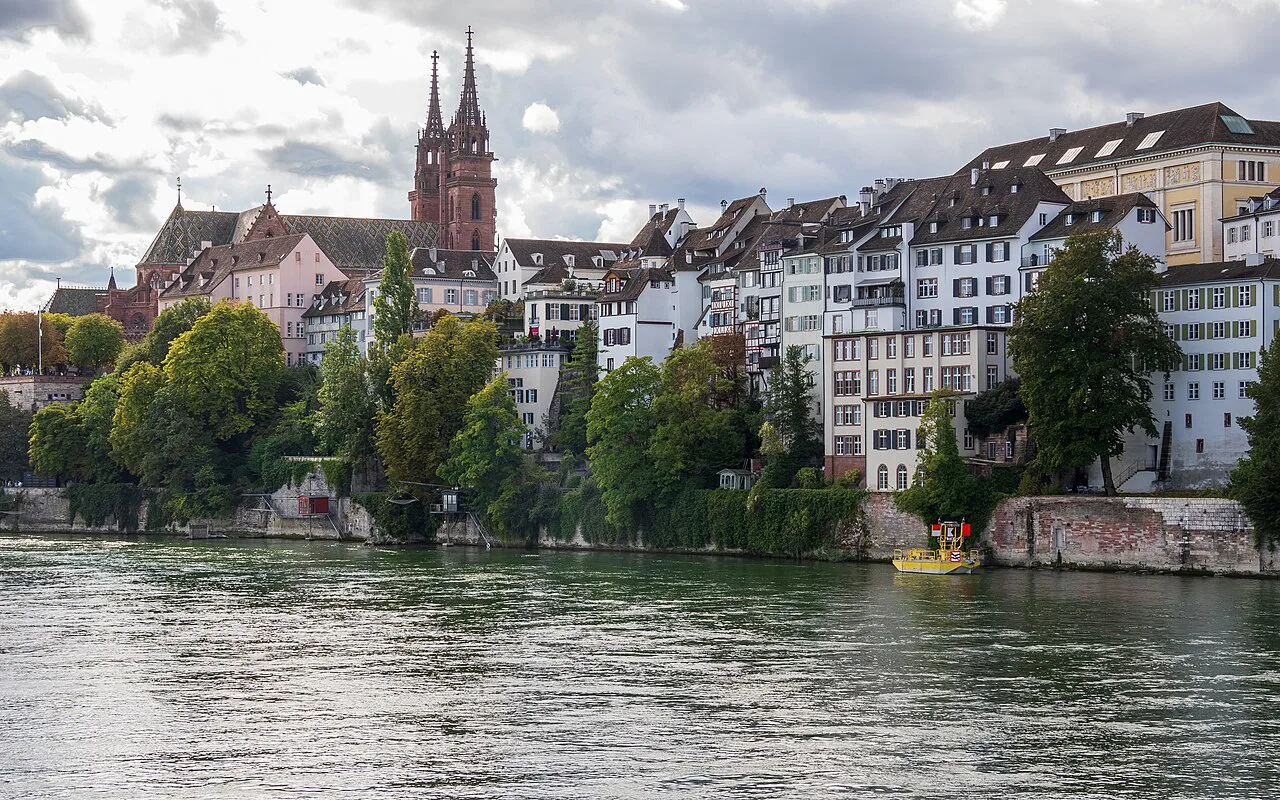
Walking the bank of the Rhine is the city's signature free activity, and the path gives you the postcard view back toward the Basler Münster spires and the red Basel City Hall. The route runs through the center, so you can join it near the old town and leave whenever you like. Early evening light on the spires is the reason to keep this stretch for the end of the day rather than the start. If you are comparing river walks, Bern's UNESCO World Heritage old town also offers free waterside strolling.
In summer the river becomes the show, with locals floating downstream past the promenade. You do not need to get in to enjoy it: watching from the bank costs nothing and gives you a clear sense of why the Rhine defines the city. If you want the higher vantage points above the river, the best views in Basel round up where to stand for free.
Mittlere Brücke, the Oldest Rhine Crossing
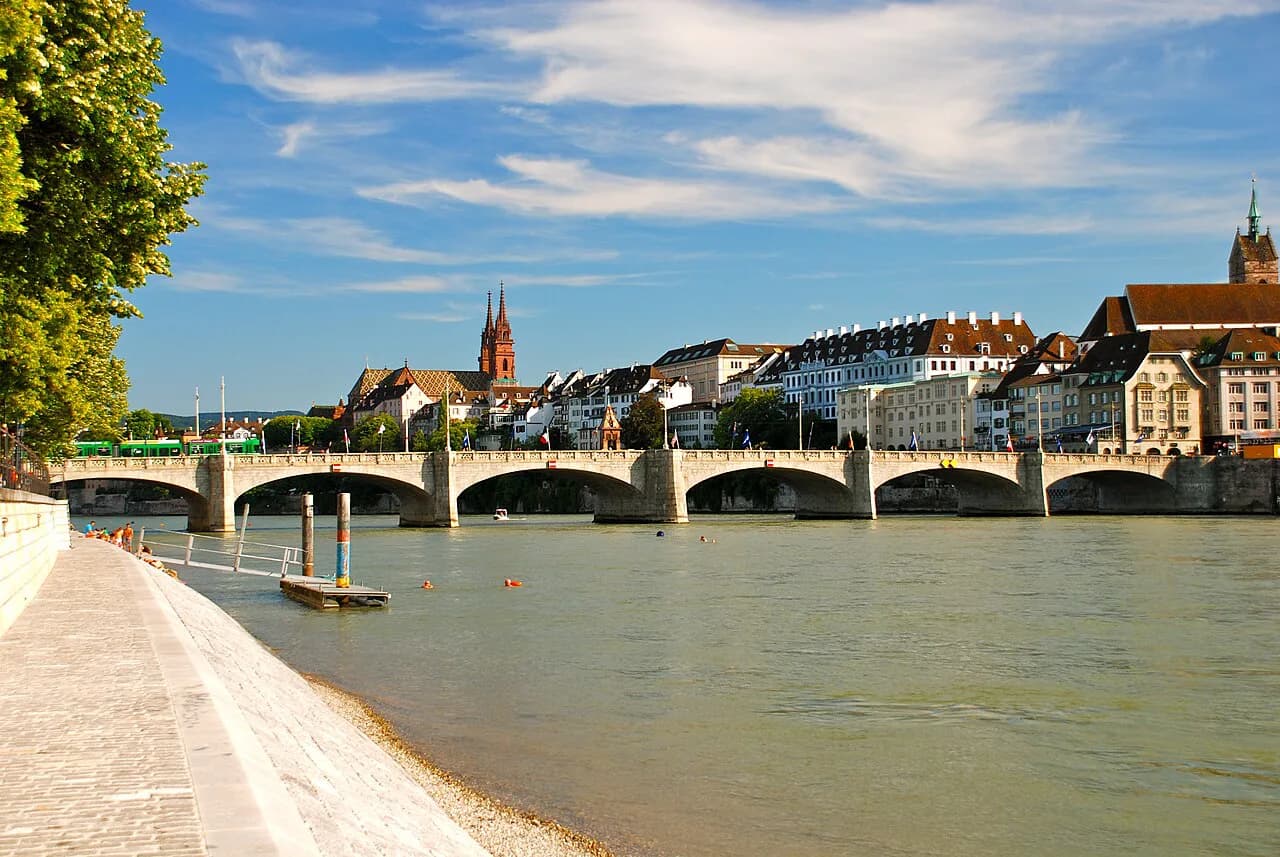
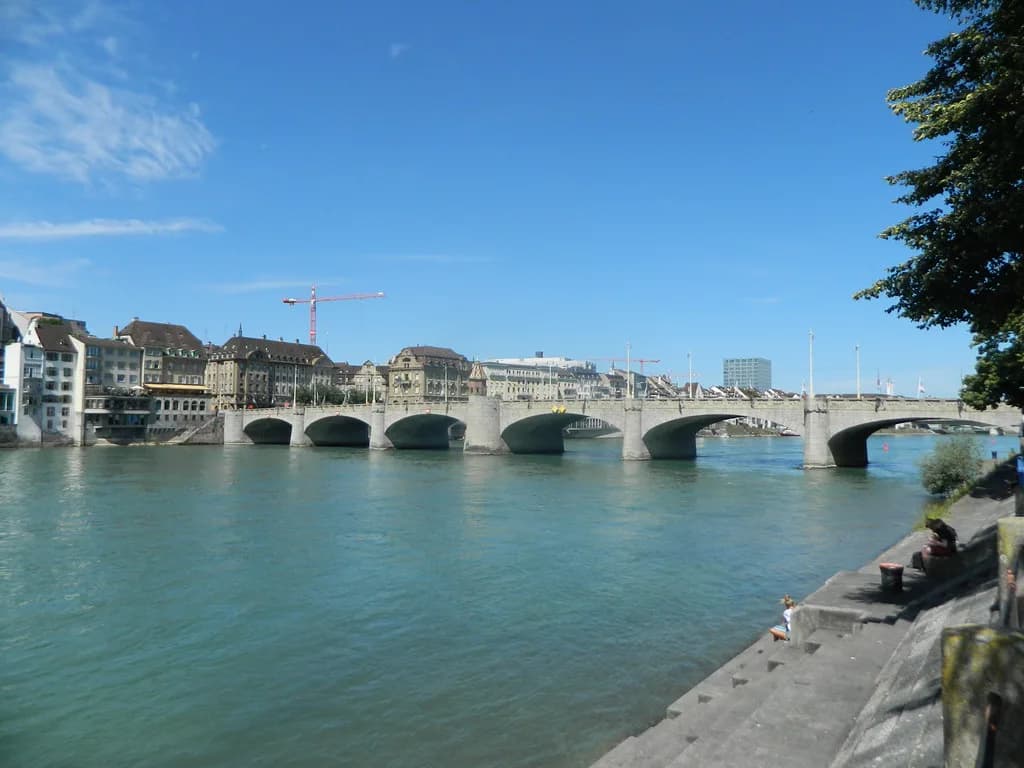
Mittlere Brücke, or Middle Bridge, is the oldest of the Rhine crossings in Basel and the natural free link between the old town and Kleinbasel. You walk across at no cost and get open river views in both directions, with the small building mid-span as the landmark to aim for. Treat the crossing as a sight in its own right rather than pure transit, and pause on the Grossbasel end for the classic view back to the spires.
The bridge also works as the spine of a walking day: start on one bank, cross, and loop back over a different bridge so the river stays in view. If you prefer a fixed sequence with timings and turn-by-turn order, a Basel self guided walking tour sets the route so you are not improvising at each junction.
The Four Wooden Rhine Ferries
Four small wooden ferries cross the Rhine, and they are unusual enough to justify a stop even if you never board. They are powered only by the river's current, held on a cable, and run back and forth across the water. Watching one swing out and drift across is free from either bank, and it explains a piece of Basel engineering you will not see elsewhere.
Riding is a different matter: the fare is CHF 2 for adults and CHF 1 for children, and the ferries do not appear to run to a fixed timetable, departing when passengers board. The short crossing means waits are usually brief. Budget travelers should decide in advance whether the ride earns its small cost or whether the free view from the bank is enough.
Old Town on Foot: City Hall and Marktplatz
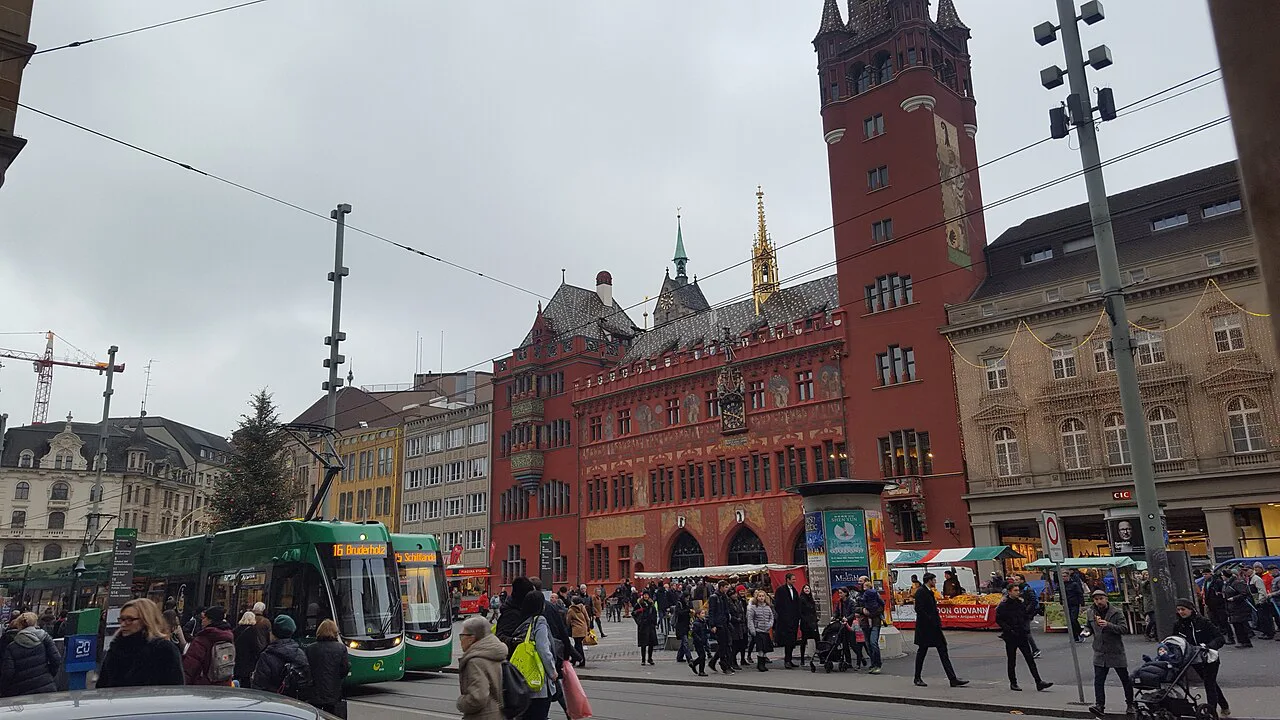
The old town is free to wander, and the red Basel City Hall with its gold detailing is the building to seek out. You can step into the courtyard, and in the mornings a produce market sets up around the building with food and coffee stalls. That combination of architecture and everyday market life makes Marktplatz one of the best no-cost stops in the city.
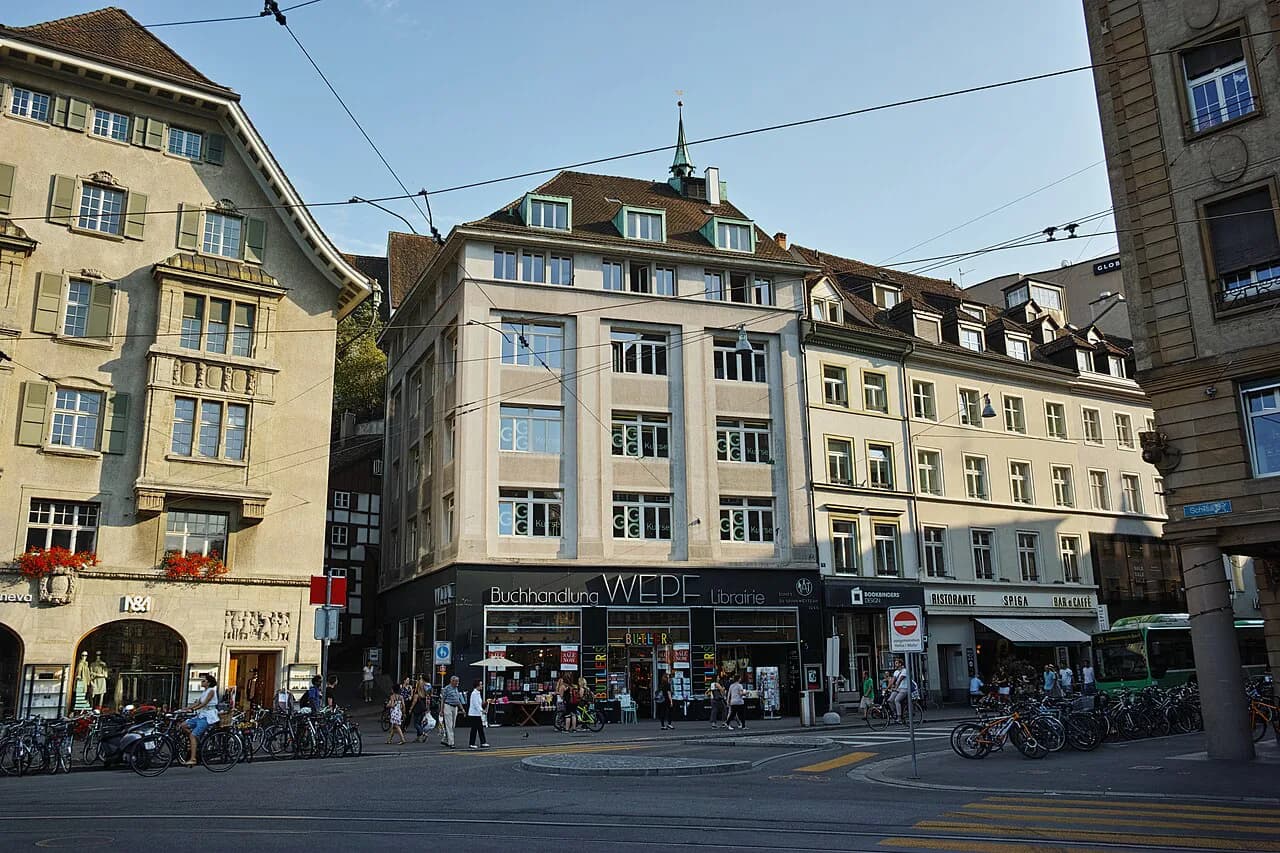
Give the lanes around City Hall an hour of unstructured walking rather than a checklist. The medieval streets, courtyards and painted facades reward slow progress, and there is no entry fee to slow you down. If you want a single page covering the quarter in depth, the Basel Old Town guide maps the streets worth prioritizing.
The City Gates, with Spalentor as the Photo Stop
Three city gates survive in Basel, marking the old entrances to the city, and Spalentor is the most impressive of them. It is a free photo stop and an easy anchor for the western end of an old town walk. Pair it with the lanes back toward Marktplatz so the gate sits at the edge of your loop rather than in the middle.
The gates make more sense once you have seen the old town core, because they show where the walls once closed the city. Walking between them is entirely free and gives the day a natural shape. Keep the Spalentor for the end of the loop if you are heading back toward the center afterward.
The Tinguely Fountain: Free, Mechanical, and Time It Right
The Tinguely Fountain in the center is free to see and unlike any ordinary fountain: mechanical sculptures move and squirt water in a constant, slightly chaotic performance. It sits in the middle of town, so it slots into any walking route without effort. Because the pieces are always in motion, a few minutes of watching beats a quick photo.
One practical catch: the fountain is turned off on Wednesday mornings for cleaning. Plan around that window if the fountain is a priority, or save it for another day. The fountain sits close to the old town lanes, so pairing it with a City Hall and Marktplatz walk keeps the morning efficient.
Basler Münster: What You Can See for Nothing
The Basler Münster is a huge Gothic church that the sources date back to the 9th century, and its exterior, forecourt and courtyard are free to view. The sandstone facade, the roof and the setting above the Rhine are the reasons to come, and they cost nothing. Walking through the courtyard in front gives you the scale of the building without a ticket.
Climbing the tower is the paid extra, and it requires a ticket that visitors should price before deciding. If your goal is a high view of the city, weigh the tower against free alternatives such as the river promenade or the bridge. The Münster view from the water is the shot most people remember anyway.
The Hoosesagg Museum: One Window, No Ticket
The Hoosesagg Museum on Imbergässlein is a museum that consists of a single window, and it costs nothing to look. The display changes, so the contents vary from visit to visit, and there is even a small step for children to see in. It takes minutes, but it is one of the most distinctive free stops in Basel.
Treat it as a curiosity on a walking route rather than a destination. It sits in the old town, which means you can fold it into the same loop as City Hall and the lanes nearby. Families in particular get a kick out of the miniature scenes.
Free Drinking Water Around the City
Basel has public drinking fountains across the city, and using them is one of the simplest ways to cut costs on a warm day. Instead of buying bottles at every stop, refill as you walk; the fountains are common enough that finding one is rarely a problem. This matters more than it sounds in a country where everyday expenses add up quickly.
Carry a refillable bottle and treat the fountains as part of the route rather than an interruption. The saving is small per bottle and meaningful over a full day of walking. It also keeps your hands free for the camera at stops like Spalentor and the bridge.
Are Any Basel Museums Free?
Basel's museums generally charge admission, so a free-sights day should not assume free entry. The Kunstmuseum Basel, for example, has charged for tickets, and Museum Tinguely has had its own admission price; in 2022 those were CHF 16 or CHF 26 for the Kunstmuseum depending on the special exhibition, and CHF 18 for Museum Tinguely. Treat those as historical figures and confirm the current price at the museum before you go, since special exhibitions change the maths.
The cheaper museum move is choosing one or two collections that genuinely interest you rather than trying to cover the ground. The Spielzeug Welten Museum, a toys museum, has been a good family pick with interactive displays. For a full comparison of what each collection offers, the museums in Basel guide lays out the options side by side.
What the BaselCard Covers, and What It Does Not
The BaselCard is issued as a free bonus when you book a hotel in Basel, handed over at check-in. It covers use of public transport and gives 25% off entry to many of Basel's museums and the zoo. It does not make museum entry free.
That combination is worth doing the arithmetic on before you dismiss it. If you plan two museums and a few tram rides, the transport saving plus the 25% discount can outweigh the cost of paying full price separately. The card is delivered with the room, so there is nothing to buy up front.
Sunday and Monday: Closures That Reshape the Plan
Many shops and supermarkets in Basel close on Sundays, so a free-sights day that depends on picking up supplies can stumble. Plan food and water around the days when stores are open, and lean on the public fountains on Sunday. The exception worth knowing is that the supermarket at the main station has been open on Sundays, which helps if you arrive or leave that day.
A lot of Basel's museums close on Mondays, which makes Monday the natural day for the outdoor free route: the Rhine promenade, the bridge, the gates and the fountain all remain available. Save museum days for the rest of the week. For shops and their hours, the shopping in Basel guide fills in the practical side.
How Many Days a Free-Heavy Plan Needs
Basel is compact enough that one full day covers the old town, the Rhine promenade, the bridge and the fountain without rushing. Two days is the more comfortable shape: one for the free walk and one for a museum or two plus a slower stretch along the river. The city's sights are close together, so extra days go to depth rather than distance.
A one-day version runs old town lanes and City Hall in the morning, the Münster forecourt and the bridge around midday, then the promenade and fountain in the late afternoon. The two-day version swaps the second afternoon for a museum and a ferry ride if you want them. Neither plan requires a ticket for the core sights.
Where the Free Route Ends and Paying Makes Sense
The honest trade-off is that the free route covers the city's outdoor highlights but not its collections. Basel's reputation rests heavily on its museums, so a trip built entirely on free sights skips the reason many people come. Choose one museum that matches your interests and let the rest of the day stay free.
Beyond that, small paid extras such as the ferry fare or a tower ticket are easy to justify if they add a view or an experience you cannot get from the bank. The rest of the budget is better spent on a single good museum than on a scatter of minor add-ons.
Plan Your Free Day in Basel
Basel's free day is genuinely free: the Rhine promenade, Mittlere Brücke, the old town lanes and City Hall courtyard, the Spalentor gate, the Tinguely Fountain, the Hoosesagg window and the public fountains all cost nothing to see. The traps are narrow and known: the Wednesday-morning fountain cleaning, Sunday shop closures and Monday museum closures. Build the walking loop first, then decide whether the BaselCard's transport and 25% museum discount earns its place in your plan.
Explore more Basel guides
Frequently Asked Questions
What can you do in Basel for free?
The Rhine promenade, the Mittlere Brücke crossing, the old town lanes around City Hall and Marktplatz, the Spalentor gate, the Tinguely Fountain, the Hoosesagg Museum window and the public drinking fountains all cost nothing. The Basler Münster exterior and courtyard are free to view; the tower climb requires a ticket.
Is the BaselCard worth it for free attractions?
The BaselCard is issued with a hotel stay and covers public transport plus 25% off many museums and the zoo. It does not make museum entry free and does not cover the wooden Rhine ferries, so its value depends on how many museums and tram rides you plan. If your day is purely outdoor sights, the card adds little.
Are Basel museums free on any day?
Basel's museums generally charge admission, and the BaselCard gives a discount rather than free entry. Monday is a common closing day for many museums, which makes it the natural day for the free outdoor route. Check the individual museum before you build a day around it.
Can you walk Basel's old town without paying?
Yes. The old town lanes, the City Hall courtyard, Marktplatz and the surviving city gates are free to walk through. The compact layout means you can cover the core on foot in a few hours, and Spalentor is the best photo stop among the gates.
How long does a free walking route through Basel take?
A loop covering the old town, City Hall, the Münster forecourt, the bridge, the promenade and the fountain fits comfortably into one full day at an unhurried pace. Add the Hoosesagg window and the Spalentor gate without much extra time. Two days lets you add a museum and slow down along the river.
Is the Rhine ferry free in Basel?
No. The wooden ferries charge a fare, with adults paying CHF 2 and children CHF 1 in recent years. They do not appear to run to a fixed schedule and depart when passengers board. Watching them from the bank costs nothing.
What should I skip if I only have one day?
Skip the tower climb and any second museum, and keep the day to the outdoor loop. The Border Triangle marker, where Switzerland, France and Germany meet, takes time to reach and has little nearby, so it is a poor fit for a short visit. Spend the saved time on the Rhine promenade instead.
Sources
Notes for your Swiss city break
Optional updates to our Swiss city guides.
You might also like
Continue reading
More guides you'll find useful