Bern in October: Weather, Crowds and What to Do
Bern in October brings cooler days and thinner crowds in the old town. Here is what to expect, which sights to prioritize and how to plan a short break.
On this page
October is a good month for Bern because the city is compact enough to walk in cool, shortening days and the sightseeing is mostly indoors or under the arcades. A short break of one full day covers the old town, the Münster tower and the river viewpoints; two days add the museum quarter across the bridge and the Rosengarten. The trade-off is daylight: late October afternoons close in, so front-load outdoor stops and save museums for the end of the day, and weigh the month against the rest of the year with our guide to the best time to visit Bern.
Bern in October at a Glance
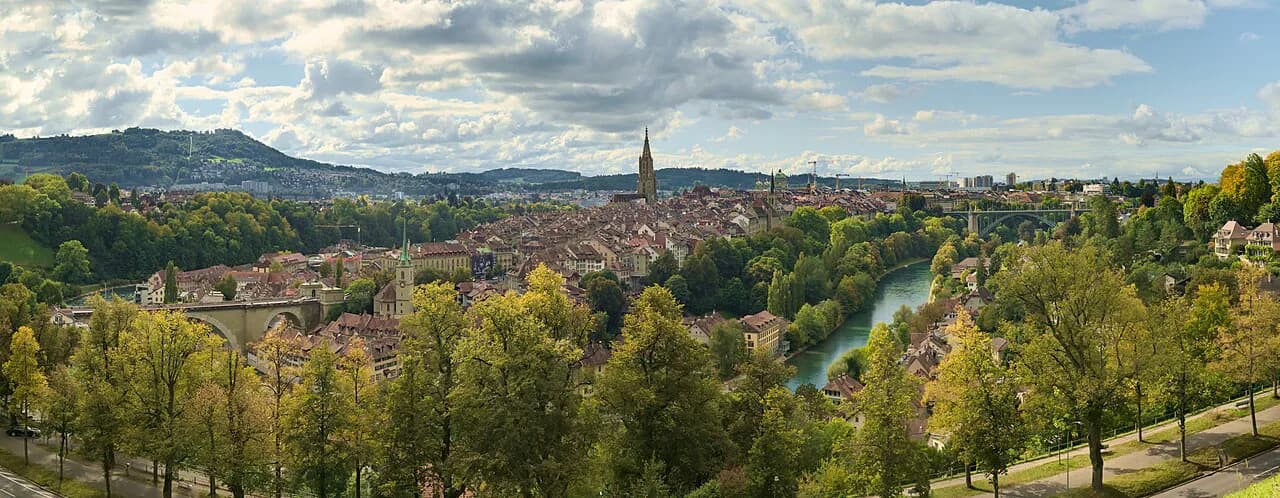
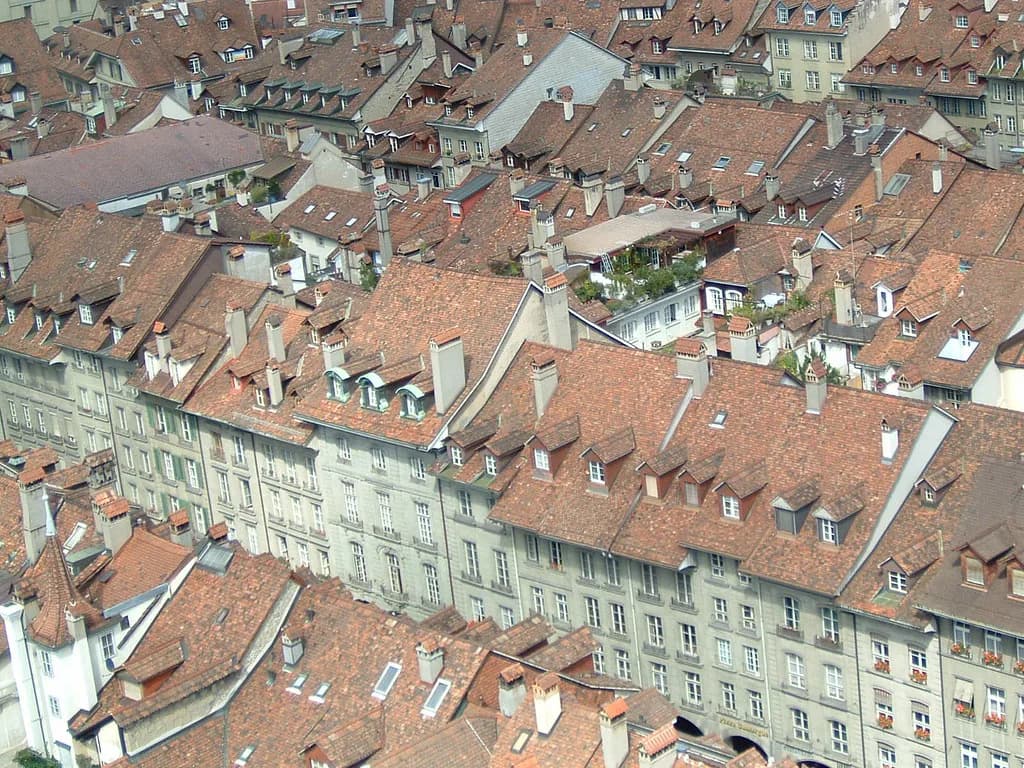
Bern sits on a sandstone promontory inside a bend of the Aare, and the UNESCO-listed old town fills that promontory with arcaded streets, fountains and cellar shops. In October the visitor load thins compared with high summer, which makes the six-kilometer arcade network easier to move through when it rains. Plan around a single walking spine: BärenPark and the Nydeggbrücke at the eastern end, then the Münster and its terrace, the Zytglogge, and the Bundeshaus at the western end.
The monthly rhythm matters more than any single attraction. October is shoulder season, so you are trading guaranteed sunshine for thinner queues and a city that feels lived-in rather than busy. If leaf color is your main goal, treat it as a bonus rather than a plan, because the old town's stone facades and river gorge dominate the scenery.
What the Weather Is Typically Like, and How to Dress
Expect typical October conditions rather than a forecast: cool mornings, mild middays and a real chance of rain on any given day. Layering works better than a heavy coat, because arcades and museum halls can feel warm while the Münsterplattform and the Nydeggbrücke catch the wind off the river. Waterproof shoes matter more than an umbrella, since the old town's cobbles and the climb up the tower stairs get slick.
Check the daily forecast the morning you arrive and let it set the order of your day, not the content. On a clear morning, climb the Berner Münster tower early while the Alps are visible from the platform; on a wet morning, swap in the museum quarter and walk the covered arcades instead. Pack a compact rain shell, a warm mid-layer and shoes with grip for the sandstone steps.
Why October Suits a Short City Break
Bern rewards a short visit because the center is walkable end to end in under half an hour, so a single day can hold a lot without transit. October suits that format: you are not chasing beach weather, and the city's pleasures — arcades, fountains, cellar restaurants, museum halls — work in cool air. If you have only a weekend, one day for the old town and one for the museum quarter is a realistic split.
The main trade-off is daylight and the shortening of the outdoor season. Late October evenings arrive early, so plan the tower climb and the river viewpoints before mid-afternoon and keep the final hours for indoor stops. October also pairs well with a spring visit if you are comparing seasons, since April brings its own mix of showers and blossoms along the Aare River.
Rainy days are the real risk, and Bern answers them well with a dense cluster of museums across the river. Build a wet-weather backup into your plan rather than improvising: pick one museum as your fallback and check its opening days before you travel, since Swiss museums often keep their own schedules.
A One-Day Walking Plan Through the Old Town
Start at the Nydeggbrücke end, where the bridge gives a wide view up and down the Aare gorge and the BärenPark sits just below the old town edge. Walk up through the Nydegg quarter into the arcaded streets, then follow the ridge west to the Münster. Keep the order fixed: river and bears, cathedral and terrace, clock tower, parliament. That sequence keeps you moving downhill and with the flow of the old town rather than backtracking.
The arcades, known locally as Lauben, run along most of the main old-town streets and let you walk in rain or sun without breaking stride. Use them to link the sights and duck out at the fountains and squares when the weather cooperates. Budget roughly half a day for this spine, then decide whether the afternoon goes to the museum quarter or to a slower loop through the lower streets.
If you are weighing a different month for the same walk, September often brings warmer, drier days and May brings longer evenings and more outdoor cafe time in the UNESCO World Heritage Old Town of Bern. October's advantage is quieter streets and a city that feels less rushed.
Berner Münster: the Tower Climb and the Münsterplattform
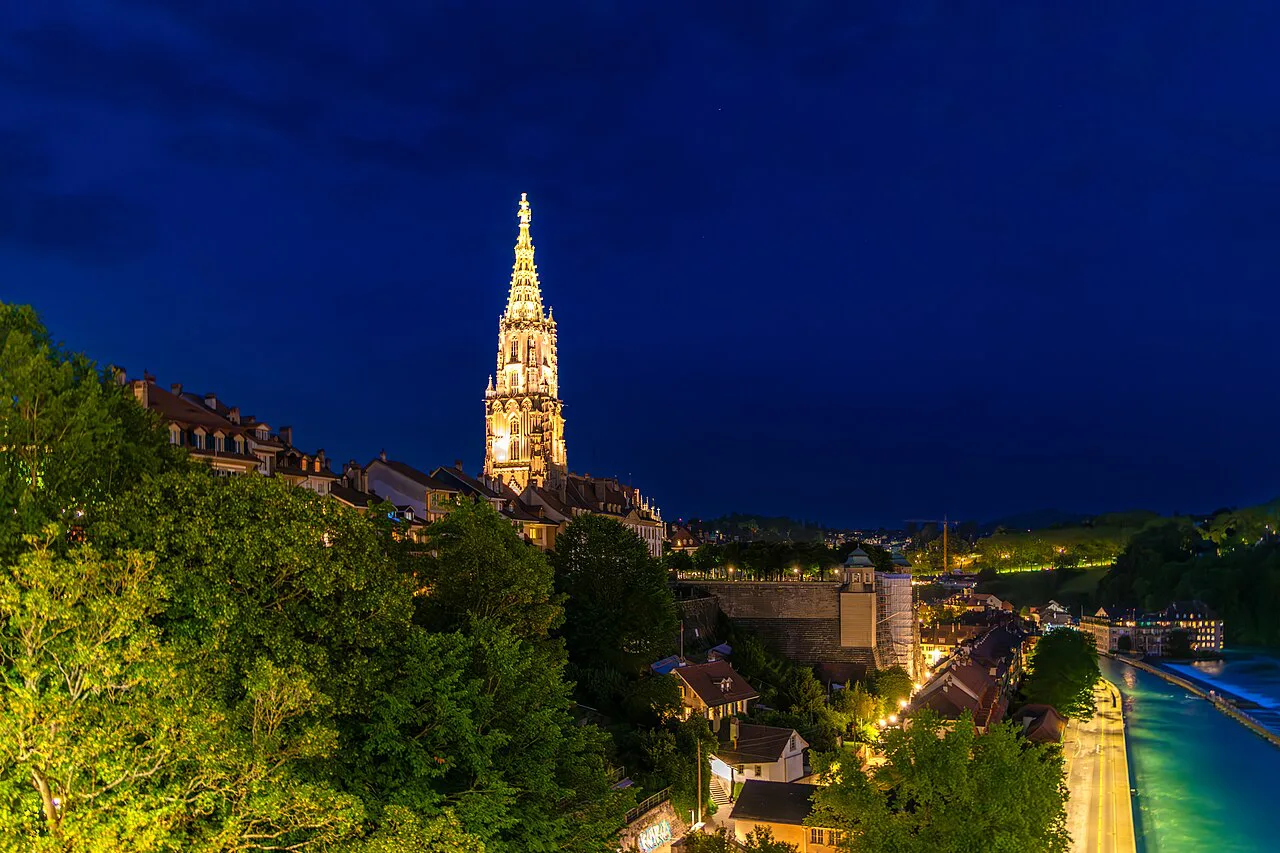
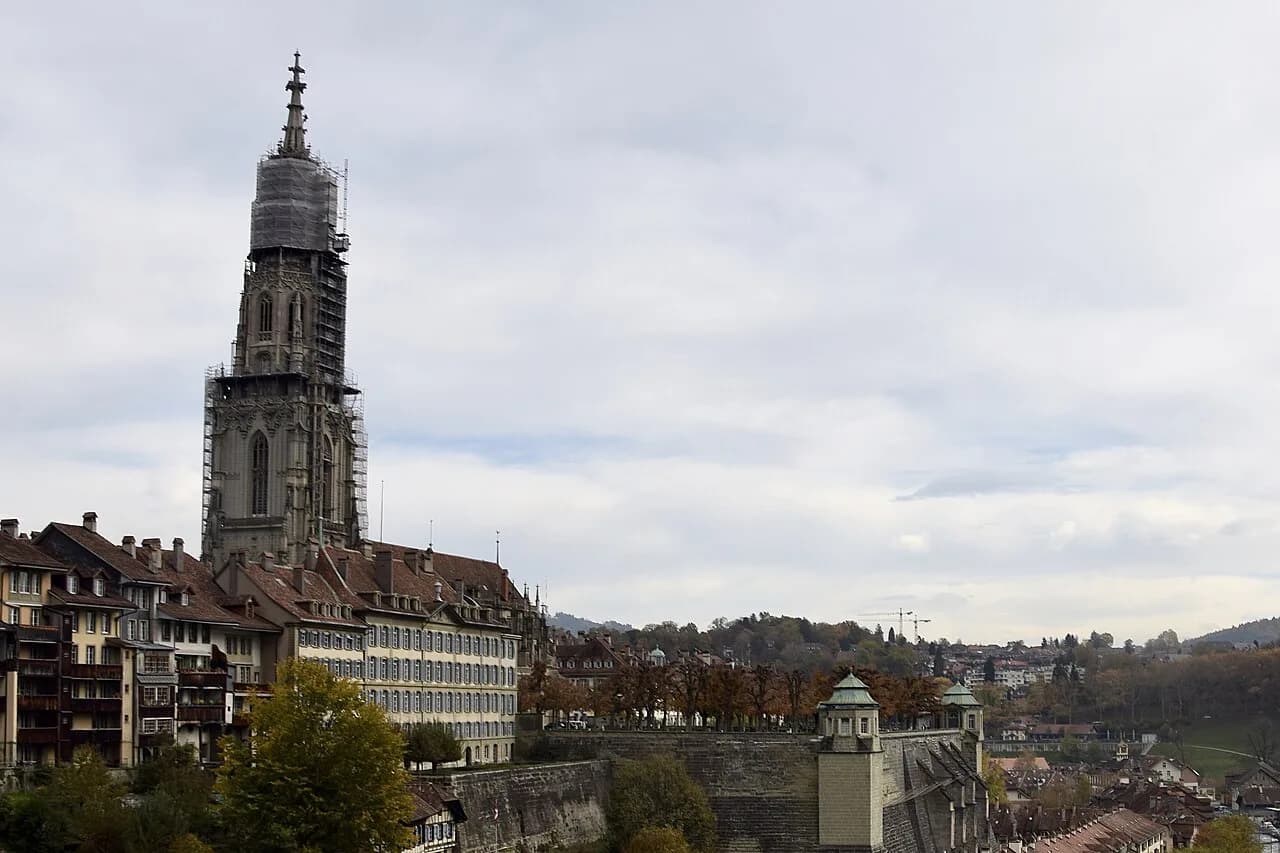
The Berner Münster is the Gothic cathedral at the eastern end of the old town, and its tower is the city's best-known climb. The tower reaches roughly 100 meters and the ascent runs up 344 stairs to a viewing level below the very top, where the view opens over the old town rooftops and, on clear days, the Alps. The cathedral itself is free to enter, and the tower carries a small separate fee.
Climbing solo is not always possible; the tower ascent can require going up with another visitor as a safety measure, so arrive ready to pair up or wait briefly. The Münsterplattform, the terrace behind the cathedral, is free and open around the clock, with views over the Aare and the Matte quarter below. It is the best place in the city to sit with a coffee after the climb, and a September visit gives you the same terrace with warmer air.
Zytglogge and the Clock Figures
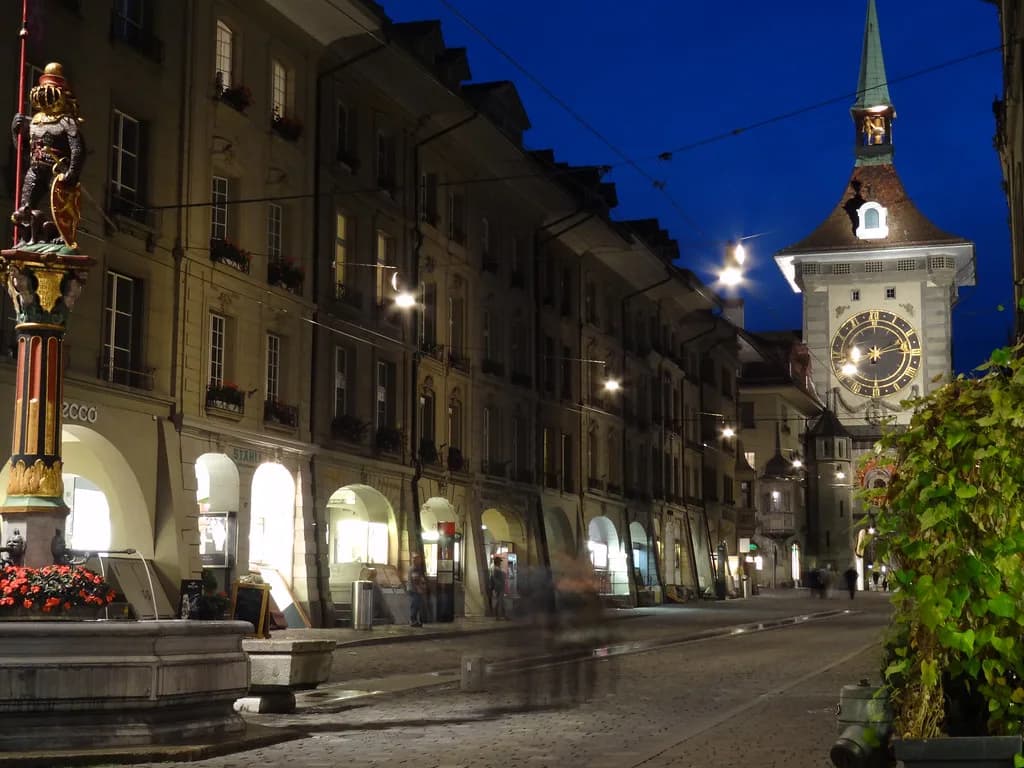
The Zytglogge is the medieval clock tower on Kramgasse and the old town's ceremonial midpoint, in use since the 13th century as a guard tower, prison and civic clock. On the hour, mechanical figures — bears, a fool and a rooster — perform above the clock face, drawing a small crowd of onlookers below. Time your walk so you pass the tower a few minutes before the hour rather than planning the whole day around it.
Guided tours occasionally go behind the clock face and up into the tower, but availability is limited, so treat the interior as optional. The street-level view of the figures costs nothing and fits naturally into the old town walk. If you want the tower interior, check the official Bern tourism pages before you travel, as there is no guaranteed daily schedule.
Bundeshaus: Tours and the Visitors' Gallery
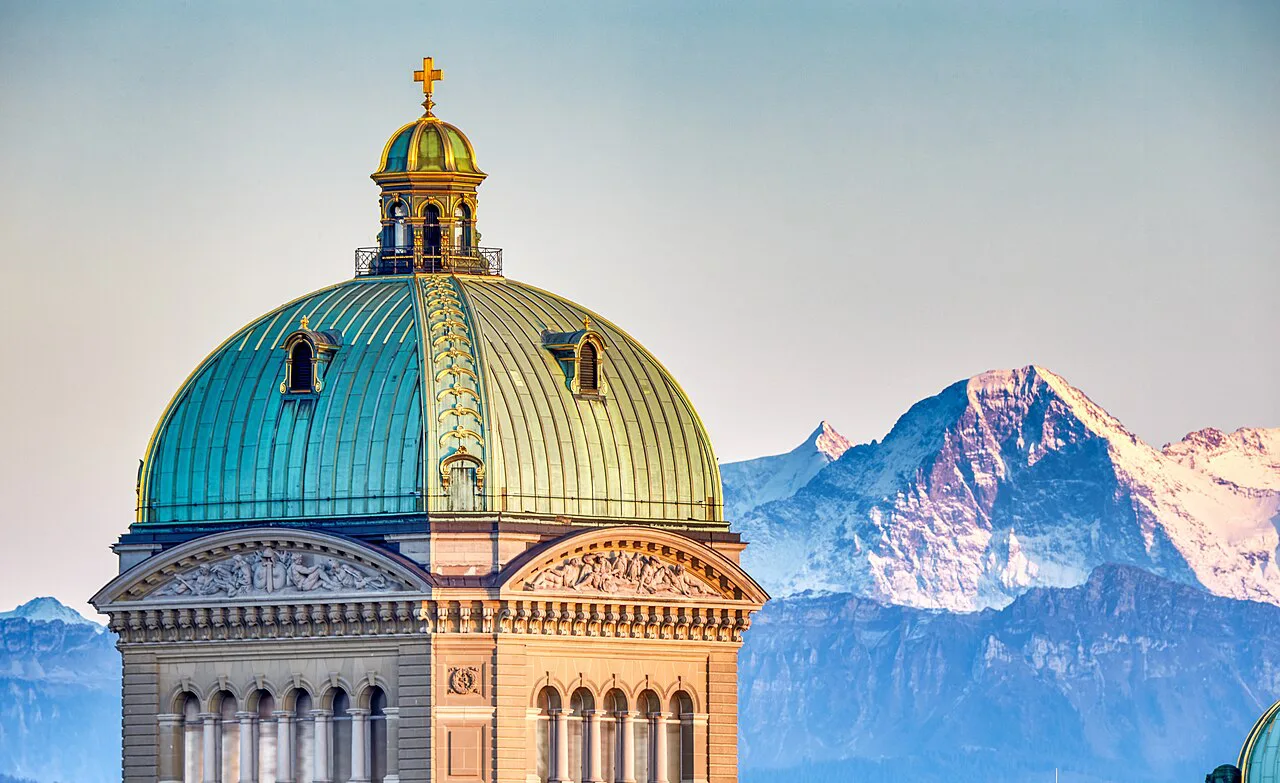
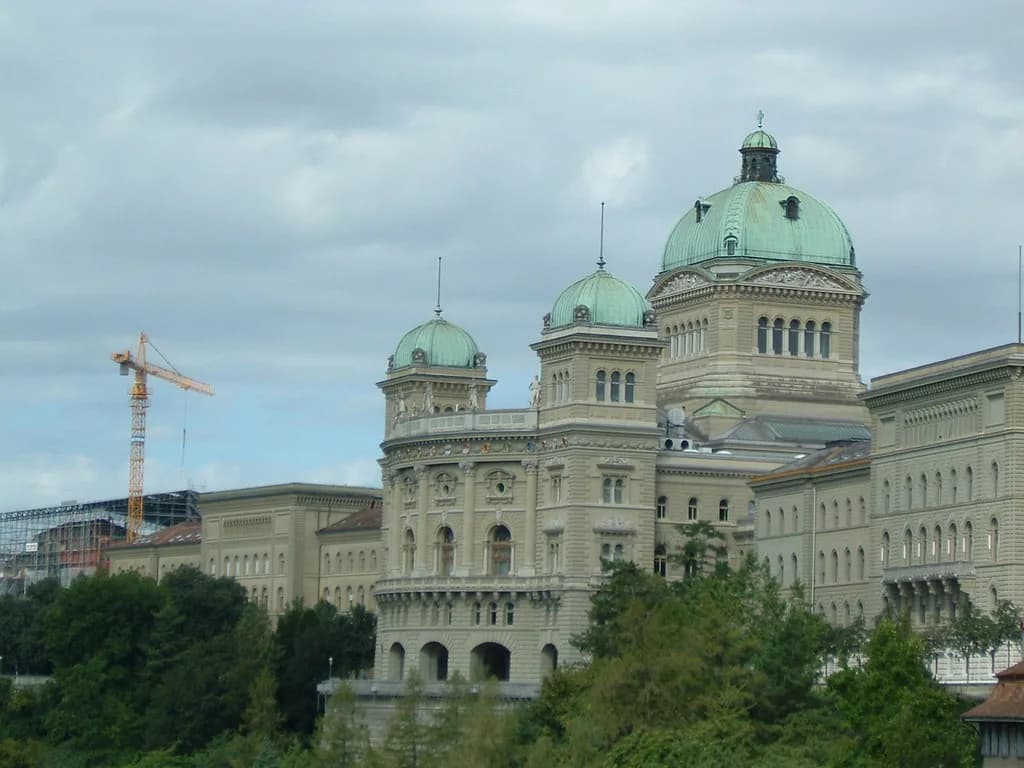
The Bundeshaus on Bundesplatz is the seat of Switzerland's parliament and government, built from 1894 to 1902 in neo-Renaissance style under a dome about 60 meters high; 95 percent of its materials come from Switzerland. Guided tours of the council chambers run 45 to 60 minutes and take you through the domed hall, the National Council and Council of States chambers, and the Wandelhalle where members and press talk politics. When the councils are in session there are no regular guided tours.
Tours can be booked three days in advance on the Parliament's website, so a short October break can slot one in with a few days' notice. During sessions you can instead sit in the visitors' gallery and watch debate; session dates are published on the Parliament's site. Combine the visit with the Bundesplatz fountains and the Bundesterrasse promenade behind the building, which opens onto the Aare and the Alps.
Inside the National Council chamber, look for the small trout hidden in the mural — a joke said to date from an argument between the painter and the architect. The fish is hard to spot from a distance, and the goddess of peace floats faintly in the clouds nearby. These details are what make a guided tour worth the advance booking rather than a walk past the facade.
Kirchenfeld: The Museum Quarter Across the Bridge
Kirchenfeld, the district across the Kirchenfeldbrücke from the old town, is one of Bern's most popular residential quarters and holds a dense cluster of museums and schools alongside roughly 18 percent of the city's population. For a visitor, that concentration makes it the natural home of a half-day indoor block, reachable on foot from the Bundeshaus in about ten minutes. Use it as your wet-weather anchor.
At Helvetiaplatz, the Bernisches Historisches Museum is the quarter's landmark, and its building is set for a comprehensive renovation. The old building is scheduled to close from mid-2027 to mid-2032, during which the large hall in the cube will keep running with a new exhibition on Bern's history and cooperate with museums elsewhere in the canton. Plan around that timetable only if your visit falls in those years; for an October trip before then, treat the museum as a normal stop.
Check opening days for each museum before you commit to the quarter, since schedules vary by institution and a single closed door can empty an afternoon. Pick one main museum and one smaller one rather than trying to cover several. If you are visiting in summer instead, the same quarter works as a hot-weather escape.
Rosengarten and BärenPark Viewpoints
The Rosengarten sits on the hillside above the old town and is the classic outlook over the rooftops and the river bend. It holds more than 200 rose varieties, irises and 28 kinds of rhododendrons, and there is no admission fee. From the garden it is a 5- to 10-minute walk down to the BärenPark, which makes the pair a natural loop.
The BärenPark spreads over about 6,000 square meters along the Aare slope and is free to enter; donations are welcome and it is accessible around the clock. The resident bears hibernate for a couple of months from around October or November, so an October visit may catch them before they settle in. Do not plan a whole morning around the bears, but do build in the river walk between the park and the Nydeggbrücke.
Reaching the Rosengarten means uphill walking, which is worth noting on a short October day when light is limited. Bus line 10 runs from the center to the upper edge of the park, cutting out the climb. If you walk up, take the Nydeggbrücke route and use the river as your reward on the way down.
Rainy-Day Options and Money-Saving Passes
Rain in October is common, so plan the indoor half of your visit around the museum quarter and the arcades rather than improvising. The old town's covered walkways let you move between the Zytglogge, the cathedral and the Bundeshaus without full exposure. If the weather turns, save the tower climb and the Rosengarten for a clearer day and shift the Bundeshaus tour earlier.
Two free stops anchor any low-cost day: the Münsterplattform and the Rosengarten cost nothing to enter, and the BärenPark is free with donations welcome. The arcades and the riverbank paths are open to all. If your plans run into spring showers instead, our April notes cover which of these stays work in wet weather.
For paid tickets, check the Parliament's own site for tour booking rules, and check each museum's site for admission — none of these are worth guessing in advance. If a rainy day threatens your plans, the safest approach is to confirm the day before which museums are open and when the next Bundeshaus tour runs.
How Many Days You Need, and When to Go Next
One full day covers the old town spine, the Münster tower and a river viewpoint; two days let you add Kirchenfeld's museums and a slower Rosengarten loop. October works for both lengths because the sights are close and the crowds are thinner. If you can stretch to three days, add a half-day for the museum quarter without rushing; our collection of Bern Attractions: 8 Visitor Guides goes deeper on each stop.
If you are flexible on dates, compare October with the neighboring months: June through September bring longer days and warmer weather, while April and May bring spring light and fountains running. October's case is quieter streets and a more local rhythm. If you are considering Zürich in October or Basel in October for the same month, the same shoulder-season logic applies.
Plan Your October Visit
October in Bern is a shoulder-season city break: cool, often wet, but walkable and uncrowded. Fix your walking order around the old town, book the Bundeshaus tour early, and keep the museum quarter as the rainy-day anchor. Bring layers, shoes with grip and a flexible plan for the tower climb, and if the month is not fixed yet, start from the season-by-season best time to visit.
Explore more Bern guides
Frequently Asked Questions
Is one day enough in Bern?
One full day covers the old town walk, the Münster tower and a river viewpoint. Two days let you add the Kirchenfeld museum quarter and the Rosengarten without rushing.
Do I need to book a Bundeshaus tour in advance?
Yes. Tours can be booked three days in advance on the Parliament's website, and there are no regular guided tours while the councils are in session. During sessions you can watch from the visitors' gallery instead; the Parliament publishes the session dates.
What should I wear in Bern in October?
Dress in layers with a rain shell and shoes with grip for the sandstone cobbles. The arcades shelter you from rain, but the Münsterplattform, the Nydeggbrücke and the Rosengarten are exposed to wind.
Is Bern worth visiting in autumn?
Yes. October brings thinner crowds, a walkable old town and a good indoor fallback in the museum quarter. Daylight shortens late in the month, so do outdoor stops before mid-afternoon.
How does October compare with other months in Bern?
October is quieter than summer but colder and wetter, while September often brings warmer, drier days and May brings longer evenings. Choose October if thinner crowds matter more than guaranteed sunshine.
Sources
Notes for your Swiss city break
Optional updates to our Swiss city guides.
You might also like
Continue reading
More guides you'll find useful