Lucerne Old Town: What to See and a Self-Guided Walking Route
Lucerne Old Town packs Chapel Bridge, the Lion Monument, Weinmarkt and Kornmarkt into a compact, largely car-free district worth half a day on foot.
On this page
Lucerne Old Town is the historic core on the north bank of the Reuss where it leaves Lake Lucerne: a compact, largely car-free district of crooked lanes, fountain squares and painted facades that you can walk end to end in an afternoon. Most travelers start at Chapel Bridge and finish at the Lion Monument, which keeps the whole loop on foot. If you enjoy comparing preserved medieval cores, the Basel Old Town guide covers another Swiss old town laid out the same way.
The district is small enough that a map is a convenience rather than a necessity, but knowing which bank you are on saves backtracking. The Reuss splits the old center from the Church of St. Leodegar and the Musegg side, and every bridge crossing changes the mood of the walk.
What Lucerne Old Town Is
Lucerne Old Town is the historic district on the north bank of the River Reuss, a largely car-free grid of pedestrian lanes between the riverfront and the old city walls. Several streets are open only to people on foot, which makes the district easy to wander and hard to rush through.
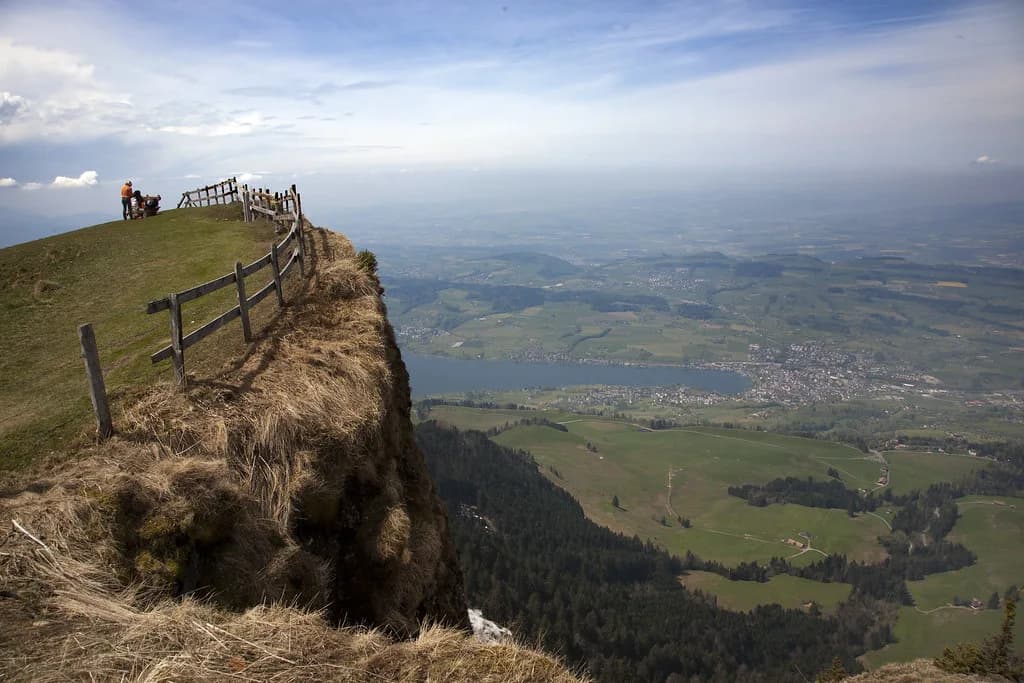
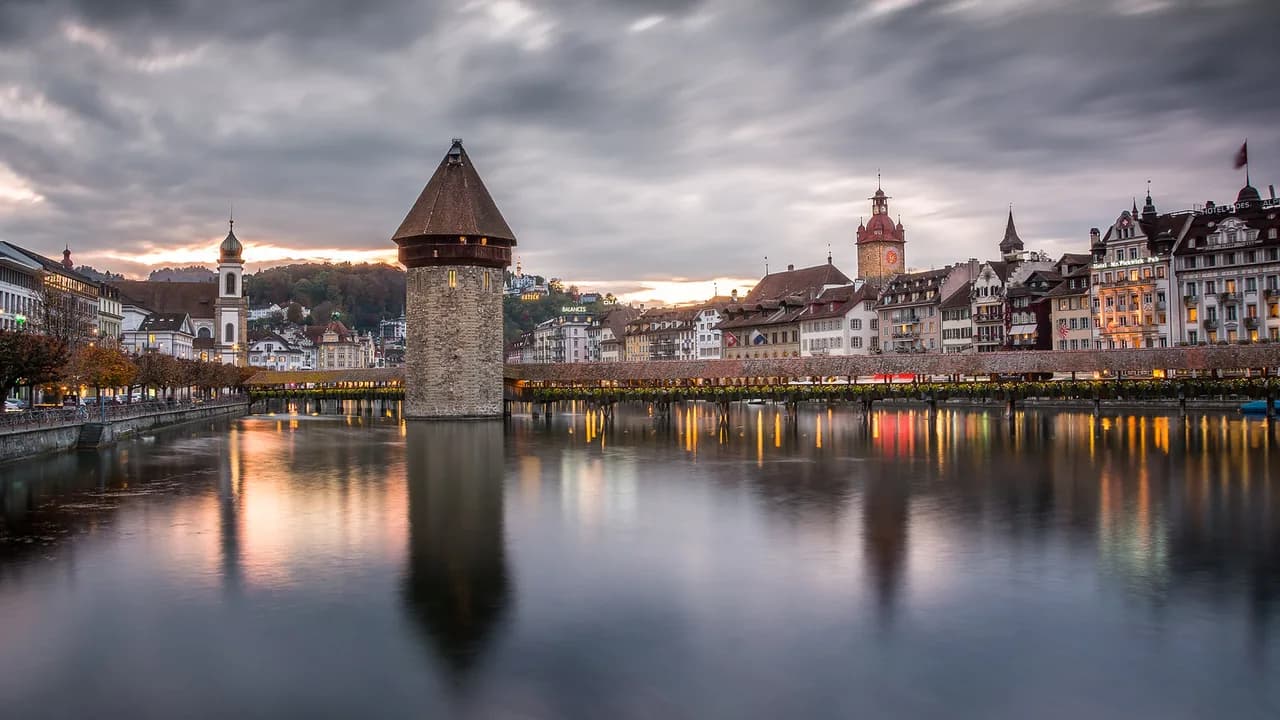
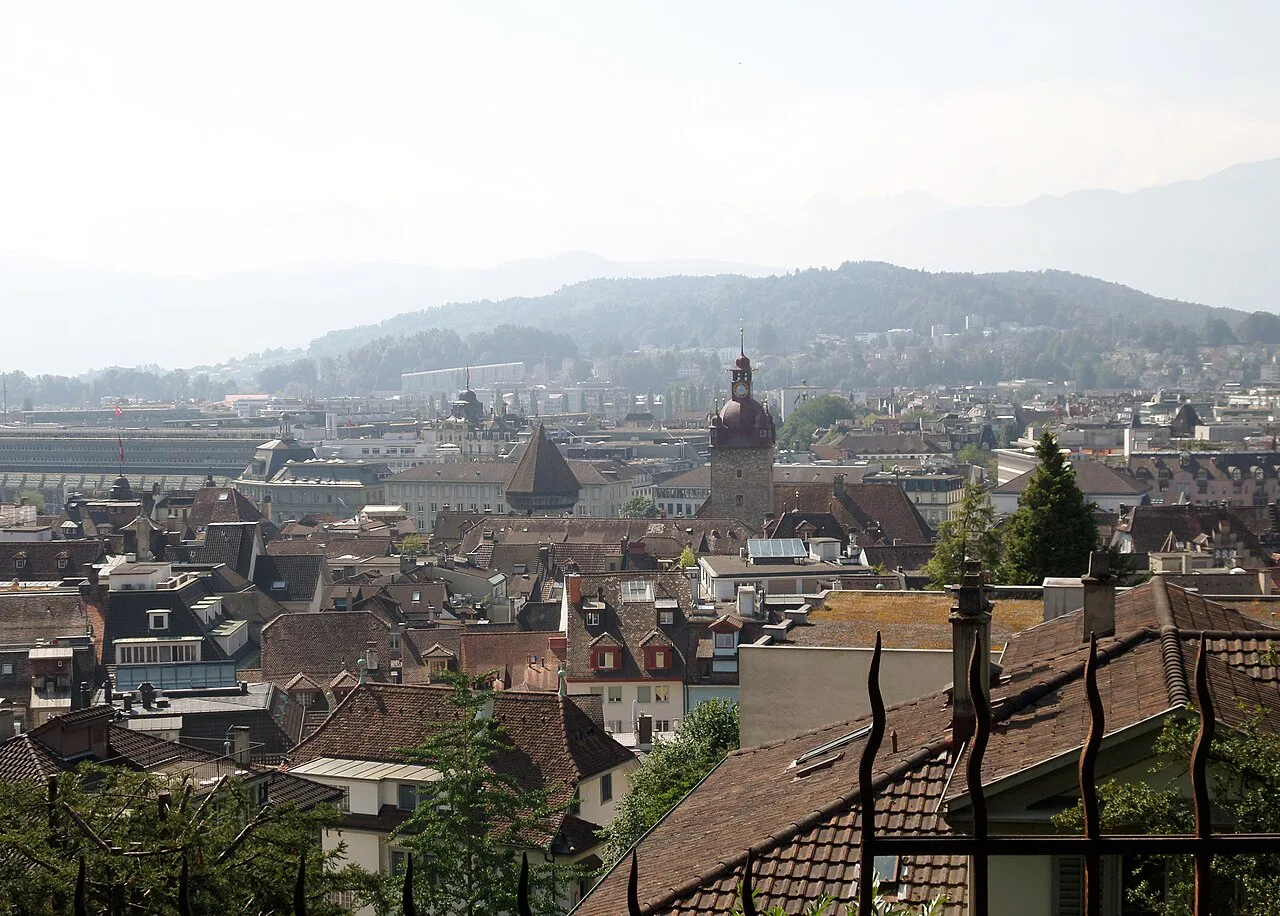
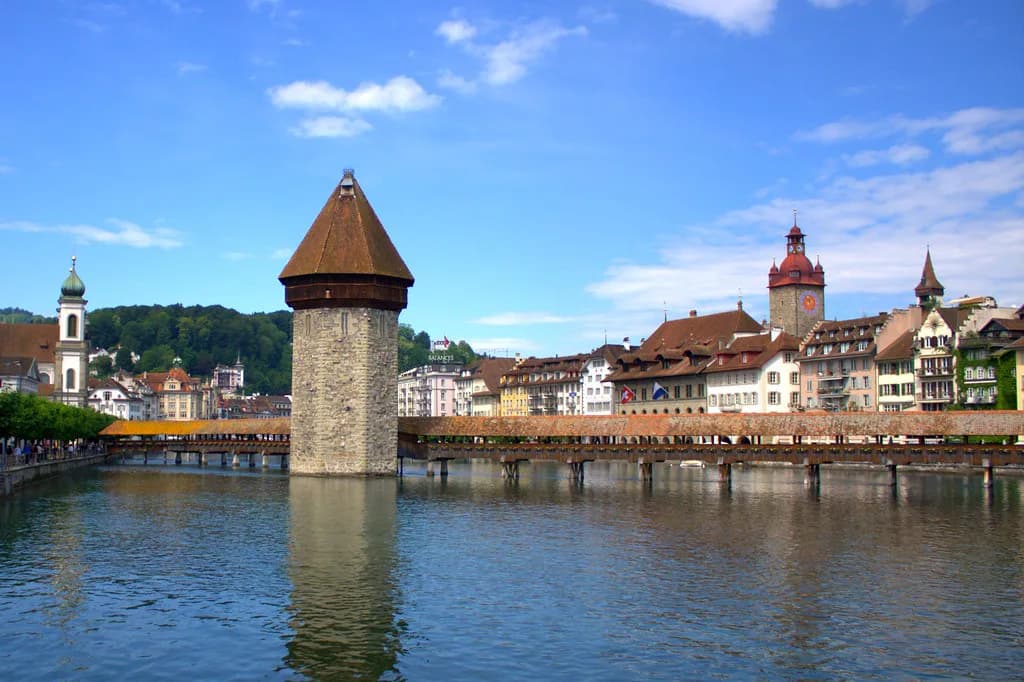
The setting does much of the work: Lake Lucerne sits at the district's feet, the Reuss runs through it, and the covered bridge and green-domed church give the waterfront its postcard silhouette. Plan the Old Town as a half-day block and build the rest of your Lucerne itinerary around it.
How the Old Town Is Laid Out
Think in three bands: the Reuss riverfront, the market squares just inland, and the lanes climbing toward the walls. Chapel Bridge cuts diagonally across the river, so crossing it puts you on the south bank facing the Church of St. Leodegar rather than deeper into the old lanes.
Weinmarkt is the spacious square ornamented by a large stone fountain, while Kornmarkt, the medieval market square, holds the Rathaus, the town hall. Both sit a short walk apart, so you can pass through one, duck into side lanes, and arrive at the other without a plan.
Chapel Bridge (Kapellbrücke)
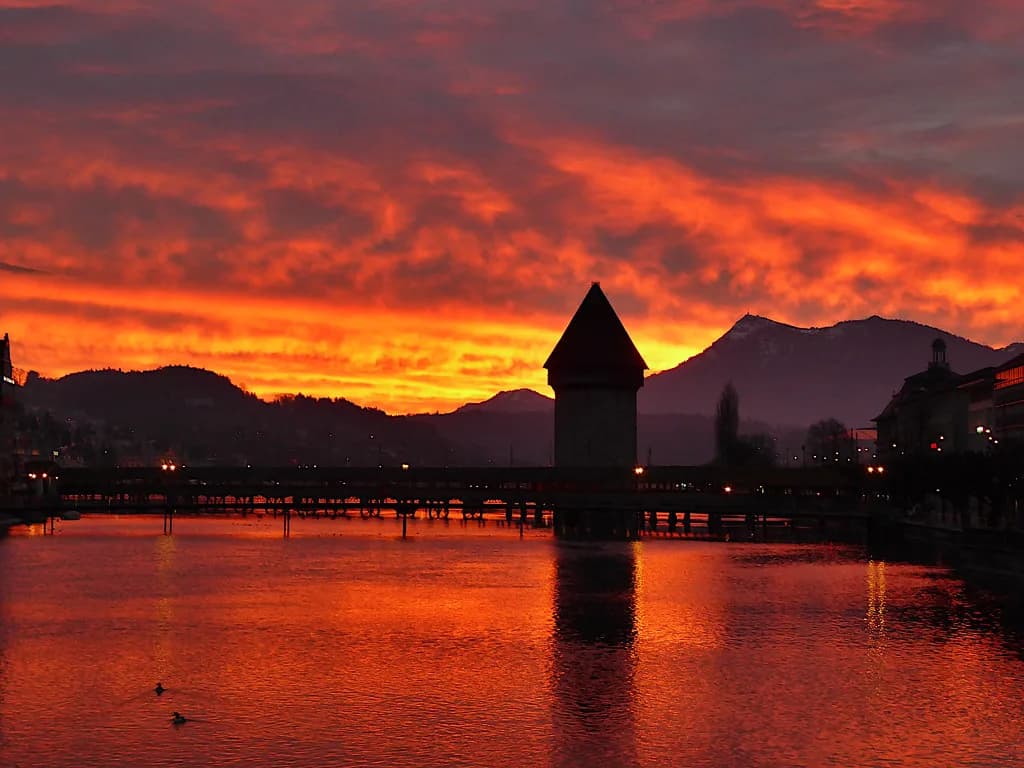
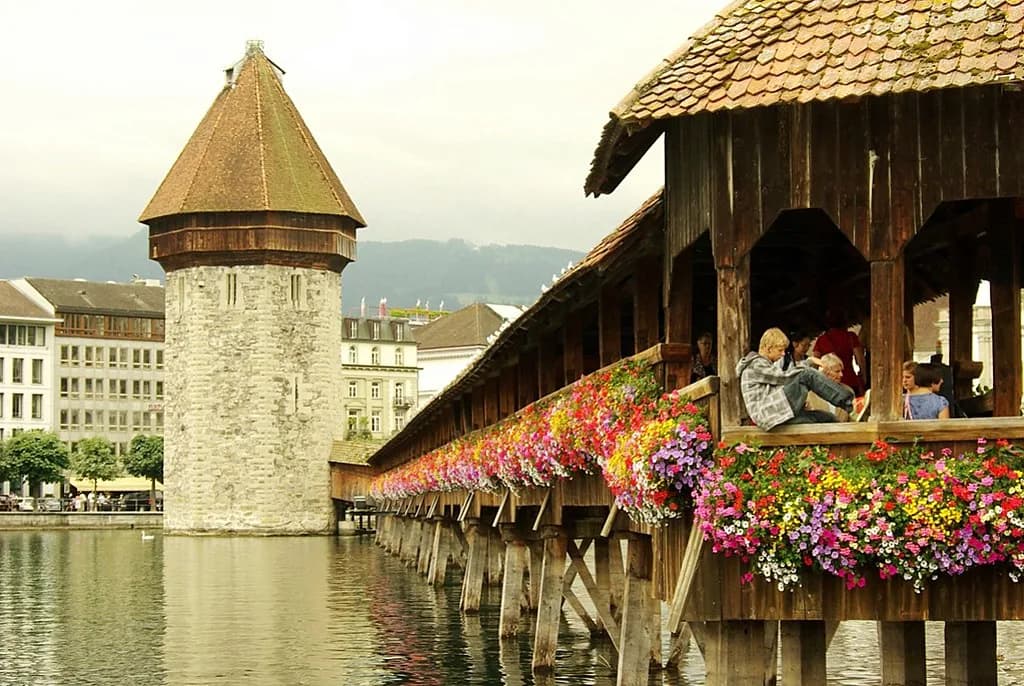
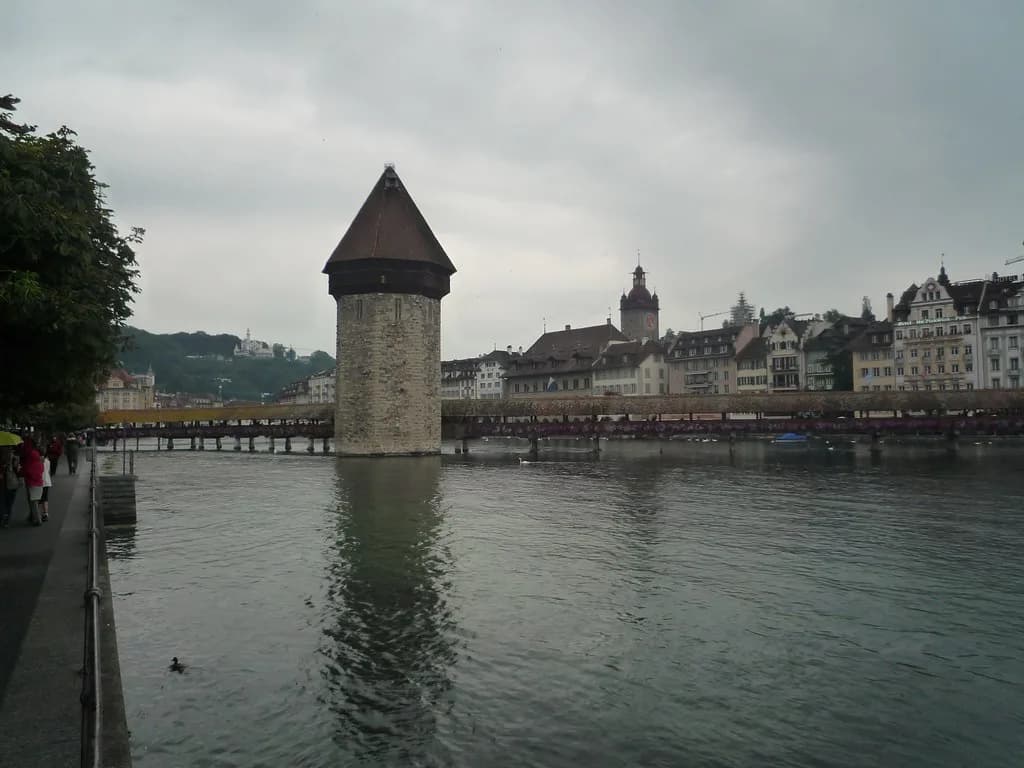
Chapel Bridge is the covered wooden footbridge that crosses the Reuss at an angle, originally built in 1333 to protect the city and often described as the oldest wooden bridge in Europe. Walk it once for the crossing and once for the paintings: the interior roof panels depict scenes from Lucerne's history, and most visitors never look up.
Cross slowly and step aside for people taking photos at the openings; the bridge is a working pedestrian route, not a museum corridor. The best light on the timbers comes when the sun is low, and the riverfront on either end rewards a few minutes of standing still.
Weinmarkt, Kornmarkt and the Rathaus
Weinmarkt is the square to linger in: broad, fountain-centered and ringed by painted facades that show off Lucerne's taste for frescoed exteriors. Kornmarkt, once the medieval market, is now the civic square, with the Rathaus anchoring one side.
Between the two squares, the lanes hold small shops and passages worth a detour if you like browsing. For a dedicated look at the shopping streets and arcades, the shopping in lucerne guide covers where the clusters sit.
The Old Town Boulevard Along the Reuss
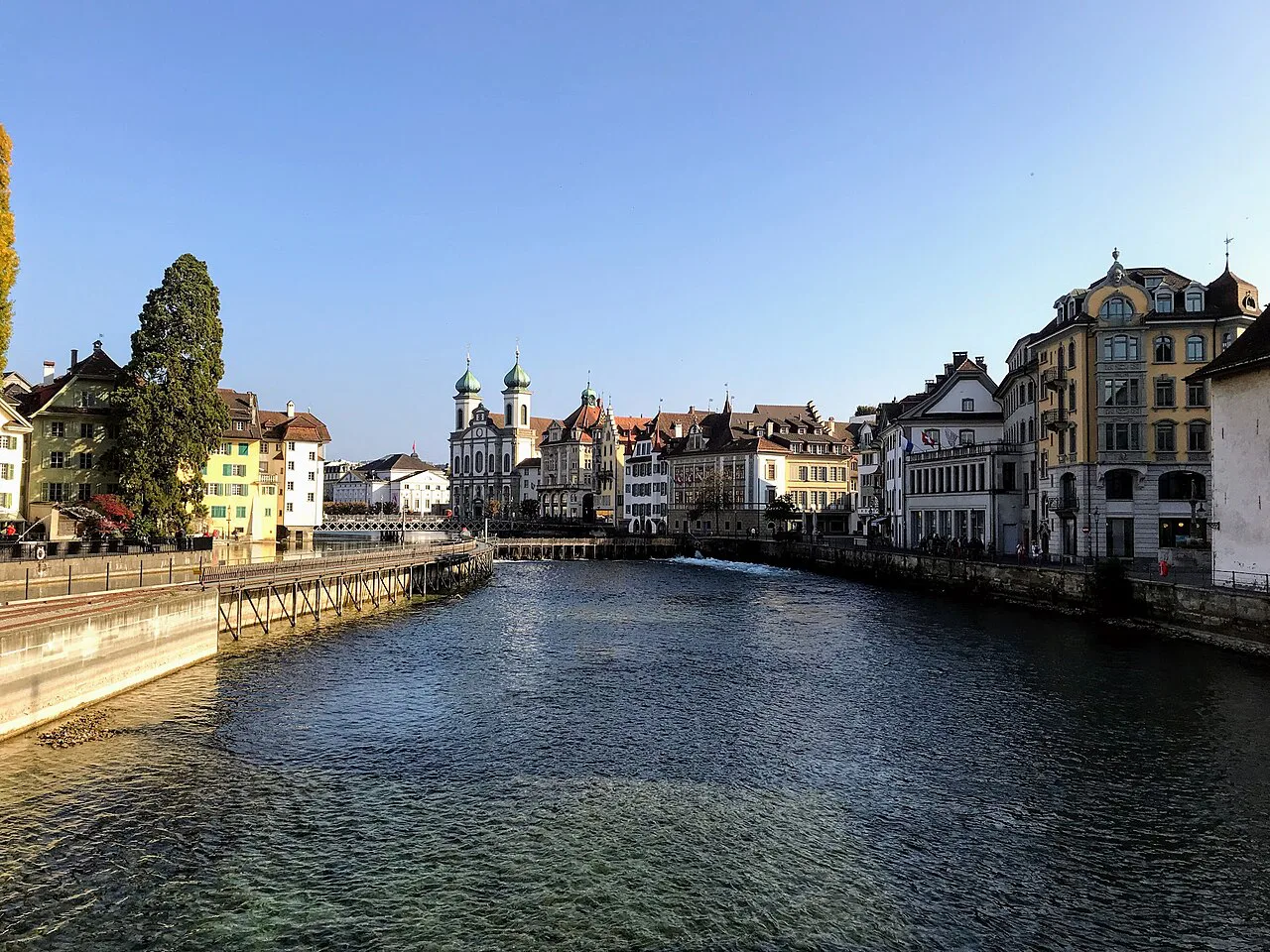
The Old Town boulevard runs between the Rathaus and Chapel Bridge along the Reuss, lined with restaurants whose outdoor seating faces the water. It is the natural place to pause mid-walk, and the view back toward the bridge is the one most photographs of Lucerne try to capture.
Seat yourself on the river side rather than the building side and you get the bridge, the water and the opposite bank in one frame. Prices on this stretch reflect the location, so treat it as a scenic stop rather than a budget meal.
The Lion Monument
The Lion Monument sits on the north side of the Reuss, a short walk from the old lanes, and commemorates the Swiss soldiers who died in the French Revolution. Mark Twain called the dying beast the most mournful and moving piece of stone in the world, a line that still sets expectations for the visit.
The monument is outdoors and free to approach, which makes it an easy addition rather than a ticketed stop. Come early or late in the day; the pool in front and the carved rock face are small, and a crowd of tour groups can swallow the atmosphere.
Bourbaki Panorama
The Bourbaki Panorama is a circular painting 112 meters long, created in 1881 by Edouard Castres and depicting the hardships of the Franco-Prussian War of 1870 to 1871. It sits near the Lion Monument, so the two combine naturally in one leg of the walk.
This is the one Old Town sight that rewards a proper time slot: the panorama is an indoor exhibit with its own admission, and the scale only works if you stand in the middle and turn. Allow an hour. For other collections in the city, the museums in lucerne guide covers the wider choice.
Church of St. Leodegar
Across the river, the Church of St. Leodegar is recognizable by its twin spires and holds an interior of ornate artwork, intricate carvings and a historic organ. It closes the loop of a good Old Town walk and gives you a reason to cross the Reuss rather than turning back at the bridge.
Step inside for the contrast between the bright exterior and the shadowed nave, then walk back along the water. The return leg gives you the classic view of the Old Town frontage from the opposite bank.
A Half-Day Walking Route
Start at Chapel Bridge, cross it looking up at the panels, and continue to the Church of St. Leodegar on the far bank. Recross the river, then work inland through Weinmarkt and Kornmarkt before following the boulevard back toward the bridge.
From Kornmarkt, walk northwest to the Lion Monument and, if you have the time, the Bourbaki Panorama. The whole circuit is short enough to repeat in the evening, when the lanes clear and the squares empty out.
How Long the Old Town Needs
Half a day covers the core: the bridge, both squares, the boulevard and the church. Add the Lion Monument and the Bourbaki Panorama and you are into most of a day, especially if you take the riverside seating seriously.
If you are planning across the city rather than just this district, the Lucerne Attractions: 8 Visitor Guides hub keeps the individual sights and quarters in one place. Pair the Old Town with a lakefront walk or a ride up for a view rather than cramming two districts into one morning.
When to Go
The lanes are pedestrian-only and the squares are open to the sky, so the Old Town has no indoor fallback on a wet day beyond the churches and the panorama. Summer brings market stalls and crowded riverside tables; spring and fall leave the same streets quieter and easier to photograph.
Mornings are the calmest window for the bridge and the squares before the walking groups arrive. If you want a view over the rooftops to finish, the best views in lucerne guide covers where to head.
Money and Common Mistakes
Walking the Old Town, the bridge, the squares and the boulevard costs nothing; the Lion Monument is outdoors as well. The paid stops are the indoor sights such as the Bourbaki Panorama, whose admission is posted at the entrance.
The errors to avoid are simple: crossing Chapel Bridge without looking up at the painted panels, skipping the north bank and the Lion Monument, and starting without a map. The tourism office near the south side of the bridge hands out maps and historical pamphlets if you want paper in hand.
Plan Your Visit
Lucerne Old Town works best as a half-day on foot, walked in one loop from Chapel Bridge through Weinmarkt and Kornmarkt to the Lion Monument and the church across the river. The core is free and largely car-free, and the indoor stops are the only places that ask for a ticket.
Start early, look up inside the bridge, and save the riverside seating for a pause rather than the plan. If you want the route spelled out turn by turn, the Lucerne Self-Guided Walking Tour pairs neatly with this district.
Explore more Lucerne guides
Frequently Asked Questions
Where do you start in Old Town Lucerne?
Most walks begin at Chapel Bridge, which puts you directly on the riverfront with the market squares a short walk inland. The tourism office near the south side of the bridge hands out maps and historical pamphlets if you want a starting point with paper in hand.
Is Lucerne Old Town walkable?
Yes. The district is a largely car-free grid on the north bank of the Reuss, and several streets are open only to pedestrians. The bridge, both market squares and the riverside boulevard sit within a short walk of each other.
What is a must-see in Lucerne Old Town?
Chapel Bridge, Weinmarkt and Kornmarkt with the Rathaus, and the riverside boulevard along the Reuss. Just beyond the lanes, the Lion Monument and the Bourbaki Panorama fill out a fuller half day.
How long does it take to walk the Old Town?
Half a day covers the core: the bridge, both squares and the boulevard. Add the Lion Monument and the Bourbaki Panorama and you are close to a full day if you stop along the river as well.
Is Chapel Bridge in the Old Town?
Chapel Bridge crosses the Reuss diagonally from the Old Town side, so it functions as the district's main gateway rather than a sight inside it. The interior roof panels carry paintings of Lucerne's history, so look up during the crossing.
Where is the Lion Monument in relation to the Old Town?
The Lion Monument sits on the north side of the Reuss, a short walk from the old lanes and a natural extension of the loop through Kornmarkt. It is outdoors, so it adds little time to the walk.
Sources
Notes for your Swiss city break
Optional updates to our Swiss city guides.
You might also like
Continue reading
More guides you'll find useful