Most Beautiful Towns in Switzerland: Where to Go
Ten beautiful Swiss towns for a short break, from car-free mountain villages to lakeside old towns, with what to see and how to reach each one.
On this page
The prettiest Swiss towns split cleanly into three types, and knowing which type you want settles most of the planning. Lakeside old towns such as Lucerne and Thun give you bridges, water and a walkable center; car-free mountain villages such as Wengen and Stoos trade street life for views; Appenzell and Kandersteg work as launch points for a cable car and a short walk. Pick by trip style first, then by rail connections.
None of these places needs more than a day of sightseeing, which is why the sensible move is to use two or three as bases rather than ticking off ten. A town that looks like a photo stop on a screen usually rewards an overnight stay, and a village that looks like a base often works perfectly as a half-day add-on. The fit guide and money sections below show how lift prices and pass coverage change those choices on a short break.
How to Choose Between Switzerland's Prettiest Towns
Lakeside old towns are the easiest wins for a short break: you arrive by train, walk out of the station and you are already in the postcard. Lucerne and Thun both fit that pattern, with waterfront promenades, flower-lined streets and compact centers you can cover on foot in a few hours. They also carry the highest price tags for food and lodging, so treat them as bases you pay for and enjoy. Before you set dates, weigh the season against the crowds with our guide to the best time to visit switzerland.
Where is the prettiest town in Switzerland? There is no single answer, but the prettiest lakeside town in most travelers' minds is Lucerne, with its Kapellbrücke, flower-draped footbridges and walkable waterfront. The prettiest car-free mountain village is usually named as Wengen, sitting above the Lauterbrunnen Valley and reached only by rail.
Which Swiss towns are car-free? Wengen and Stoos are the car-free villages in this list. Wengen has no road access at all and is reached by the Wengernalp Railway from Lauterbrunnen, while Stoos is reached by the world's steepest funicular from Schwyz.
Is Lucerne or Thun better for a short break? Lucerne is better if you want the headline sights, the walkable old town and easy access to mountain excursions. Thun is better if you want flowers, the turquoise Aare and a gentler pace as an add-on to a Bernese Oberland base.
Car-free mountain villages are the opposite trade: harder to reach, quieter once you are there, and dependent on one rail link or cable car. Wengen has no road access and sits above the Lauterbrunnen Valley, reached by the Wengernalp Railway from Lauterbrunnen, and that single line is what keeps the village calm. Stoos is likewise car-free and sits above Schwyz at the bottom of the world's steepest funicular, which is part of the appeal.
Village-plus-lift pairings such as Appenzell with the Ebenalp cable car, or Kandersteg with the Oeschinensee cable car, give you a real mountain day without committing to an overnight at altitude. They suit travelers who want one big view and a short walk rather than a full hiking day. A short list of names circulating online, including villages such as Grimentz and Avenches, is worth treating as a starting point rather than a verdict, since charm depends on what you plan to do there.
Lucerne: Kapellbrücke, Waterfront and Footbridges
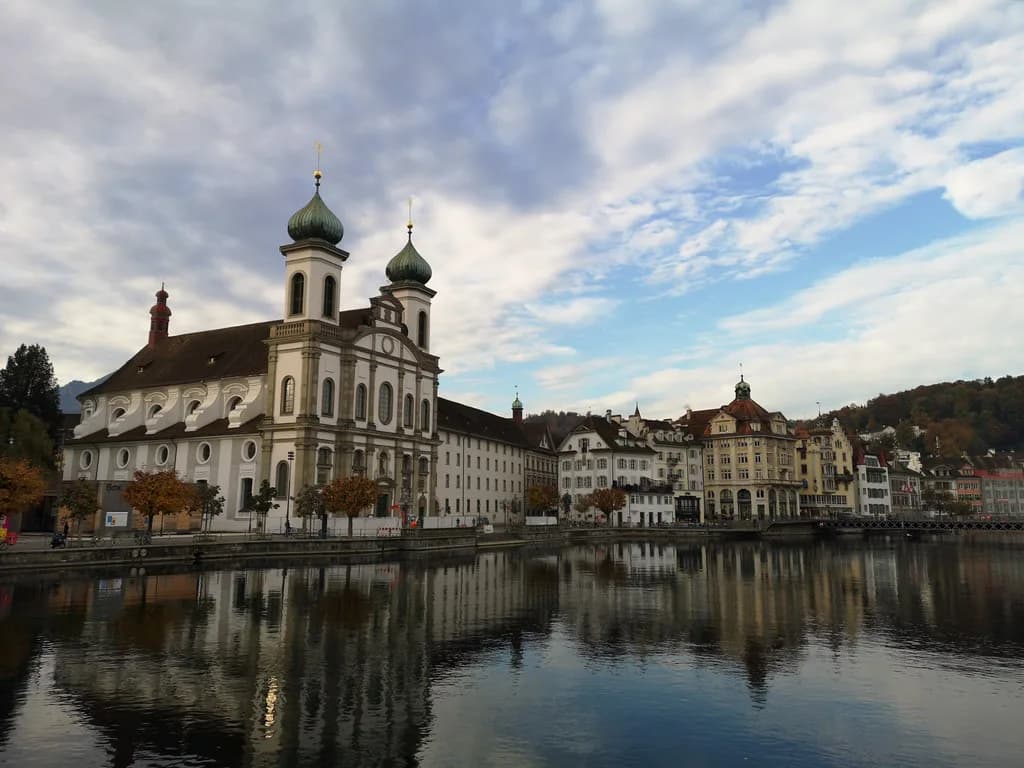
Lucerne is the most celebrated of the lakeside old towns, and its core is built around water: the Kapellbrücke, the flower-draped footbridges, the riverfront streets and the lake itself. A half-day covers the old town and the bridges comfortably; a full day leaves room for a boat on the lake or an excursion up a nearby mountain. Travelers consistently describe it as one of Switzerland's most striking cities and one of its most expensive, so plan your food and lodging spend accordingly. For the full walking route through the bridges and riverfront streets, see Lucerne Old Town: What to See and How to Walk It.
The best photos come from the footbridges along the water, where the flowers, the turquoise river and the painted buildings line up in a single frame. Walk the waterfront early if you want the bridges relatively clear, then loop back through the old town. Budget the morning for the center and keep the afternoon free if you are adding a mountain.
Treat Lucerne as a one-night base at most if your trip is short, and pair it with a mountain village rather than another city. The cost of a night here buys you the view and the walkability, not a bargain. If you want a wider spread of Swiss cities with different price points, compare the best cities before you commit.
Thun: Flowers, the Aare and an Easy Add-On
Thun works best as an easy add-on to a Bernese Oberland base rather than a destination in its own right. The old-town streets are lined with flowers, the turquoise Aare runs through the center, and the waterfront invites a slow wander with cafes along the way. Travelers who stop here after a mountain day tend to describe it as a gentle finish, not a headline sight. If flower-lined old-town streets are what you are after, the Bern Old Town: What to See on a UNESCO Altstadt Walk covers a similar walk in a bigger city.
Give Thun three to four hours: the old town, the river and a coffee stop cover it comfortably, and you can be back at your base by evening. Use the flowers as foreground for photos and follow the riverbank rather than a fixed route. It is not the place to build a whole day around unless you plan to linger by the lake.
Wengen: Car-Free Above the Lauterbrunnen Valley
Wengen is the classic Swiss postcard village: wooden chalets, flower balconies, green slopes and a valley dropping away below. There is no road access, so you arrive on the Wengernalp Railway from Lauterbrunnen, which runs through some of the best scenery on any Swiss rail line. The village sits above 1,300 meters, so pack a layer even when the valley floor is warm.
The same traveler who detailed the valley towns put the Lauterbrunnen-to-Wengen fare at about CHF 7 on a summer trip and reported full coverage with a Swiss Travel Pass. Use that as an indication only and confirm the current fare when you book. The practical point is that the link is short, frequent and cheap enough that a day trip is realistic.
Treat Wengen as either a quiet base for two or three nights or a relaxed day trip from Lauterbrunnen, not both. Staying over buys you empty morning streets and valley views from your window; day-tripping saves money but puts you on the train with everyone else. If you want a longer multi-town route, build those nights in deliberately.
Iseltwald on Lake Brienz: Quiet Village, Busy Dock
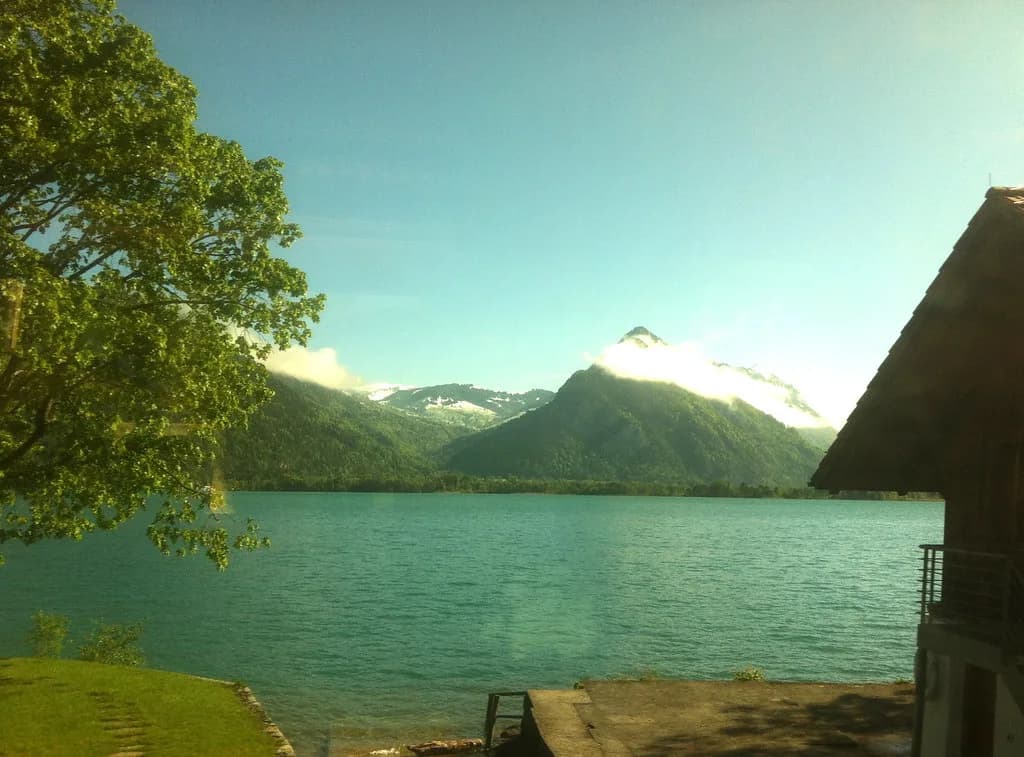
Iseltwald is a small village on Lake Brienz with a genuinely quiet feel and a lake color that justifies the detour. It differs from Interlaken in exactly the way you would hope: fewer tour groups, no souvenir crush and a shoreline you can walk slowly. Travelers who stay several nights here tend to use it as a calm base for the region rather than a sight to tick off.
One caveat: the dock made famous by a Korean drama draws a queue, and access to it carries a small charge. Ferries also call at the village, which makes a boat between lakeside stops a practical alternative to driving. Plan your photo stop around the ferry schedule and you avoid both the queue and the parking hunt.
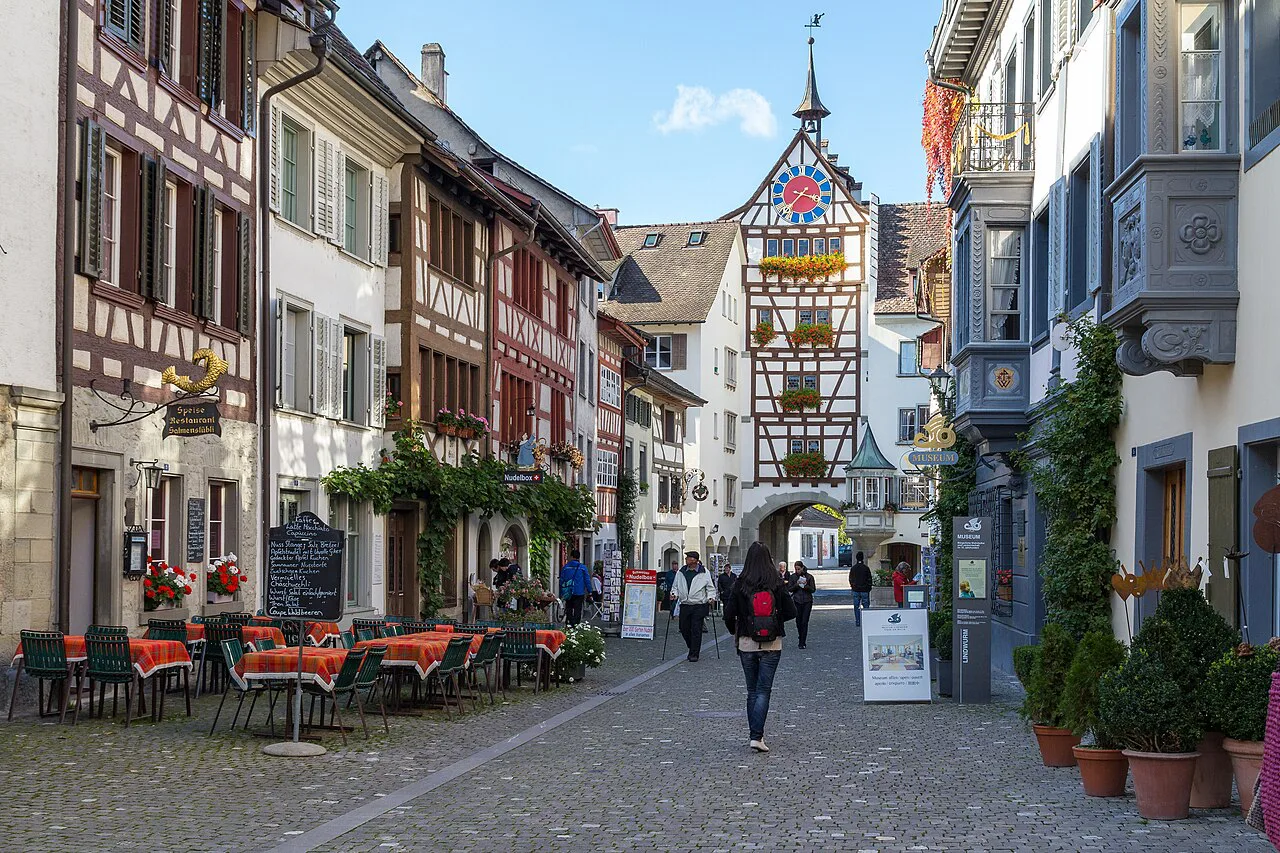
Grindelwald: Chalets, Balconies and Jungfrau Views
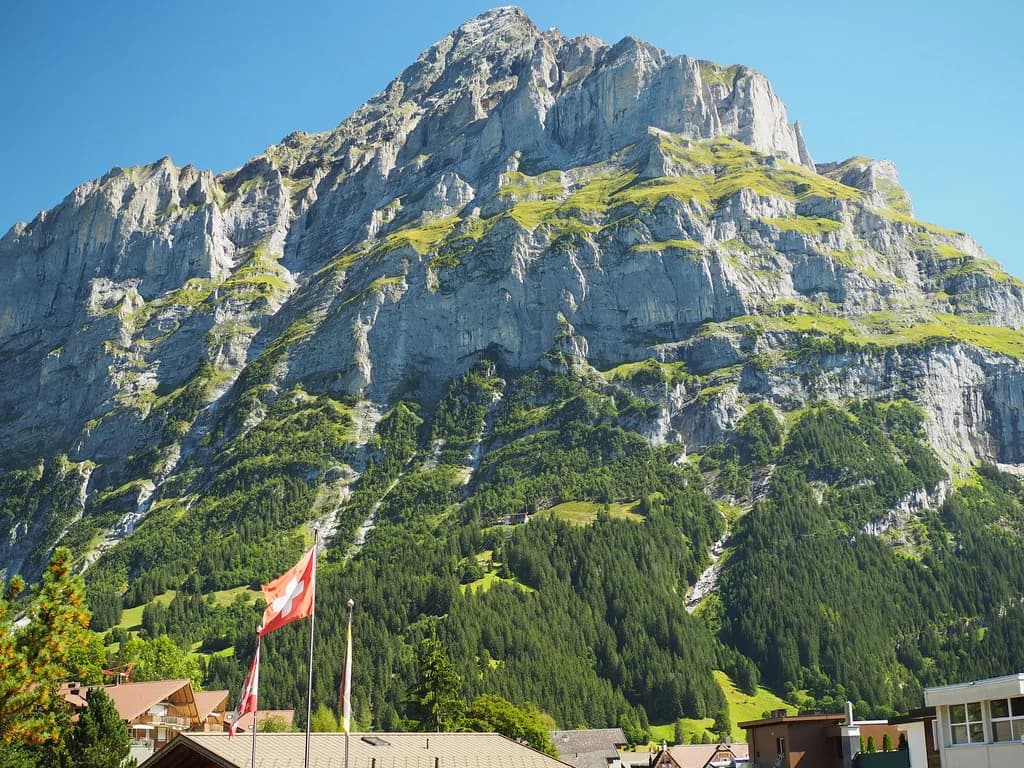
Grindelwald sits under the Jungfrau with chalets, flower-covered balconies and mountain views framed by every window. It is one of the busiest villages in the Bernese Oberland, and travelers who visit in high season routinely describe crowds along the main street. That does not make it skippable; it means you choose your hours and your base carefully.
The village is also the launch point for excursions such as the gondola to Grindelwald-First, from where a short walk reaches Bachalpsee. The same traveler put that gondola at roughly CHF 76 return in summer, with Swiss Travel Pass holders paying half, so the mountain day is a real line in your budget. Confirm the fare and lift operating times before you build a day around it.
Use Grindelwald as a base only if you want the amenities and accept the company, or as a stop if you prefer quieter nights elsewhere in the valley. Either way, mornings and late afternoons are the calm windows. If your trip is built on rail hops like this one, a five day itinerary is the natural frame.
Appenzell and the Ebenalp Cable Car
Appenzell gives you a compact, gently traditional village center, and fifteen minutes away the Ebenalp cable car lifts you to Berggasthaus Äscher, a guesthouse wedged under the cliff, and the Wildkirchli cave walk. The cable car was reported at CHF 24 one way and CHF 36 return, plus a small parking fee at the base station. This is the classic half-day from the village.
From the top station the walk to Äscher takes roughly 15 to 20 minutes and is signposted. Go early or late if you want the cliff face without a crowd in the frame, and check the cable car's operating season on its own site. Pushing on to Schäfler Ridge adds real exposure and should only be attempted by confident walkers.
Stoos and Fronalpstock: 360 Degrees Over Lake Lucerne
Stoos is a car-free village above Schwyz reached by the world's steepest funicular, and from the village a chairlift climbs to Fronalpstock for a full-circle view over Lake Lucerne and the surrounding Alps. The combination of funicular and chairlift makes the day logistically simple: arrive at Schwyz, ride up, walk a few minutes, ride again. A restaurant, a small playground and a viewing platform sit at the summit. If you want to weigh this view against the country's other great rides, our guide to Switzerland scenic trains helps you choose.
Travelers report roughly CHF 56 return for the Fronalpstock trip, and Swiss Travel Pass holders reportedly ride free on this one. Sunset is the strongest time to be up there, but the last descent is what governs your plan, so check the lift timetable before you stay for the light. With clear weather the view is worth the outlay; with cloud it is not, so keep the plan flexible.
Stoos works as an overnight for anyone who wants the ridge walk at dawn, or as a day trip from Lucerne or Zurich. Pair it with a lakeside old town rather than another mountain to keep the budget in check. It also slots neatly into a longer rail-based route such as a 10 day switzerland itinerary if you want to see how it fits.
Kandersteg and the Oeschinensee Cable Car
Kandersteg is a small village that functions as a gateway: the Oeschinensee cable car climbs from here to the trail above one of Switzerland's most photographed mountain lakes. The same traveler reported roughly CHF 40 return for the lift, with Swiss Travel Pass holders receiving close to half off, plus a small parking fee at the base. Confirm the current ticket price before you travel.
Take the first cable car of the day if you want fewer people on the trail, and note that the path above the lake is exposed to sun for most of its length. Come prepared with sun protection and water. The village itself is modest, so treat Kandersteg as the access point rather than the attraction.
Which Town Fits Which Trip
For a first short break with a mix of city and mountains, use Lucerne as your lakeside base and add one car-free village such as Wengen or Stoos. If you want water and flowers with less crowding, Thun and Iseltwald are the gentler picks. Build the days around rail connections rather than road distances, since several of these villages have no road access.
For a mountain-heavy trip, pair Grindelwald with Kandersteg and keep Appenzell for a separate eastern leg. Travelers who want one big view and a short walk should prioritize Appenzell and Kandersteg over Grindelwald, which needs more time to justify the crowds. Cold months change the picture: check what operates before booking around a lift.
For a slower trip of a week or more, spread two nights across three towns rather than one night across six. Overlanding by train makes the connections short and scenic, and the extra night buys you the quiet hours that justify a place like Wengen or Iseltwald. The five-day version is the better fit for a tighter schedule.
Money and Logistics for Swiss Towns and Lifts
Mountain lifts are the single biggest variable in a town-hopping budget, and pass coverage is uneven. The same traveler reports free rides on Rigi, Stanserhorn and Stoos with the Swiss Travel Pass, half price on most others, and close to half off at Oeschinensee. Treat those as reported examples rather than a guarantee for every lift on your route.
If your plan includes several mountains, do the arithmetic before buying a pass: a CHF 76 return gondola covered at half price saves more than a CHF 24 cable car with no discount. A Half-Fare card changes the maths again on lifts that only offer 50 percent off. Read the pass conditions against your actual list of lifts rather than buying on principle.
Two logistics rules matter more than any discount. First, mountain villages without road access mean your car stays behind, so plan around the rail or cable link. Second, weather governs whether a lift ticket is money well spent, so keep the flexible days for the mountains.
What to Skip on a Short Break
The costliest mistake on a short break is stacking too many costly excursions into too few days. A trip that adds three mountain lifts, a lake cruise and two old towns in four days leaves you paying premium prices for rushed mornings. Cut one mountain and give the town you have chosen a full afternoon instead.
Skip anything that only works in perfect weather unless you can move it to another day in your plan. Cloudy summits usually mean paying the same ticket for half the view, so watch conditions and swap days. A lake town on a dull morning is a better use of time than a mountain in fog.
Plan Your Visit
Start with the type of place you want: a lakeside old town for walkability, a car-free village for views and quiet, or a village-plus-lift pairing for one big mountain day. Then check the rail link, the lift report and the current fare for your dates before you commit. None of these towns needs more than a day, which is exactly why you should pick a few rather than all ten.
If you have only a few days, a single base plus two nearby towns beats a long list every time. For a longer trip, add a mountain or two and give yourself the option to drop one if the weather turns. Compare lift seasons and fares with each operator or railway before you book.
Explore more Switzerland guides
Frequently Asked Questions
Where is the prettiest town in Switzerland?
There is no single answer, but the prettiest lakeside town in most travelers' minds is Lucerne, with its Kapellbrücke, flower-draped footbridges and walkable waterfront. The prettiest car-free mountain village is usually named as Wengen, sitting above the Lauterbrunnen Valley and reached only by rail. If you want a village-and-mountain half-day, Appenzell with the Ebenalp cable car is the classic pairing.
Which Swiss towns are car-free?
Wengen and Stoos are the car-free villages in this list. Wengen has no road access at all and is reached by the Wengernalp Railway from Lauterbrunnen, while Stoos is reached by the world's steepest funicular from Schwyz. Both have quiet streets and valley views, but you cannot arrive by car, so plan your rail or funicular connections.
Is Lucerne or Thun better for a short break?
Lucerne is better if you want the headline sights, the walkable old town and easy access to mountain excursions. Thun is better if you want flowers, the turquoise Aare and a gentler pace as an add-on to a Bernese Oberland base. Lucerne is also the more expensive of the two, so budget accordingly.
How many days do I need in these towns?
Each of the towns listed takes between a half-day and a full day of sightseeing. Use two or three of them as bases rather than trying to cover all ten. Two nights in a mountain village and two in a lakeside town is a sensible split for a short break, and a longer trip should simply replace one base with another rather than adding more stops.
Should I buy a Swiss Travel Pass for this kind of trip?
Only if you are using mostly trains, buses and boats and plan several mountain lifts. Travelers report free travel on some lifts, such as Rigi, Stanserhorn and Stoos, with half price on most others. Compare the pass price against your actual lift list rather than buying on principle, and check the current conditions before booking.
How do I reach Wengen without a car?
Take the train to Lauterbrunnen and change onto the Wengernalp Railway for the short climb to Wengen. There is no road access to the village, so arrival is by rail only. One traveler reported a fare of about CHF 7 and full Swiss Travel Pass coverage; confirm the current fare when you book.
Sources
Notes for your Swiss city break
Optional updates to our Swiss city guides.
You might also like
Continue reading
More guides you'll find useful