How Many Days in Bern? What One, Two or Three Days Cover
Bern's compact center fits into a day, but museums, the Rosengarten and the Gurten reward a second. Here is what one, two and three days in Bern cover.
On this page
One full day in Bern covers the Old Town on foot: the Zytglogge clock tower, Kramgasse, the Berner Münster and the Münsterplattform terrace above the Aare. Two days add a museum in the Kirchenfeld quarter and the Gurten viewpoint above the city. Three days are for travelers who want a slower pace, a market morning and time on the river loop without rushing.
How many days do you need in Bern?
Plan one full day for the compact center and two days if you want a museum and a hilltop view. Bern's sights sit inside a tight loop of the Aare, so the walking between them is short and the question is never distance; it is how much you want to stop. A half day suits travelers passing through who mainly want the Zytglogge and Kramgasse, while three days suit anyone who wants the Gurten, a museum and an unhurried look at the arcaded streets.
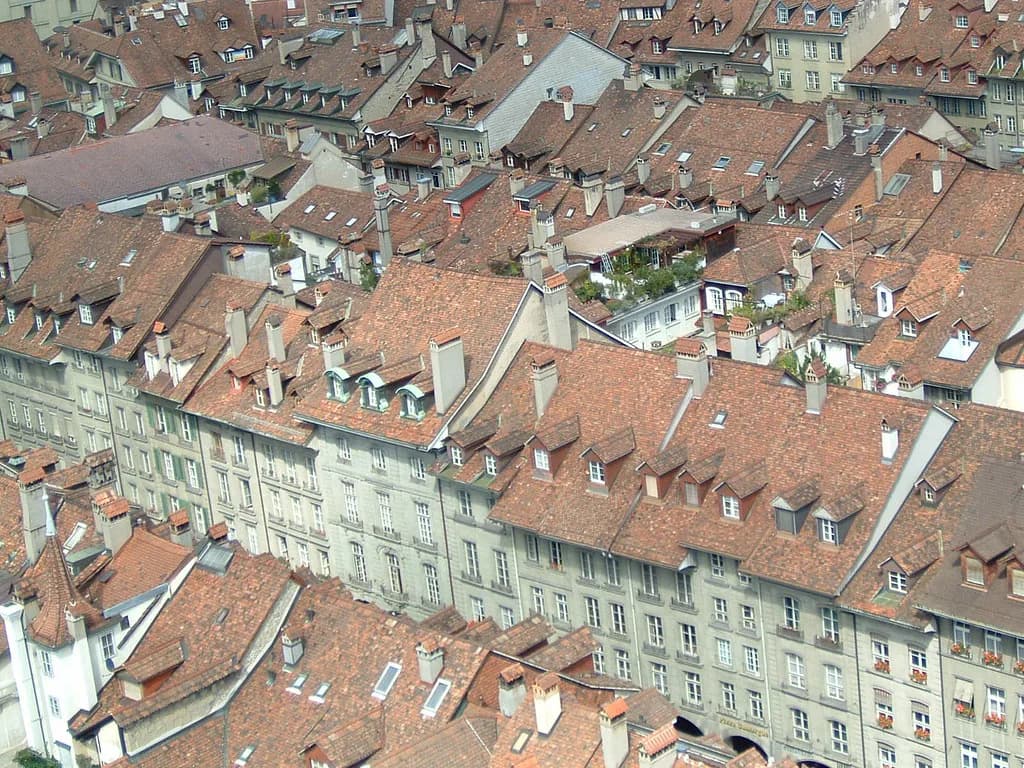
Bern suits a short break better than most Swiss cities because the center is walkable and the main sights cluster. The Old Town is UNESCO-listed, and several of the named stops — the Zytglogge, the Münster, the Parliament and the Town Hall — sit within it. If you are still deciding whether the city earns a stop at all, read is bern worth visiting.
What the Old Town covers on foot
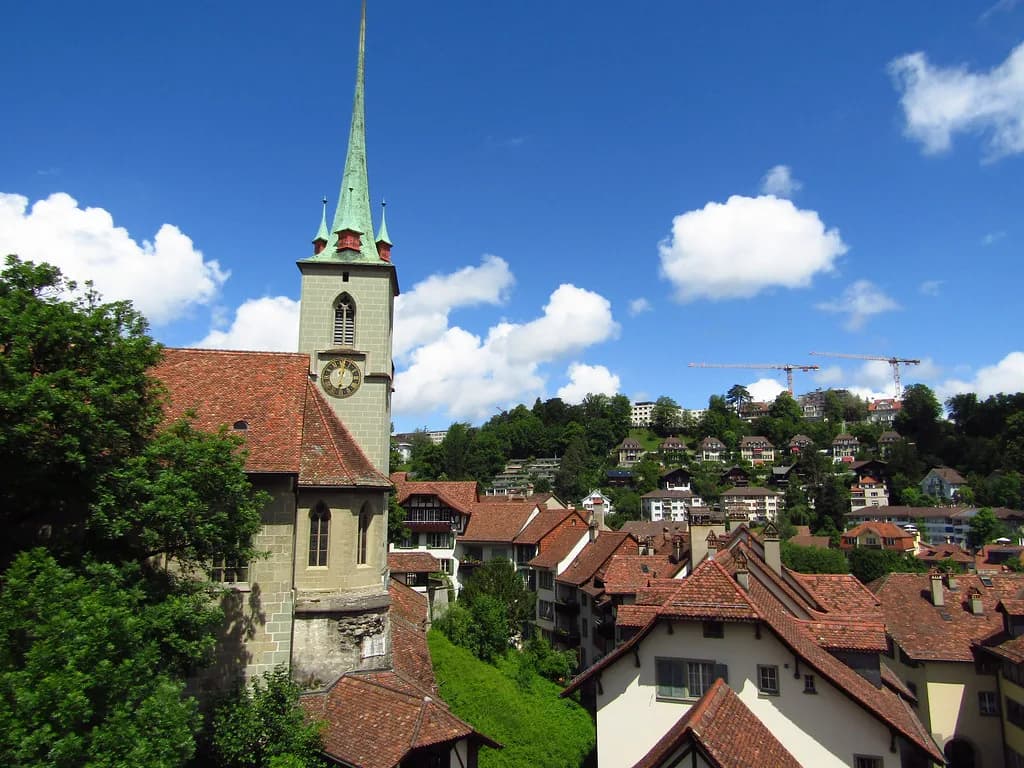
The Old Town is a single walkable spine. Zytglogge marks the western gate area, Kramgasse runs east from it, and the Berner Münster stands at the far end, with the Münsterplattform terrace behind it looking over the Aare. The arcades that line Kramgasse and the neighboring streets let you walk most of the way under cover, which matters in rain. The Zytglogge itself was a guard tower, prison and clock tower over its long history, and its medieval figures appear with the hour.
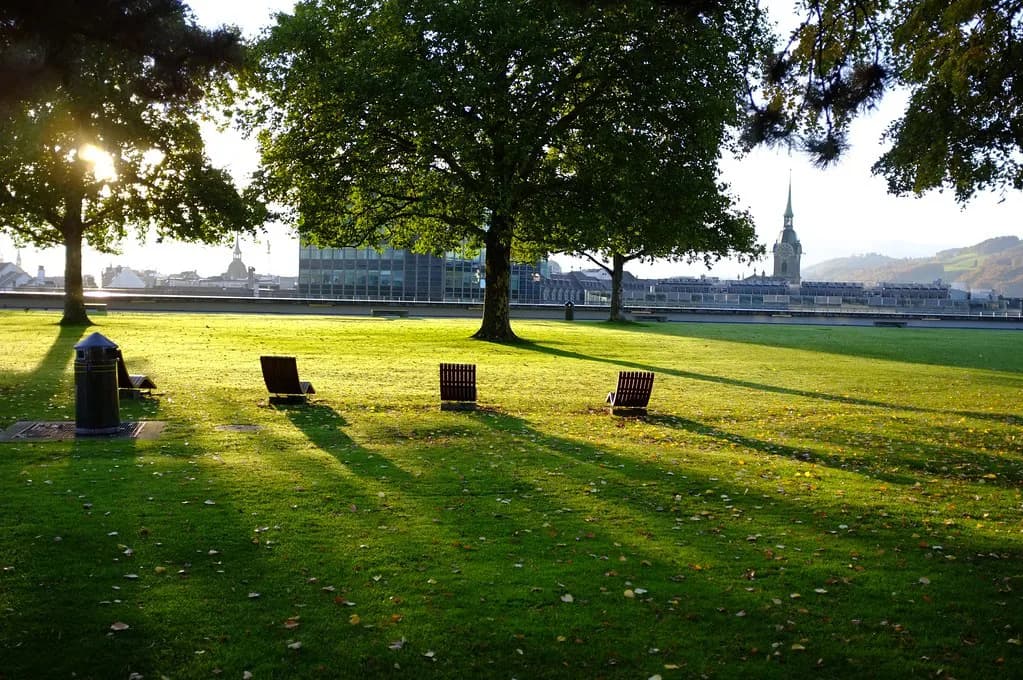
Walking the core takes little time; the stops are what fill a day. The Münsterplattform is free and open around the clock, and it gives you the best alpine and river view inside the city. The riverside gardens are a good picnic spot on a sunny day, and trees shade the terrace in summer. If you want the plainest plan for a short visit, the one day in bern walk covers these sights in order.
Where Bern sits: the UNESCO Old Town and the Aare loop
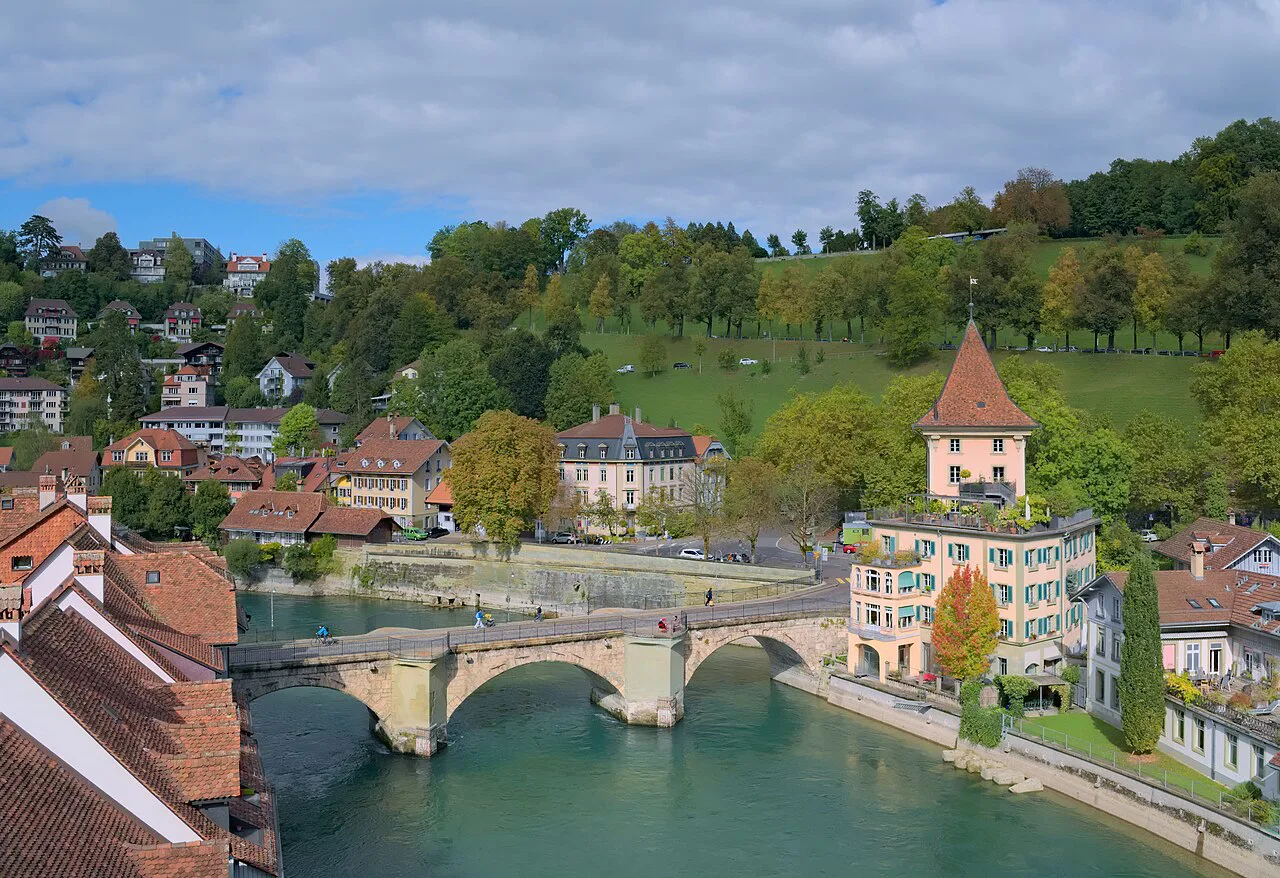
Bern's center sits on a peninsula where the Aare bends around the old walls, and that loop is why the city feels small underfoot. The Aare River view opens up from the Nydeggbrücke and from the Bundesterrasse behind the Parliament building, where the promenade looks toward the Alps on clear days. The river runs close to the major sights, so a loop from the Münster down to the water and back adds a short walk rather than a separate trip.
Across the river, Stadtteil 4 — Kirchenfeld–Schosshalde — holds the museums and schools and is described by the city as one of its most popular residential areas, home to roughly 18 percent of the population. That puts the Kirchenfeld museums a short walk over the bridge from the Old Town, which is why a museum morning fits neatly into a second day.
Day 1: Zytglogge, the Münster tower, the Münsterplattform and the Bundesterrasse
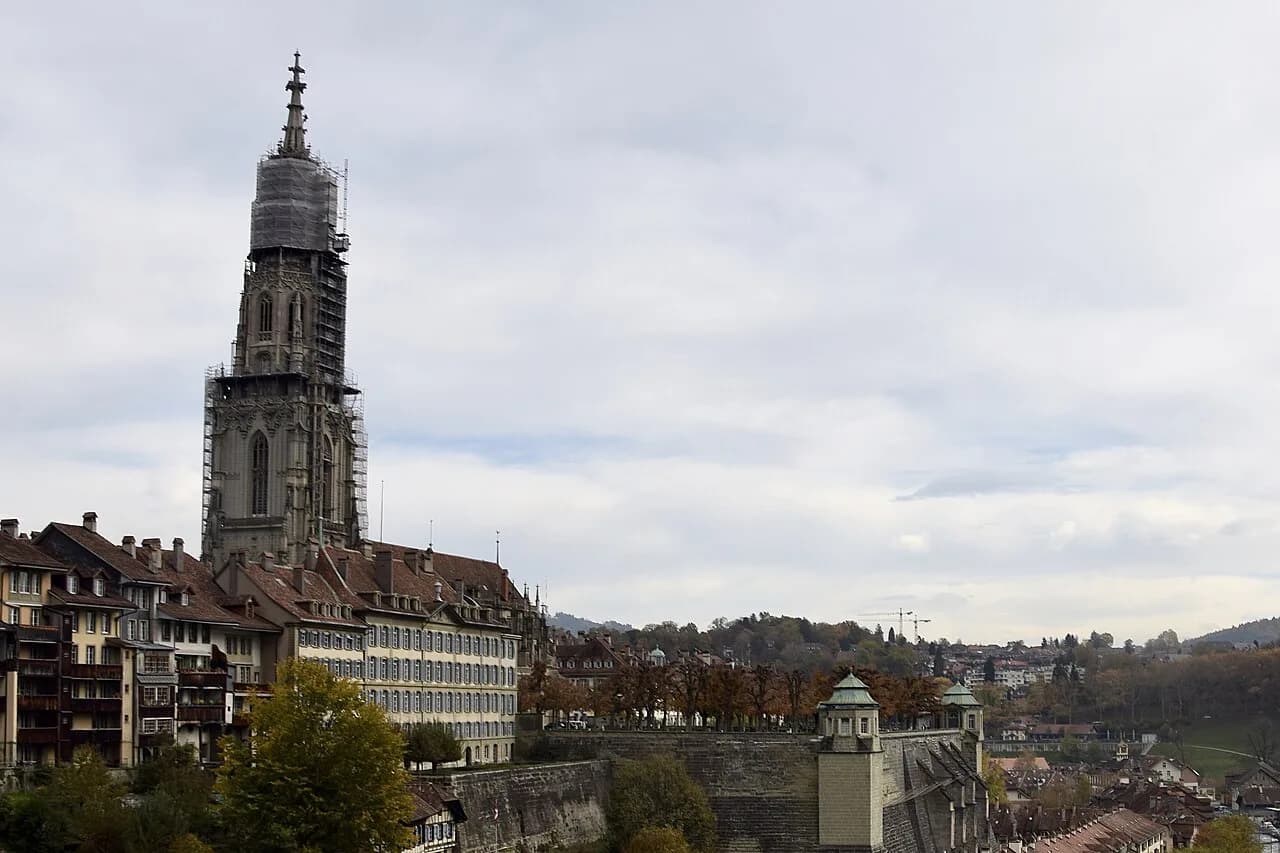
Start at the Zytglogge and walk Kramgasse to the Berner Münster. The cathedral is free to enter, and you can climb the tower — 344 stairs — for a modest entrance fee; the tower climb is not for anyone uneasy with tight stairs, and single climbers are asked to pair up for safety. After the tower, walk behind the Münster to the Münsterplattform for the river view.
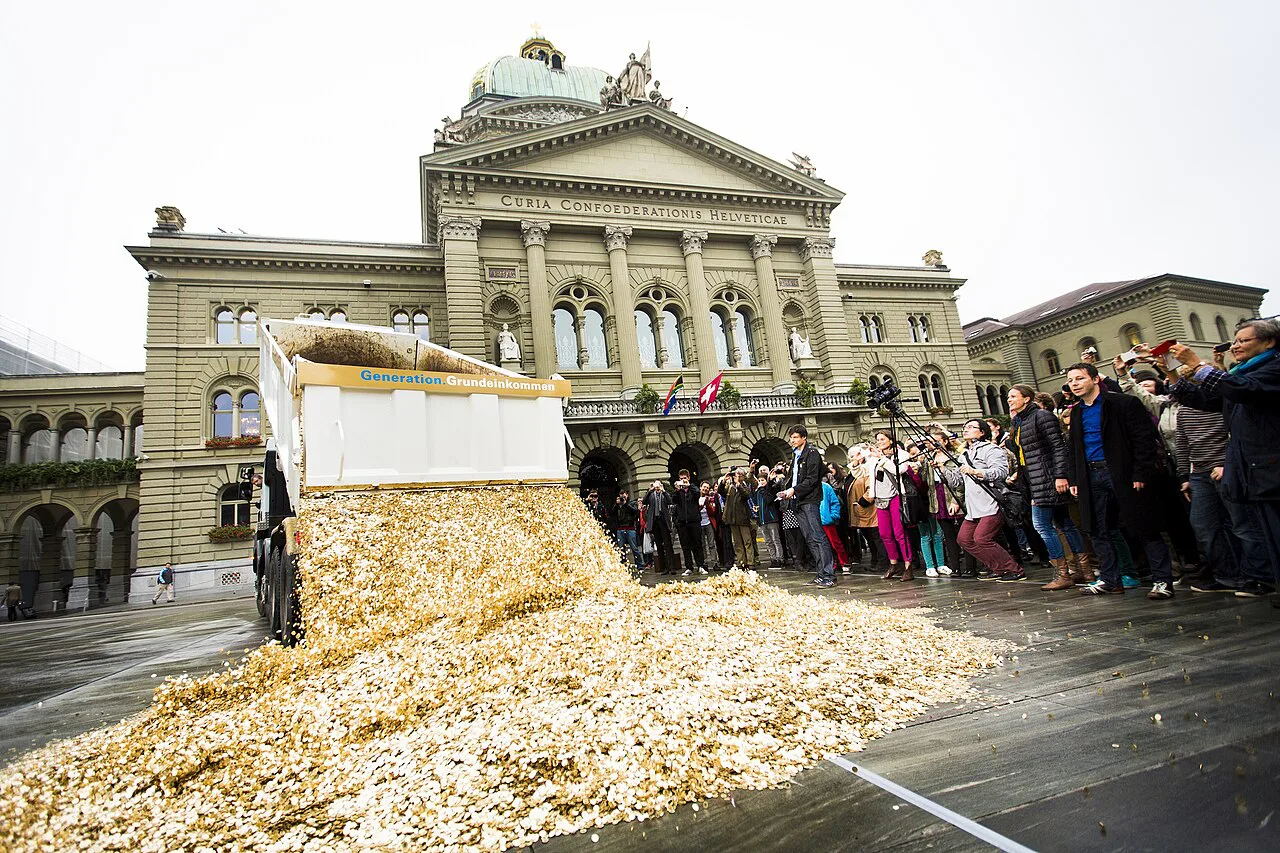
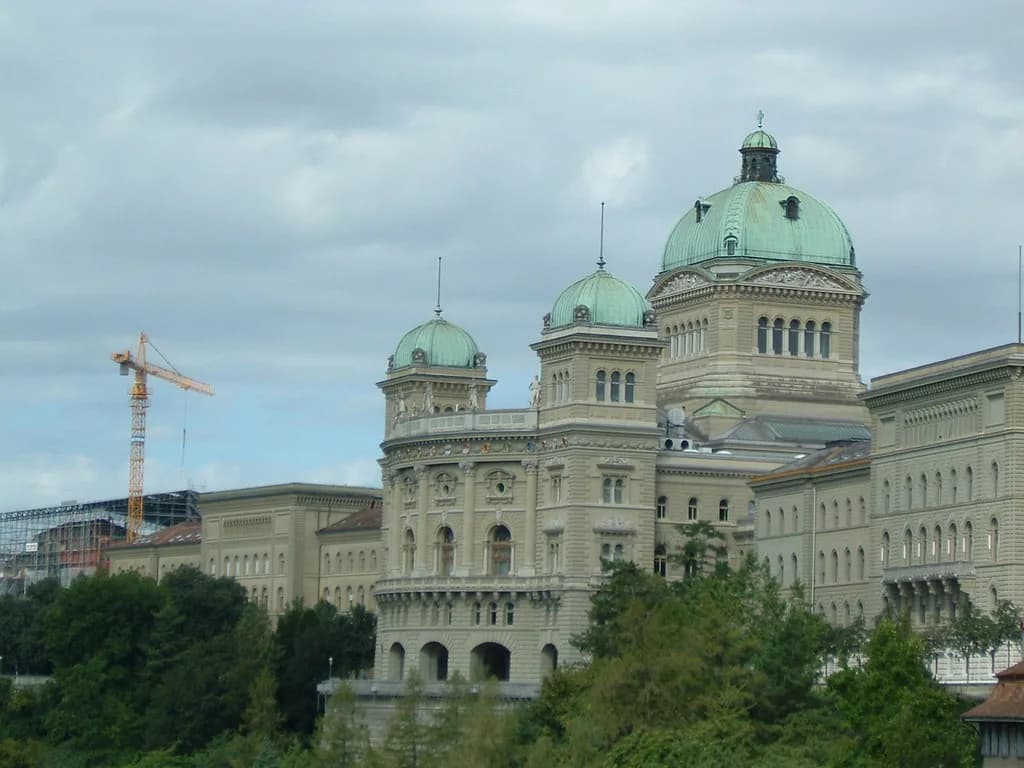
From the Münster, head back through the Old Town to the Parliament building on Bundesplatz. The Bundeshaus, built from 1894 to 1902 in neo-Renaissance style with a dome of about 60 meters, is the seat of the Swiss parliament and government. The Bundesterrasse promenade behind it gives a wide view toward the alpine range on a clear day.
A Parliament tour is the day's main decision point. The guided tour takes 45–60 minutes through the domed hall, the National Council and Council of States chambers, and the Wandelhalle. Tours do not run while the councils are working, and the visitor gallery is the option during sessions. The tour is free, but it drops out of a short trip whenever the dates fold, so check the Parliament's published schedule before you build the day around it.
Day 2: the museums and the Kirchenfeld–Schosshalde district
Day 2 is for the museums across the Nydeggbrücke in Kirchenfeld. The Berne Historical Museum sits at Helvetiaplatz and anchors the Museumsquartier, with the Einsteinhaus on Kramgasse in the Old Town as a lighter alternative for anyone who prefers to stay in the center. Pick one museum rather than two; each takes a half day once you allow for the walk and a coffee.
The Historical Museum has a major renovation ahead. The city of Bern has set out a planned total renewal with a construction credit of CHF 120 million, and the city's contribution goes to a vote expected in June 2026. Under the plan, the old building would close from mid-2027 to mid-2032, with the large hall in the Kubus continuing to host an exhibition on Bern's history and partnerships with museums in the canton during the building work.
That timeline changes how Day 2 is best spent. If you travel after the old building closes, plan a museum elsewhere in the canton or use the day for the Gurten and the river walk instead. Before booking, confirm the museum's opening days and any exhibition moves on the Bernisches Historisches Museum's own site rather than assuming the collections are on show at Helvetiaplatz.
Day 2 alternative: Rosengarten, BärenPark and the Nydeggbrücke
If museums do not appeal, spend Day 2 on the hills above the Old Town. The Rosengarten is a park with roses and irises and a wide view back over the rooftops, and it is free to enter. Bus line 10 runs from the center toward the park, and getting off at the upper entrance avoids most of the uphill walk.
From the Rosengarten it takes 5–10 minutes on foot to reach BärenPark, where the city's bears live in an enclosure above the Aare. The park is free and open at all hours, though the bears hibernate for a couple of months from around October or November, so a winter visitor may see empty ground. Cross the Nydeggbrücke on the way back for the river view and finish with the Münsterplattform.
Day 3: the Gurten, a longer river walk, or a slower museum morning
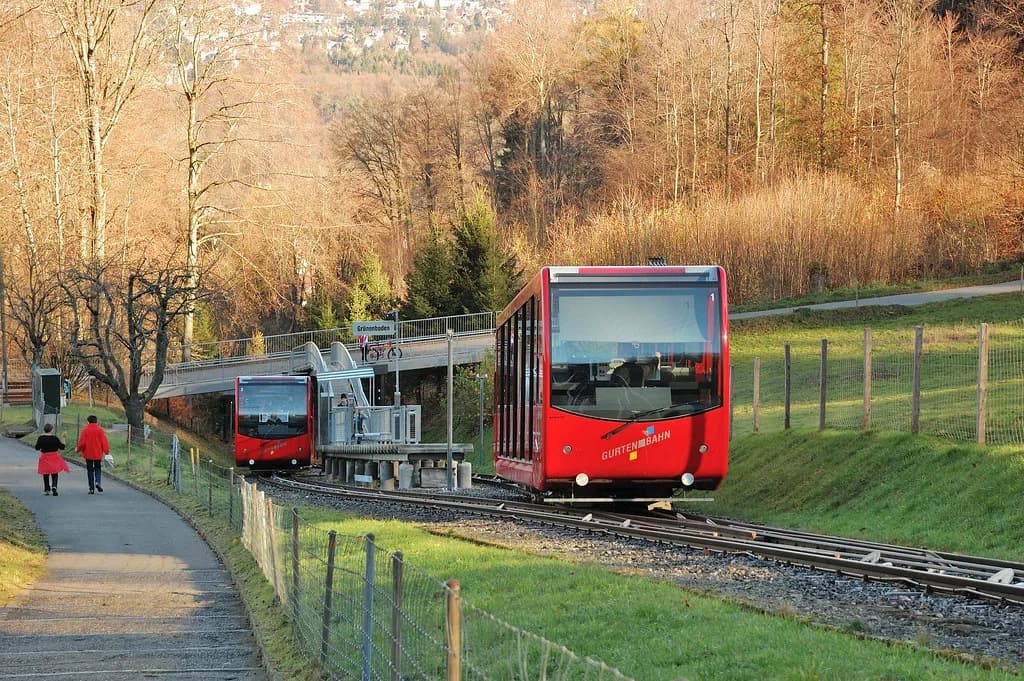
A third day buys you the Gurten, the wooded hill above the city at just over 860 meters. A funicular runs up from the valley station, and a viewing tower at the top gives a better panorama than the ridge itself. The hill also has a playground and summer toboggan runs, which makes it the easiest day to bring children along.
Travelers with a hotel booking can use the Bern Ticket for free public transport, which includes the Gurten funicular, according to the published guide. That makes a hilltop morning cheap once you have paid for the room. A slower third day also lets you walk the Aare loop properly, sit on the Münsterplattform, and revisit whichever street you liked on Day 1.
How the Museumsquartier fits in, and the Historical Museum renovation
Kirchenfeld concentrates the city's museums in a small area, and the city's own plans treat the quarter as a growing visitor destination. The planned renovation of the Historical Museum aims to open a south side that would let people walk through from Helvetiaplatz into the museum garden outside opening hours, and to add foyers, a bistro and a shop that work without a museum ticket. That plan is a future project, not a current feature, so treat it as a reason for a later return rather than a stop on this trip.
Who should plan a half day and who should plan three full days
Half a day suits a traveler on a rail pass between Zürich and Lake Geneva who mainly wants the Zytglogge, Kramgasse and one viewpoint. One day suits the visitor who wants the Old Town plus the Münster tower or a Parliament tour, not both. Two days suit anyone who wants a museum and the Gurten, and three days suit a slower traveler or a family that wants playground time and a picnic.
Cost is the other constraint. A longer stay means more paid entries, and you can compare the likely bill with is bern expensive before you commit. If you are weighing cities, bern vs zurich sets out how the two compare for a short break, and how many days in zurich covers the lake city's own required time.
Time and money: the Parliament tour and the Münster tower
Two decisions set the shape of a Bern day: whether you can join a Parliament tour and whether you want the Münster tower climb. The Parliament tour is free and runs 45–60 minutes, but it only operates when the councils are not sitting, so a session week can remove it entirely. The tower climb carries a small fee and 344 stairs, and it is not worth it in low cloud.
Both stops sit within a few minutes of each other, so the cost is time rather than travel. Book the Parliament tour about three days ahead on the Parliament's own website if a tour is central to your plan. Leave the tower climb unbooked and take it on a clear morning instead, when the view justifies the stairs.
Practical trade-offs for a short visit
Two hills frame a short visit: the Münster tower and the Rosengarten. Both reward the climb, but doing both in one day leaves little time for the museums. If you have two days, put the tower on Day 1 with the Old Town and the Rosengarten on Day 2 with BärenPark, so the walking stays in one direction.
Rain rarely stops a Bern day, because the arcades give cover along most of the Old Town. A wet day is a better museum day, and a clear day is better saved for the Gurten and the Bundesterrasse. Swiss weather changes quickly, so a flexible plan with one indoor and one outdoor day is more useful than a fixed hour-by-hour schedule.
Where Bern fits against Lucerne, Zürich and Geneva on a multi-city trip
Bern is the shortest of the big Swiss city stops, which is why two days is usually enough. Lucerne and Zürich both reward more time once you add a lake, a mountain or a museum quarter, and how many days in lucerne sets out the case for the lakeside city. A common pattern is two nights in Bern, two in Lucerne and three in Zürich.
If you only have one day to give a Swiss city beyond the obvious stops, Bern delivers a UNESCO-listed center, a river loop and a free parliament tour in a compact area. That makes it a strong half of a two-city trip rather than a place that needs a week of its own. Check the Parliament's schedule and the Münster's tower access before you fix your dates, and the rest of the plan can stay loose.
Plan Your Visit
Two days is the comfortable answer for Bern: one for the Old Town and the Münster, one for a museum or the Gurten. Three days let you add the Rosengarten, a slower river walk and a market morning without cutting anything short. One day is enough only if you accept that the museums and the hill above the city will be left for the next trip.
For a Saturday-to-Sunday stay, a weekend in bern works out as one Old Town day and one hill or museum day, with the Parliament tour slotted in only if the calendar allows. Build the plan around fixed points — the Parliament tour dates and any museum closure — and leave the tower climb and the Gurten for whichever day looks clearest. That is how Bern rewards a short break: small distances, a walkable center and a view from nearly every high point you reach.
Frequently Asked Questions
Is one day in Bern enough?
One day covers the Old Town on foot: the Zytglogge, Kramgasse, the Berner Münster and the Münsterplattform, plus the Bundesterrasse behind the Parliament. It is not enough for a museum in Kirchenfeld and the Gurten as well. Travelers who want either should plan two days.
What can you see in Bern in two days?
Day 1 covers the Old Town, the Münster tower and the Münsterplattform. Day 2 adds a museum in the Kirchenfeld quarter or the Rosengarten, BärenPark and the Nydeggbrücke. If the Parliament is not sitting, a free guided tour can slot into either day.
What should you do in Bern on a rainy day?
Use the arcaded streets for the Old Town walk and give the rest of the day to a museum in Kirchenfeld or the Einsteinhaus on Kramgasse. The covered walkways along Kramgasse and the neighboring streets let you move between sights without an umbrella.
How do you spend a half day in Bern?
Walk from the Zytglogge along Kramgasse to the Berner Münster, then take the Münsterplattform for the river view. Add the Bundesterrasse behind the Parliament if time allows. Skip the tower climb and the museums, which each need more time than a half day gives.
How much does the Parliament tour cost, and when does it run?
The guided tour of the Parliament building is free and lasts 45–60 minutes. It does not run while the councils are working, so the dates matter more than the price. The Parliament publishes the session calendar and the tour booking window on its own website.
Is the Münster tower climb worth it?
The climb is 344 stairs to a platform that is not the very top, and it carries a small entrance fee. On a clear day the view over the Old Town and the Aare justifies the effort; in low cloud it does not. The cathedral itself is free to enter.
Is Bern worth visiting compared with Lucerne or Zürich?
Bern gives you a UNESCO-listed Old Town, a river loop and a free Parliament tour in a compact area, which suits a two-day stop. Lucerne and Zürich reward more time once you add their lakes and museums. Bern is the shorter, denser city break of the three.
Sources
Notes for your Swiss city break
Optional updates to our Swiss city guides.
You might also like
Continue reading
More guides you'll find useful