Switzerland Scenic Trains: Choose the Right Panoramic Route
Compare Switzerland's scenic trains by route, ride time and reservation rules, so you pick the panoramic ride that fits your city break and your budget.
On this page
The quick answer: pick the Bernina Express if you want the biggest scenery payoff in roughly four hours, the Glacier Express if a full eight-hour crossing from Zermatt to St. Moritz is the point of the trip, and the GoldenPass Line if you would rather split the ride into legs that connect cities you already planned to visit. Every one of these routes can also be ridden on ordinary regional trains over much of the same track, which removes the reservation and lets you step off wherever you like.
How Swiss Scenic Trains Work
Swiss panoramic trains are ordinary railway lines run with special carriages: glass-heavy panoramic cars, on-board information, and in the Glacier Express case a dining car. The train is the attraction, so the timetable is generous — the Glacier Express runs 291 kilometers in about eight hours, and the Bernina Express covers roughly 122 kilometers in about four.
What month is best for the Bernina Express? The Bernina line runs across the year, and each season changes what you see rather than whether the train runs. Snow covers the upper reaches around Ospizio Bernina in winter, while summer and fall open up the Alp Grüm terraces and the descent to Tirano.
What is the route of the Glacier Express? The Glacier Express runs between Zermatt and St. Moritz, covering 291 kilometers in about eight hours.
How much does the Bernina Express cost? The Bernina Express is covered by a Swiss Travel Pass, but a compulsory seat reservation is charged separately and runs up to about 26 CHF in high season. Without a pass, you pay the point-to-point fare plus that reservation.
The decision that shapes your budget is panoramic car versus local train, not first class versus second. On both headline routes the same tracks carry regional services with more stops, no compulsory reservation, and the freedom to break the journey, while the panoramic train adds a seat reservation fee on top of the fare — roughly 40 to 50 euros equivalent on the Glacier Express in low and high season, and up to about 26 CHF on the Bernina Express in high season.
A Swiss Travel Pass changes the arithmetic for travelers staying three or more days and moving between cities, because it covers trains, buses and boats and gives 50% off most mountain rides. Panoramic trains are included in the pass, but the compulsory reservation is still paid separately, so the reservation fee is the true incremental cost of the glass carriage.
Glacier Express: Zermatt to St. Moritz
The Glacier Express links Zermatt and St. Moritz across 291 kilometers in about eight hours, billed as the world's slowest express train. Anticipated views include the Rhine Gorge, one of the deepest gorges in Europe, and the stretch between Thusis and Preda where the line threads gorges and viaducts.
Because the carriages are enclosed in glass, you get 180-degree views whichever side you end up on, and you cannot know your side until boarding. The route crests at the Oberalppass at 2033 meters before descending through the Valais vineyards toward Zermatt with glimpses of the Matterhorn, and on-board dining is part of the experience rather than an afterthought.
Plan around a seasonal break: the Glacier Express hibernates at the end of October for about six weeks. Late spring can feel like a compromise season, neither fully green nor snowbound, while summer and the colder months deliver the contrast most riders come for.
Riding the Glacier Express Route on Local Trains
If the eight-hour sitting is more than you want, ride the same corridor on regional trains. You change a couple of times, but you can get out at any stop without losing a reservation, which turns the Rhine Gorge or the Oberalppass into a place to stand rather than a blur through glass.
Treat this as the flexible option rather than the cheap one and price both before deciding. Regional trains are covered by a Swiss Travel Pass, so on a pass the local version saves the reservation fee outright while costing you time and a couple of platform changes.
Bernina Express: Chur to Tirano
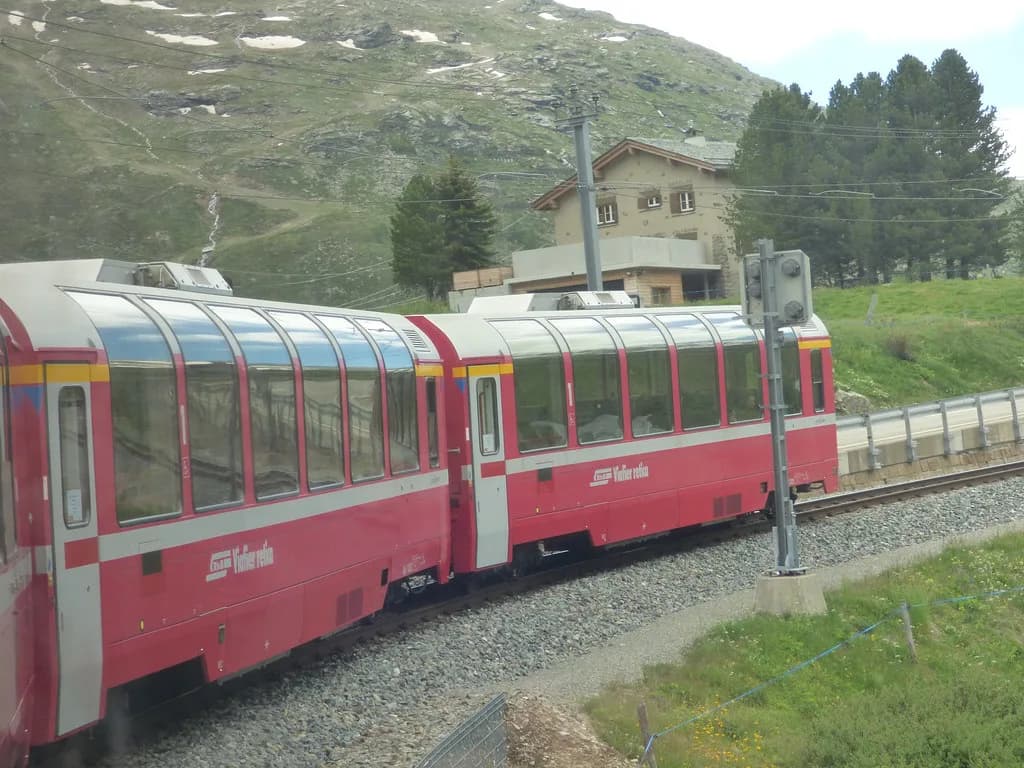
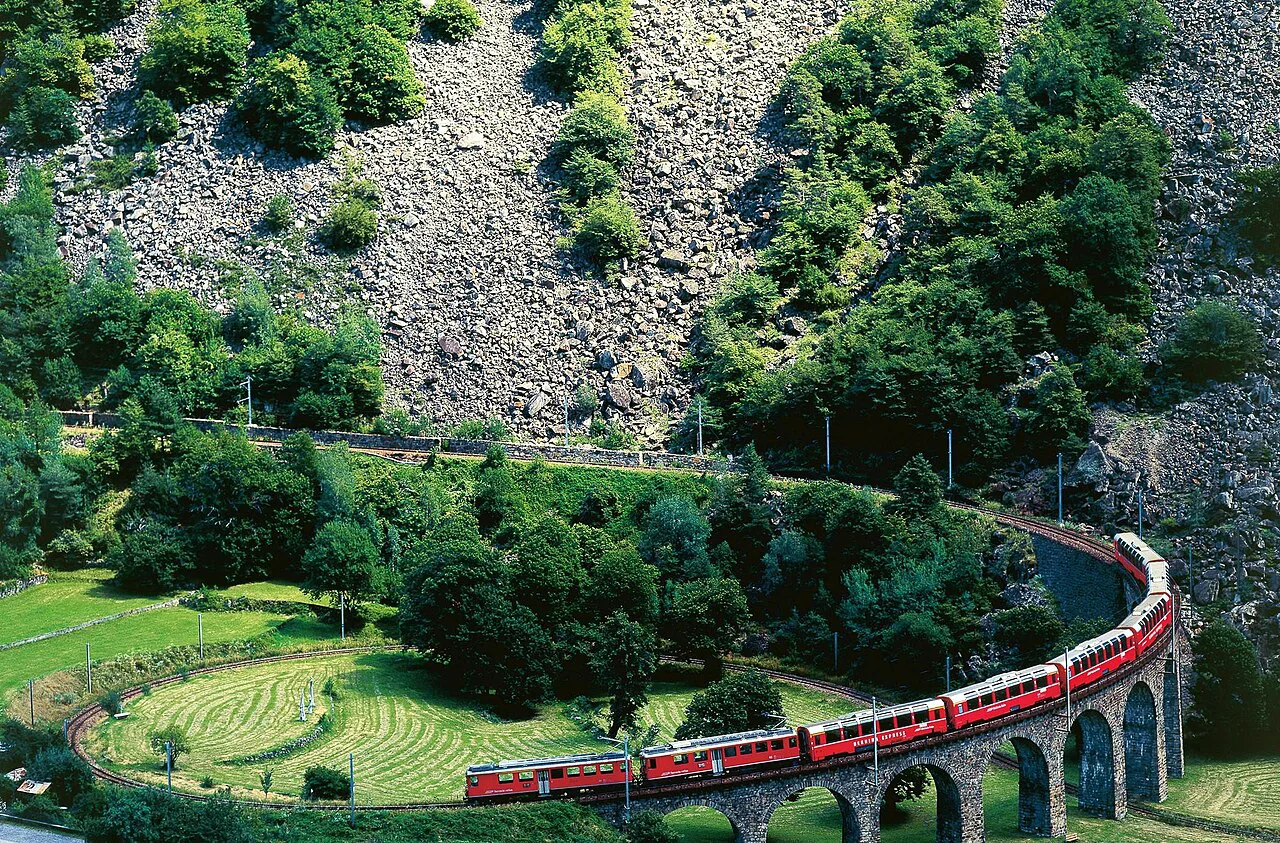
The Bernina Express runs from Chur to Tirano in Italy, about 122 kilometers in roughly four hours, crossing 55 tunnels and 196 bridges and climbing to 2253 meters at Ospizio Bernina. Highlights stack up quickly: the Landwasser Viaduct, the glacier-fed scenery around Alp Grüm, and the circular Brusio spiral viaduct on the descent.
The Albula section between Thusis and Preda is UNESCO-listed, and the stretch from Pontresina to Alp Grüm passes Lago Blanco against snow-capped peaks. From Chur toward Tirano, sit on the right-hand side for the best views, and consider breaking the trip at Alp Grüm for the terrace overlooking the Palu Glacier.
As a day trip from a city base, the Bernina line is the most efficient of the famous routes: four hours in one direction leaves room for a return or an overnight in Tirano. The cross-border leg adds the option of continuing into northern Italy instead of doubling back.
GoldenPass Line: Three Legs You Can Split
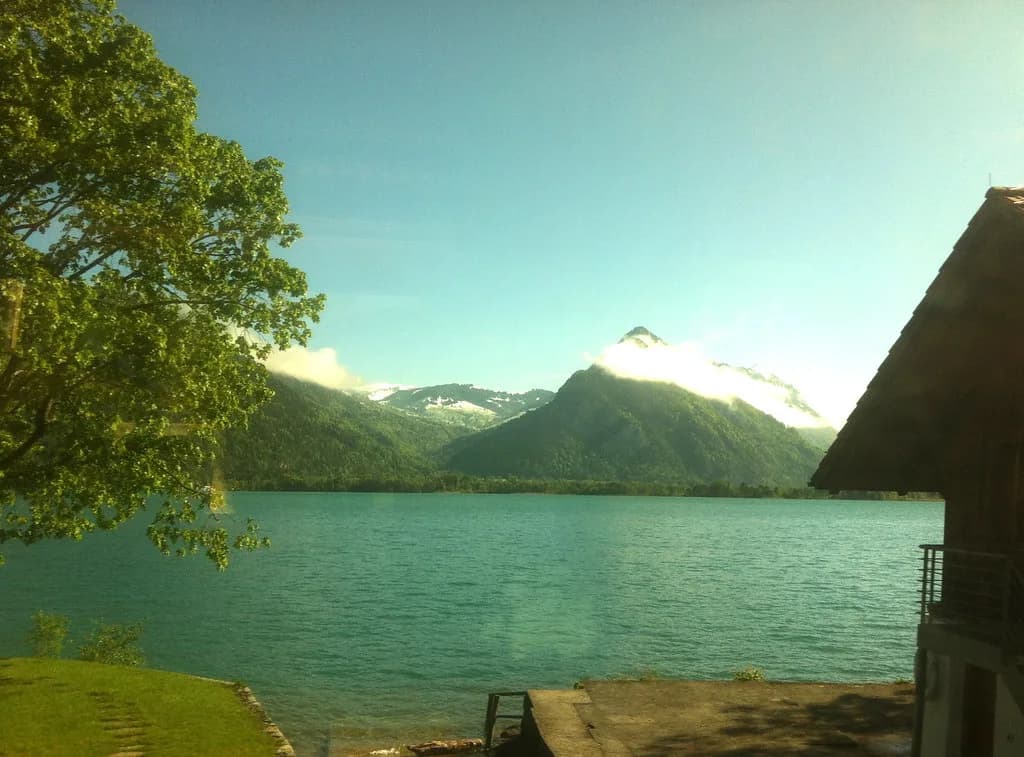
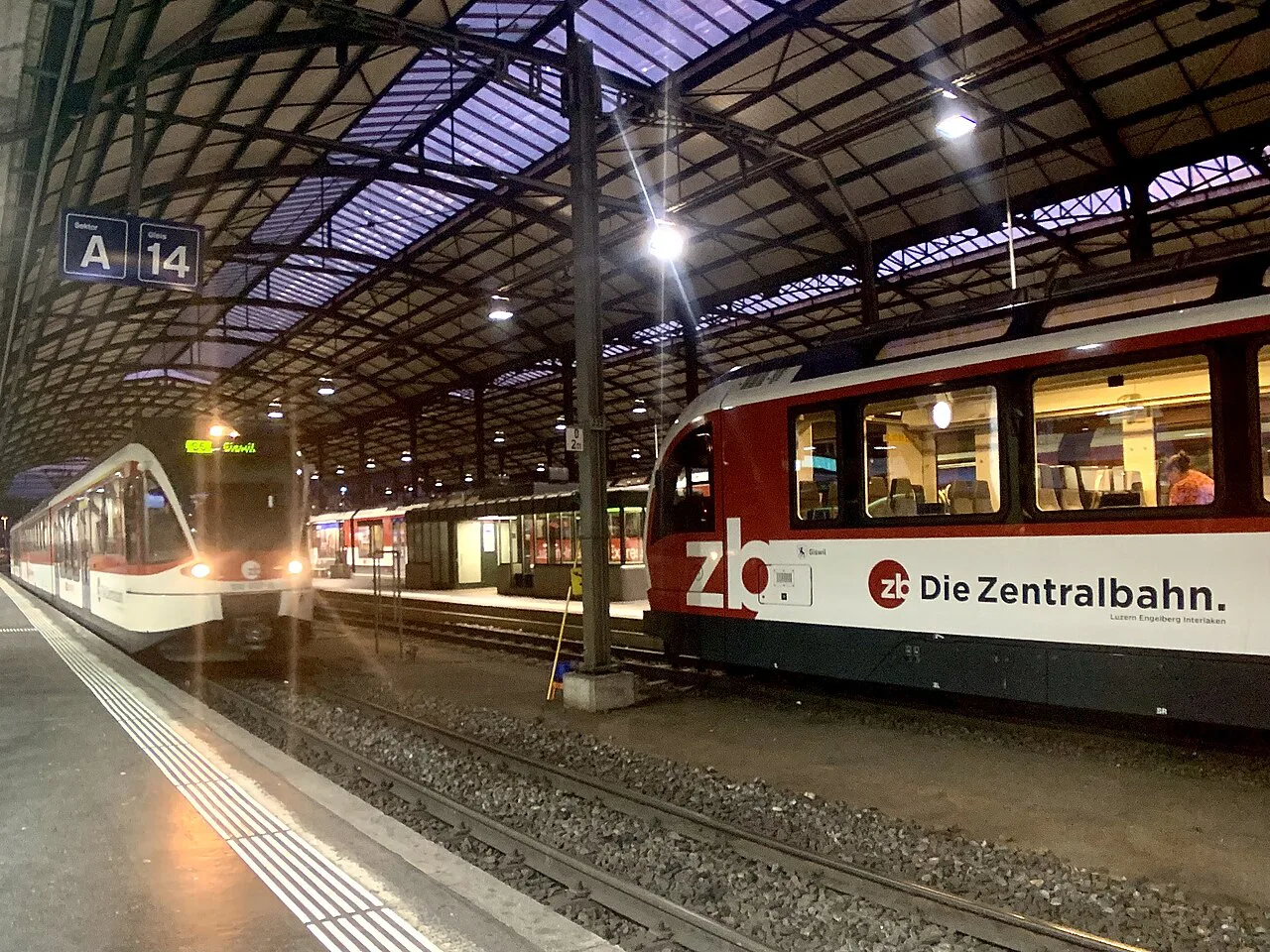
The GoldenPass Line is not one train but three, and that is its advantage for a city break. The first leg runs from Montreux on Lake Geneva to Zweisimmen past vineyards, chalets and Gstaad; the second climbs through the Simmental to Spiez and Interlaken with Lake Thun appearing on approach; the third follows Lake Brienz to Luzern.
The line runs year-round, and while a reservation is not compulsory, booking is sensible on the Montreux to Zweisimmen section in high season. Riding a single segment and combining it with another ride or a city stop is normal practice rather than a compromise.
Short Scenic Legs That Fit a City Break
With two or three days, short legs beat full panoramas. Filisur to Davos takes about 25 minutes through the Zügen Gorge and over the 200-meter Wiesen Viaduct, and continuing to Tiefencastel adds the Landwasser Viaduct.
The Luzern–Interlaken Express takes about two hours past Lake Lungern, Lake Lucerne and Lake Brienz, making it a practical way to move between two bases rather than a detour. Between Grütschalp and Mürren, a short mountain hop of roughly 14 minutes delivers Eiger, Mönch and Jungfrau views.
The Geneva to Montreux stretch along the Lavaux shore takes about an hour and a half and is at its best in summer and fall when the vineyards are in leaf.
Mountain Railways That Count as Scenic Trains
Several cog and rack railways deliver more drama per minute than the long-distance panoramas. The Gornergrat Bahn climbs from Zermatt to 3089 meters in about 33 minutes with Matterhorn views and 29 four-thousand-meter peaks from the top; it runs year-round with departures roughly every 25 minutes, and a Swiss Travel Pass gives 50% off.
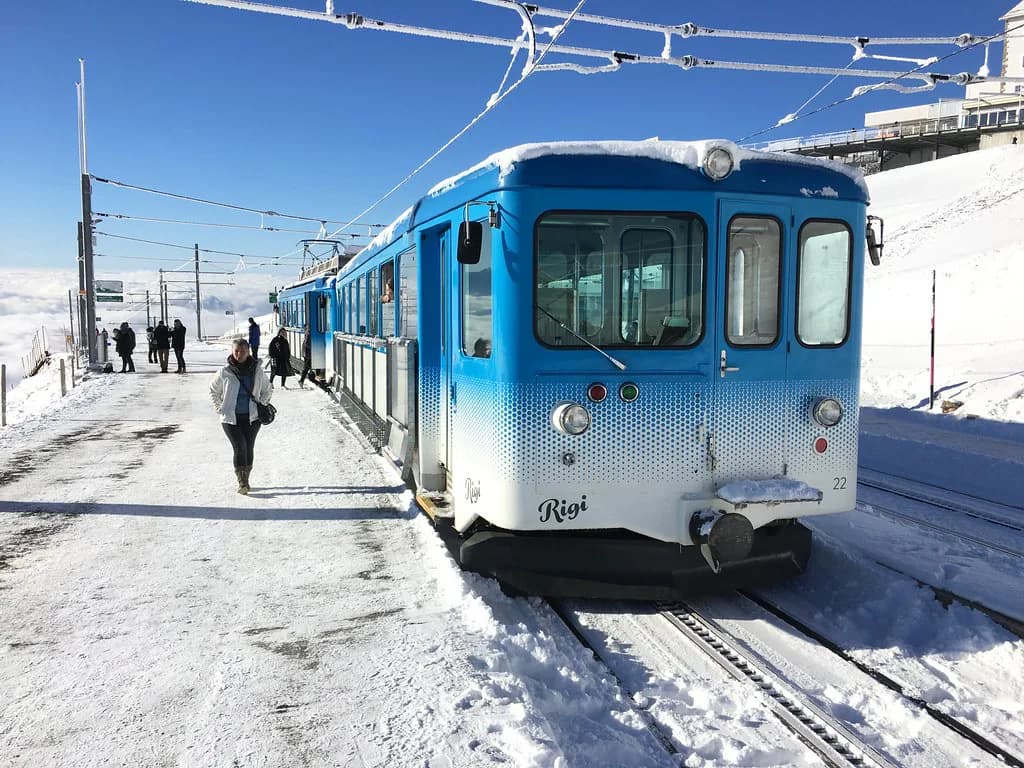
Mount Rigi is reached from Vitznau on Lake Lucerne in about an hour to Rigi Kulm, free with a Swiss Travel Pass, and the descent at sunset is the reason to time your visit late.
The Pilatus rack railway from Alpnachstad climbs gradients up to 48% in about 30 minutes to Pilatus Kulm, with a 50% pass discount. The Brienzer Rothorn steam railway takes about an hour from Brienz to the 2350-meter summit, also at 50% off with a pass, and Rochers-de-Naye above Montreux is free from Montreux to Haut-de-Caux before a 50% discount to the top.
Seasonal Limits to Plan Around
Not every scenic railway runs in January. The Pilatus cogwheel railway operates from around mid-May to mid-November, so a winter Lucerne trip needs the cable car instead. The Brienzer Rothorn runs its full summit service from June to October, with an additional service from May reaching Planalp halfway up.
The Glacier Express itself pauses at the end of October for about six weeks, and the open-air Rhine Gorge train between Landquart and Ilanz runs only in the warmer months. Build the year-round rides — Bernina, GoldenPass, Gornergrat — around a cold-season visit instead.
What a Swiss Travel Pass Covers
Pass coverage varies by ride, so check current prices and dates before you travel. The Glacier Express, Bernina Express, Luzern–Interlaken Express, GoldenPass legs, Grütschalp to Mürren, Centovalli line and Mount Rigi are all free with a Swiss Travel Pass, subject to reservation fees on the panoramic trains.
Mountain railways are discounted rather than free: 50% off Gornergrat, Pilatus, Brienzer Rothorn and Rochers-de-Naye beyond Haut-de-Caux, and 25% off the upper Jungfraujoch section beyond Wengen. The Centovalli line carries a small on-board surcharge of about 1.50 CHF if you travel through to Domodossola.
The pass is sold to visitors rather than Swiss residents and makes sense from about three or four days of active travel. If you plan mostly to sit on one panoramic train, price a point-to-point ticket plus reservation instead and keep the difference for a mountain railway.
Seat Side, Reservations and Timing
On the Bernina Express from Chur to Tirano, the right-hand side gives the best views. On the Glacier Express you cannot choose your side in advance because the orientation is not fixed, but the glass roof means the view works from either side.
Book panoramic seats well ahead — these are among Switzerland's most popular rail journeys — and reserve early in the morning if you plan to ride the Pilatus rack railway, where queues build through the operating months. Arriving on the first departure beats a late start on every one of these lines.
Two- and Three-Ride Combinations Without Backtracking
The cleanest chain is Bernina plus Glacier Express: ride Chur to Tirano, continue into Italy or return, then reposition to Zermatt and cross to St. Moritz. Alternatively, run the GoldenPass in legs — Montreux to Interlaken, Interlaken to Luzern — and treat each city as a stop rather than a turnaround. If you are building stops at the alpine end of the network, things to do in Zermatt pairs well with a night before the Glacier Express crossing.
For a shorter trip, pair the Luzern–Interlaken Express with a Lucerne mountain day: Rigi from Vitznau or Pilatus from Alpnachstad, both reachable from the city by boat or short train. That structure gives you two scenic rides and one summit without a single long transfer. If you are weighing how the seasons change these city-based rides, the best time to visit Switzerland guide covers the trade-offs by month.
Which Ride to Choose
For a first trip with limited days, ride the Bernina Express: four hours, UNESCO-listed Albula line, the Landwasser and Brusio viaducts, and easy positioning from Chur. Choose the Glacier Express when the crossing itself is the event and you have a full day to give it, and the GoldenPass when you want scenery that doubles as transport between Montreux, Interlaken and Luzern. If you are still mapping out stops and transfers, our Switzerland itinerary guide shows how these rides slot into a first train trip.
Skip the panoramic carriage on any route where you mainly want to get off — the local trains do the same trackwork without the reservation. Whichever you pick, seasonal windows on Pilatus, the Brienzer Rothorn and the Glacier Express decide more of your itinerary than seat class does.
Explore more Switzerland guides
Frequently Asked Questions
What month is best for the Bernina Express?
The Bernina line runs across the year, and each season changes what you see rather than whether the train runs. Snow covers the upper reaches around Ospizio Bernina in winter, while summer and fall open up the Alp Grüm terraces and the descent to Tirano. Travelers who want greenery and long days should aim for the warmer half of the year.
What is the route of the Glacier Express?
The Glacier Express runs between Zermatt and St. Moritz, covering 291 kilometers in about eight hours. It passes the Rhine Gorge, the section between Thusis and Preda with its gorges and viaducts, and crests at the Oberalppass at 2033 meters before descending through the Valais toward Zermatt.
How much does the Bernina Express cost?
The Bernina Express is covered by a Swiss Travel Pass, but a compulsory seat reservation is charged separately and runs up to about 26 CHF in high season. Without a pass, you pay the point-to-point fare plus that reservation. Cheaper regional trains cover the same tracks with more stops and no reservation.
Is there a train from Italy to Switzerland called the Bernina Express?
Yes. The Bernina Express connects Chur in Switzerland with Tirano in northern Italy, crossing the border on a route that climbs to 2253 meters at Ospizio Bernina. It can be ridden in either direction, which makes Tirano a practical starting point for travelers arriving from Milan.
Which Swiss scenic train is best for a short trip?
The Bernina Express covers the most ground in about four hours, and several short legs work well for a two- or three-day break. Filisur to Davos takes about 25 minutes, Grütschalp to Mürren about 14, and the Luzern–Interlaken Express about two hours while moving you between two useful bases.
Do you need a reservation on Swiss panoramic trains?
Reservations are compulsory on the Glacier Express and Bernina Express panoramic carriages and are paid on top of the fare or pass. On the GoldenPass Line a reservation is not compulsory but is sensible on the Montreux to Zweisimmen section in high season. Regional trains on the same tracks need no reservation at all.
Are scenic trains free with the Swiss Travel Pass?
The Glacier Express, Bernina Express, Luzern–Interlaken Express, GoldenPass legs, Grütschalp to Mürren, the Centovalli line and Mount Rigi are included in the Swiss Travel Pass, though panoramic trains still charge their reservation fee. Mountain railways such as Gornergrat, Pilatus and the Brienzer Rothorn give 50% off instead.
Can you ride the Glacier Express route on regular trains?
Yes. Regional trains cover the same corridor with more stops and no compulsory reservation, which lets you leave the train at any station and continue later. The trade-off is a couple of changes and a longer day, though the ride is included in a Swiss Travel Pass without the panoramic reservation fee.
Sources
Notes for your Swiss city break
Optional updates to our Swiss city guides.
You might also like
Continue reading
More guides you'll find useful