Glacier Express Guide: Route, Fares, Classes and Seat Reservations
Plan the Glacier Express between Zermatt and St. Moritz: the 8-hour route, fares in CHF, first versus second class, compulsory seat reservations and passes.
On this page
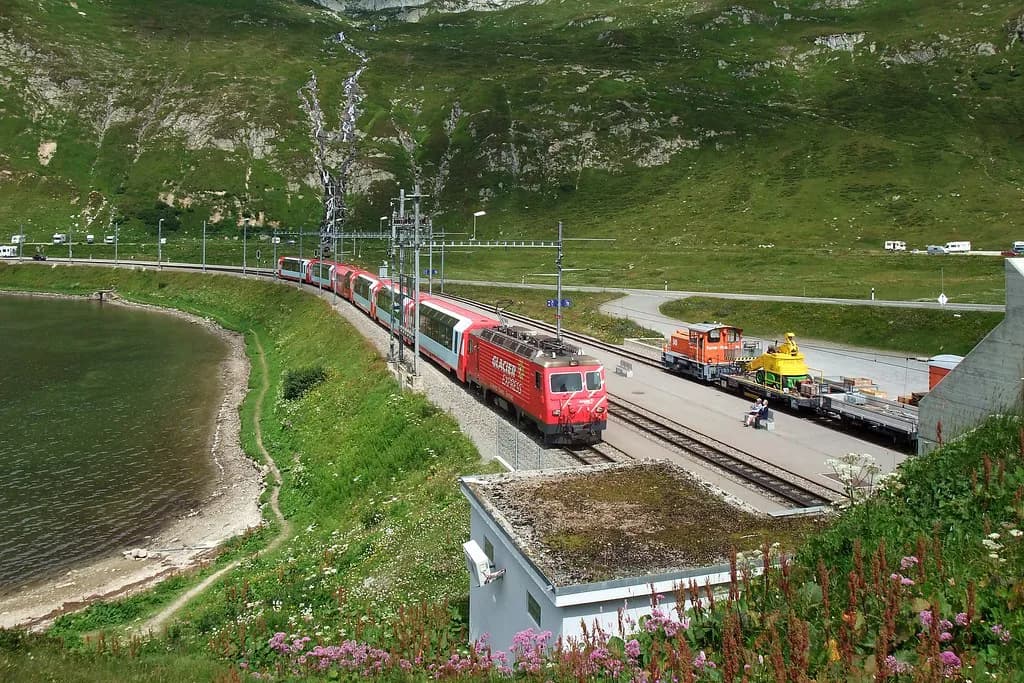
The Glacier Express is a panoramic daytime train between Zermatt and St. Moritz that takes roughly eight hours end to end, crossing Valais, Uri and Graubünden. It is the classic way to see a large slice of the Alps from a heated carriage with windows that curve up into the roof.
Two costs stack up: the train fare and a seat reservation that every passenger must hold, including children and rail-pass holders. For the full run, second class is CHF 159 and first class or Excellence Class is CHF 272, with reservations at CHF 54 in first and second class and CHF 540 in Excellence Class.
What the Glacier Express Is and How Long It Takes
The train runs between the two mountain resorts of Zermatt, at 1,605 meters below the Matterhorn, and St. Moritz in the Upper Engadine. Over the near eight-hour journey it crosses 291 bridges and passes through 91 tunnels, which is why it earned the nickname of the world's slowest express train.
Does the Glacier Express go to Zermatt? Yes. Zermatt is one of the two endpoints, with St.
How much is a ticket on the Glacier Express? The full Zermatt to St. Moritz fare is CHF 159 in second class and CHF 272 in first class or Excellence Class.
Do you need a seat reservation on the Glacier Express? Yes, every passenger needs one, including rail-pass holders and children, with the exception of children under six in first or second class who do not take their own seat. Reservations are non-refundable, so choose your date carefully.
Services leave each end in the morning and arrive in the late afternoon. In the winter timetable published for 6 December 2025 to 1 May 2026, the Zermatt departure is at 8.52am with arrival in St. Moritz at 4.37pm, and the return leaves St. Moritz at 8.38am for a 5.07pm arrival in Zermatt.
In the summer timetable listed for 2 May to 10 October 2026, two trains ran each way, leaving Zermatt at 8.52am and 9.52am and St. Moritz at 8.38am and 9.38am. Because timetables change by season, confirm the departure for your own travel date when you reserve.
The Route in Four Sections
Zermatt to Brig is the opening leg: the train drops through the valley past Visp between rock walls that rise to around 4,000 meters, then descends 651 meters into Brig, the first stop. Either side of the carriage gives good views on this stretch.
From Brig the line climbs the Upper Rhone Valley through Oberwald at 1,366 meters and into the 15.4-kilometer Furka Tunnel before leveling out into Andermatt. The next leg over the Oberalp Pass reaches 2,033 meters, the highest point of the whole route, then descends the Rhine Valley past the Rhine Gorge to Chur, the lowest point at 585 meters.
Chur to St. Moritz runs through the Domleschg Valley, known for its castles and ruins, then over the Landwasser Viaduct, a 136-meter limestone structure standing 65 meters high on six arches. After Filisur the train spirals up toward the Albula Tunnel and into the Upper Engadine before finishing in St. Moritz.
If you only have one day for a panoramic rail ride, compare this with the Bernina Express, which shares the Chur to St. Moritz corridor but continues over a different pass into Italy. For timing that day alongside the rest of a train-based trip, our Switzerland itinerary covers how to slot scenic rail days into a first visit.
Glacier Express Fares in Swiss Francs
The full Zermatt to St. Moritz fare is CHF 159 in second class and CHF 272 in first class, and Excellence Class carries the same CHF 272 fare as first class. The gap between first and Excellence shows up in the reservation fee, not the ticket.
Fares are the same in either direction, and partial journeys are priced by sector. In second class that means CHF 40 for Zermatt to Brig, CHF 77 for Zermatt to Andermatt, CHF 44 for Chur to St. Moritz and CHF 119 for Brig to St. Moritz; in first class the same sectors run CHF 68, CHF 131, CHF 75 and CHF 204.
These are regular one-way fares, so a shorter sector is a genuine money-saving route rather than a compromise ticket. Swiss francs are the currency quoted, and US dollar or euro conversions are not what the railway sells you, so budget from the franc figure.
Seat Reservations Are Compulsory for Everyone
Unlike most Swiss trains, the Glacier Express requires a seat reservation for every passenger, whether you hold an individual ticket, a Saver Day Pass or a rail pass. The fee is CHF 54 in first and second class for the full journey and remains CHF 54 even if you only ride a short sector, so a cheap sector fare plus a full reservation fee changes the arithmetic.
Excellence Class reservations cost CHF 540 on top of the fare and can only be booked for the complete Zermatt to St. Moritz trip in either direction. Reservations are non-refundable and cannot be exchanged, so pick your date before you pay.
The only exception is children under six in first or second class who do not occupy their own seat. Otherwise even children traveling free with a Junior Card or Swiss Family Card need a reservation, and children stay in their seats for safety throughout the ride.
Second Class, First Class and Excellence Class Compared
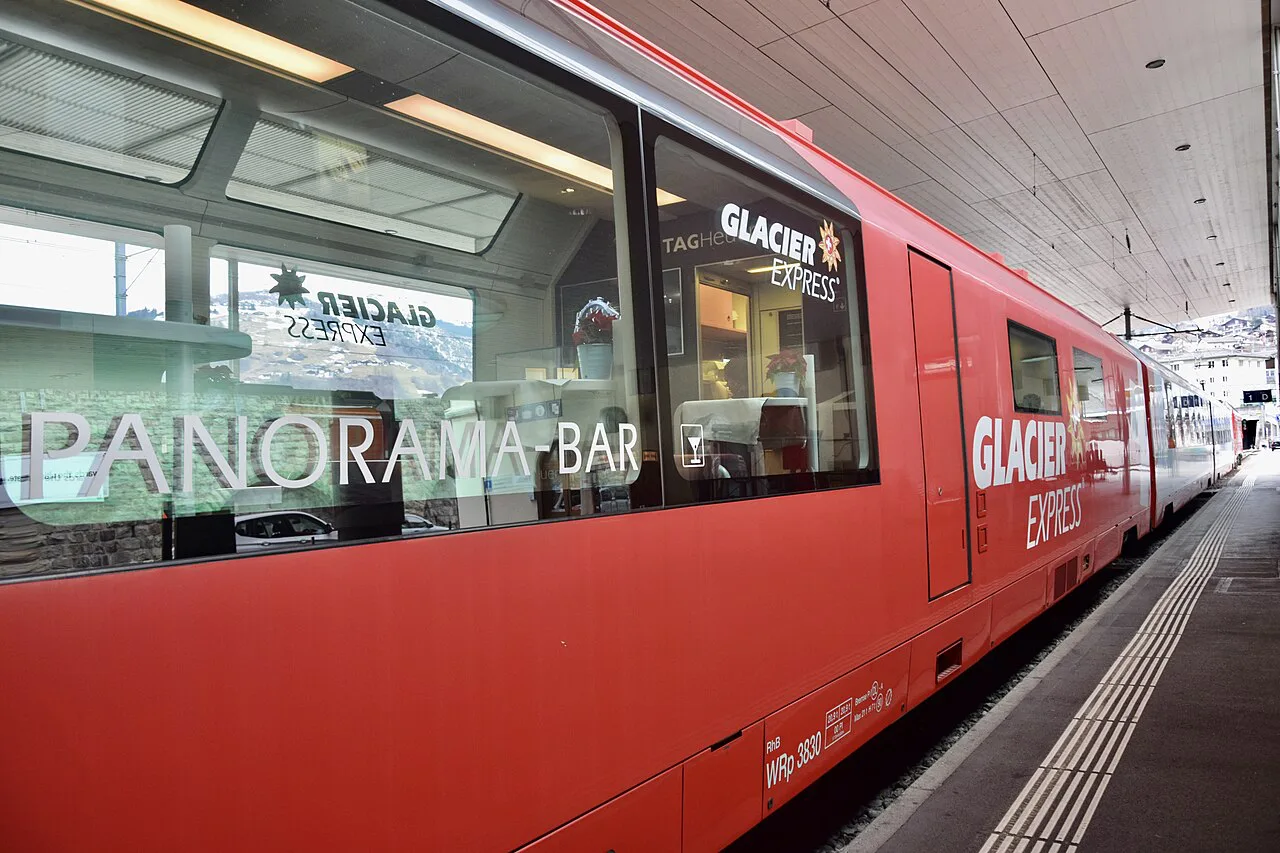
All classes get panoramic windows to the roof, air conditioning, food and drink served at the seat and access to the onboard restaurant and bar. The practical difference between second and first is space: second class is laid out two seats and two seats across the aisle, first class two and one, so first is quieter and roomier.
Excellence Class gives every passenger a window seat, lounge seating, a five-course lunch with wines, snacks and afternoon tea, a tablet with onboard information, a personal concierge and a private bar, with a maximum of 20 passengers per carriage. If the window view matters most to you, that is what the CHF 540 reservation buys.
Which Side of the Train to Sit On
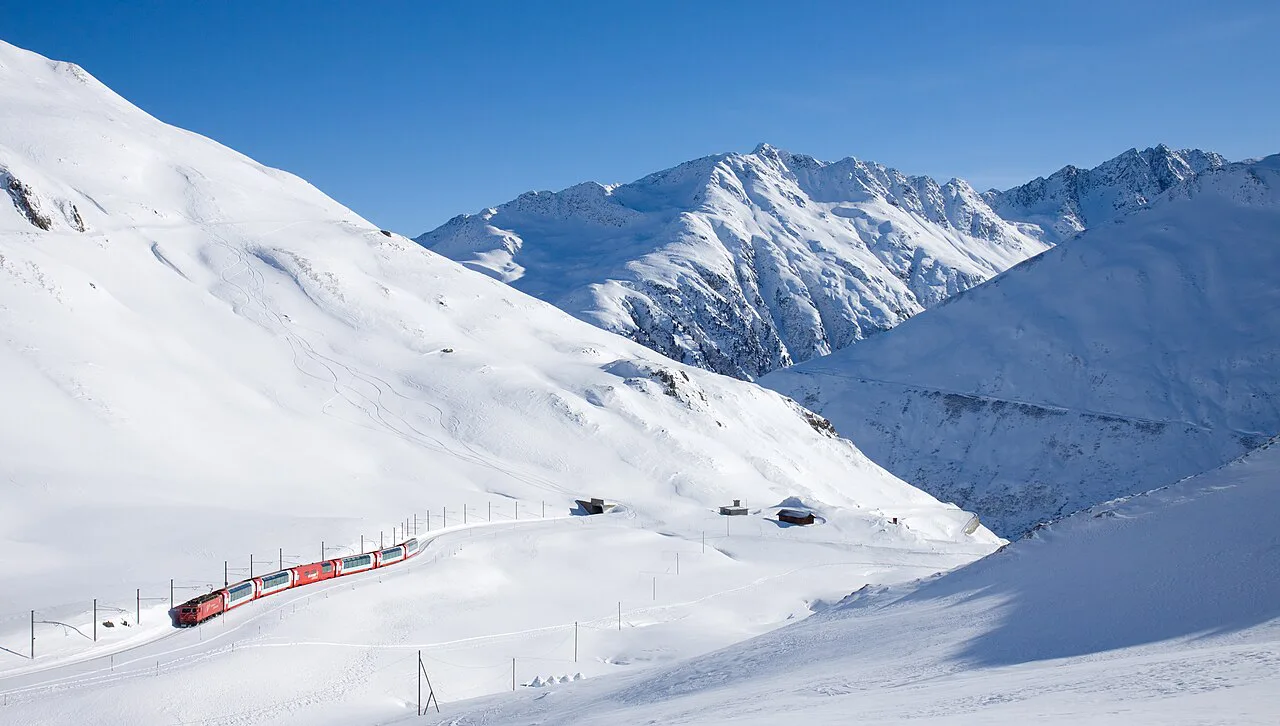
Views depend on the section. Between Zermatt and Brig, and again between Brig and Andermatt, either side works well. From Andermatt to Chur the train climbs the Oberalp Pass and follows the Rhine Gorge, and the left side is recommended for that stretch.
On the Chur to St. Moritz leg, the Landwasser Viaduct sits on the right side, so choose a right-hand seat if that structure is the photo you want. On the Excellence Class carriage the question is moot, since every seat is a window seat.
Rail Passes, the Half Fare Card and the Saver Day Pass
A Swiss Travel Pass includes the Glacier Express fare in full, and a Eurail Pass that covers Switzerland does the same. The Saver Day Pass valid on your travel day also covers the fare, and a Swiss Half Fare Card halves it.
None of these remove the reservation, which is charged on top no matter which pass you hold. That applies to children too, so the reservation fee is the one line every traveler pays.
For a wider comparison of panoramic rail routes before you commit a day to one of them, look at the other scenic trains in Switzerland, such as the GoldenPass Express between Montreux and Interlaken and the Gotthard Panorama Express, which combines a boat on Lake Lucerne with a rail leg.
How Far Ahead to Book
First and second class reservations open 93 days before travel, while Excellence Class can be booked up to 11 months ahead. The train is popular, so reserve early if you have fixed dates, especially in summer.
Booking happens on the Glacier Express site: choose the service, enter your stations and date, pick a seat from the carriage diagram, then add any discount card before paying. If you hold a Swiss Travel Pass, select it and you pay only the reservation.
When the Glacier Express Does Not Run
The train goes into an autumn recess each year before the winter timetable starts. Published dates for the 2025 and 2026 seasons put the gaps at 12 October to 5 December 2025 and 11 October to 4 December 2026 inclusive, with no Glacier Express running on those days.
Excellence Class also had a gap in the published 2026 plan, unavailable from 9 March to 27 March 2026. If you book outside these windows, you avoid the surprise of a route that simply has no train that day.
Late spring and early autumn are the safest bets for a full-length ride on a warm day. For broader season guidance across the country, see the guide to the best time to visit Switzerland, then line it up with the Glacier Express calendar.
Luggage Onboard
Suitcases fit on racks at the end of each carriage, suitable for medium and large bags, but capacity is limited. There are no overhead racks, since they would cut into the panoramic windows, so hand luggage goes at your feet or between seat backs, and you load and unload it yourself.
Travel light, or ship a bag ahead with the Swiss Federal Railways luggage service. If the train is one stop on a longer trip, it fits neatly into a Switzerland itinerary as a single travel day rather than a base for several nights.
Is the Glacier Express Worth It?
It earns its reputation for landscape, and the full run strings together the Rhine Gorge, the Oberalp Pass and the Landwasser Viaduct in one day. The trade-off is cost and time: a full day in a seat, plus a fare and a mandatory reservation fee from every passenger.
If your schedule is tight, a single sector makes more sense than the whole line. Zermatt to Brig in second class costs CHF 40, and Brig to St. Moritz CHF 119, though the CHF 54 reservation applies either way.
Travelers combining rail with a city break often pair a sector ride with a stay in Chur or St. Moritz rather than committing to the full eight hours, so it's worth comparing things to do in Chur before you pick a base. At the Zermatt end, the same logic applies: see our Zermatt city guide before deciding how many nights to build around the Matterhorn views and old town. If the mountain scenery is the main goal, add a separate day for a cable car or funicular such as the one at Mount Pilatus on a Lucerne leg, and our Lucerne guide covers Mount Pilatus and Pilatus Kulm if you want to plan that day.
Plan Your Visit
Decide first whether you want the whole Zermatt to St. Moritz run or a single sector, because the reservation fee is fixed and changes how the sector fares compare. Then choose your class based on space and window access rather than the fare alone, since first and Excellence Class share the CHF 272 ticket price.
Book within the 93-day reservation window for first and second class, or up to 11 months ahead for Excellence Class, and check the operating calendar for the autumn recess before you fix dates. Pack light, pick your seat side by section, and confirm your travel-day departure when you reserve.
Frequently Asked Questions
Does the Glacier Express go to Zermatt?
Yes. Zermatt is one of the two endpoints, with St. Moritz at the other end. The train runs in both directions, with morning departures from each resort and arrivals in the late afternoon.
How much is a ticket on the Glacier Express?
The full Zermatt to St. Moritz fare is CHF 159 in second class and CHF 272 in first class or Excellence Class. A compulsory seat reservation is charged on top, at CHF 54 in first and second class and CHF 540 in Excellence Class.
Do you need a seat reservation on the Glacier Express?
Yes, every passenger needs one, including rail-pass holders and children, with the exception of children under six in first or second class who do not take their own seat. Reservations are non-refundable, so choose your date carefully.
What is the difference between first and second class on the Glacier Express?
Second class has two seats on each side of the aisle, while first class has two on one side and one on the other, so it is roomier and quieter. Both classes get panoramic windows, air conditioning and at-seat service; Excellence Class adds a window seat for everyone, a five-course lunch and a concierge.
How long does the Glacier Express take?
The full Zermatt to St. Moritz journey takes approximately eight hours. It crosses 291 bridges and passes through 91 tunnels along the way.
Is the Glacier Express covered by the Swiss Travel Pass?
A Swiss Travel Pass, a Eurail Pass covering Switzerland or a Saver Day Pass valid on your travel day covers the fare in full, and a Swiss Half Fare Card halves it. The compulsory seat reservation fee is still charged separately on every pass.
Which side of the Glacier Express has the best views?
The left side is recommended from Andermatt to Chur for the Oberalp Pass and Rhine Gorge, and the right side from Chur to St. Moritz for the Landwasser Viaduct. Between Zermatt and Andermatt either side works well.
When does the Glacier Express not run?
The train takes an autumn break before the winter timetable begins. Published 2025 and 2026 dates show gaps from 12 October to 5 December 2025 and 11 October to 4 December 2026, plus an Excellence Class pause from 9 to 27 March 2026.
Sources
Notes for your Swiss city break
Optional updates to our Swiss city guides.
You might also like
Continue reading
More guides you'll find useful