7-Day Switzerland Itinerary: Cities, Mountains & Trains
A 7-day Switzerland itinerary by train, pairing city days in Zürich, Lucerne, Bern and Interlaken with mountain excursions and honest trade-offs.
On this page
Seven days is enough for two cities and two mountain days in Switzerland, linked by train, without spending the week in transit. The cleanest shape is Zürich, Lucerne, Interlaken and Bern, a line that keeps each hop short and lets you walk the old town on arrival day rather than losing it to travel.
The route works because each stop does a different job: Zürich for arrival and departure, Lucerne for the lake and a cable car or funicular day, Interlaken as a base between Thun and Brienz, and Bern for the Zytglogge and the Münster arcades. Travelers who want a shorter version can trim to a 5 day switzerland itinerary and still keep one mountain day.
How the Week Fits Together
Build the week from three kinds of day: city days, mountain days and travel days, and never schedule a mountain day on the same date as a long transfer. In this plan Zürich and Bern are city days, Lucerne splits into an old-town day and a mountain day, and Interlaken holds a base day that you can spend high on a summit or low along the lakes.
Is seven days enough to see Zürich, Lucerne, Interlaken and Bern? Yes, if you keep the route linear and accept one mountain day rather than two or three. Zürich and Bern work as full city days, Lucerne splits into an old-town day and a summit day, and Interlaken acts as a base rather than a destination in its own right.
Should you base in Interlaken or Lucerne? Interlaken puts you closer to the Bernese Oberland summits, while Lucerne gives you the Kapellbrücke old town and a cable-car day on Pilatus. Pick one for the mountain half of the week and day-trip from it rather than changing hotels twice, since each move costs half a day in packing and check-in.
What does a 7-day Switzerland trip cost? Rail passes, summit tickets and museum entries are the variable costs, and they change by season and class. The largest controllable expense is the summit day: a high multi-stage cable car costs far more than a lower viewpoint, and the Half Fare Card or Swiss Travel Pass reduces both depending on how much you travel.
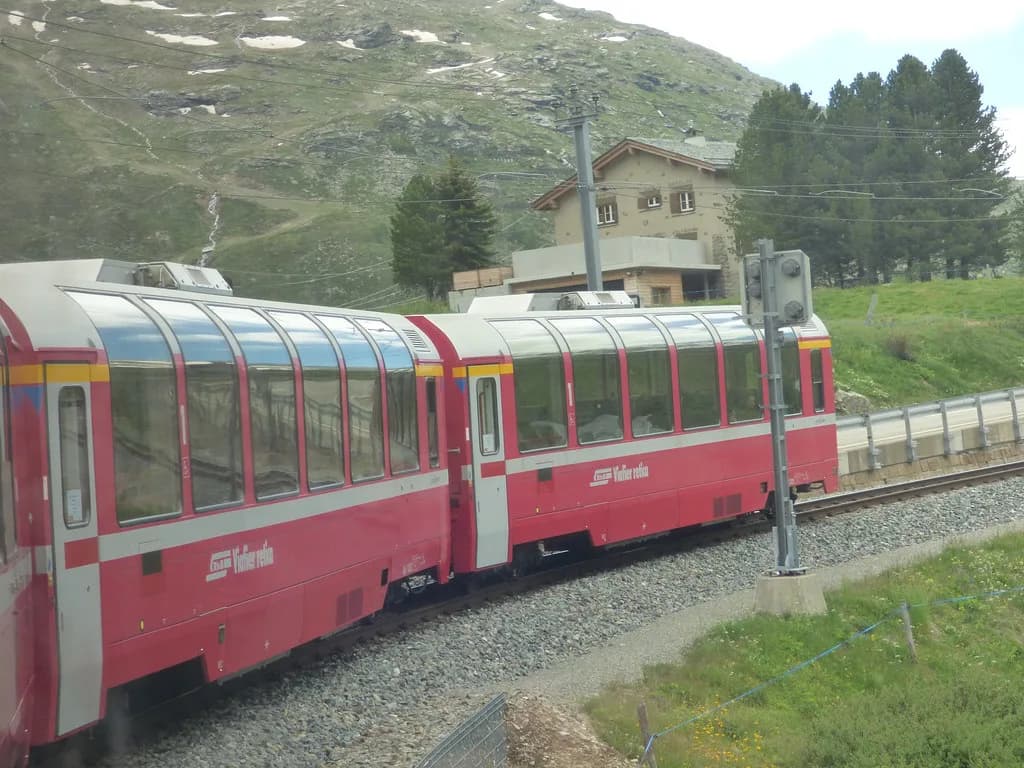
Trains do the linking, and the transfers here are short: Interlaken to Zürich runs about one hour and 33 minutes, and a Geneva arrival to Zermatt takes roughly 2 hours 55 minutes if you start in the west instead. Read those as travel-time context for planning, not as a timetable to rely on for a specific departure.
Book nothing that fixes you to a mountain on a set morning until you have seen the weather pattern for your dates. The best time to visit for city walking is late spring and early autumn, when the old towns are pleasant and the high viewpoints are more likely to be clear.
Day 1: Zürich Arrival, Altstadt and Lindenhof
Start in the Altstadt, Zürich's old town, and walk the cobbled lanes rather than taking transport on your first day. Augustinergasse is the street to aim for first, a short lane of colorful bay-windowed houses with small boutiques and cafés at ground level, and it drops you naturally toward Bahnhofstrasse, the main downtown shopping avenue.
The three river churches give the day its anchors: Grossmünster sits on the Limmat, Fraumünster stands across the water in the old town, and the Church of St. Peter carries a clock face that is the oldest in Europe and a landmark you will spot from several streets away. Walk across the river for the classic view back at Grossmünster, then climb to Lindenhof Hill, a quiet park above the city with views over the rooftops and the river.
This is also the day for Swiss chocolate, and two names are easy to find downtown: Läderach and Confiserie Sprüngli. Buy a small selection from each and compare before you commit to a larger box to take home.
Day 2: Zürich to Lucerne, Kapellbrücke and the Old Town
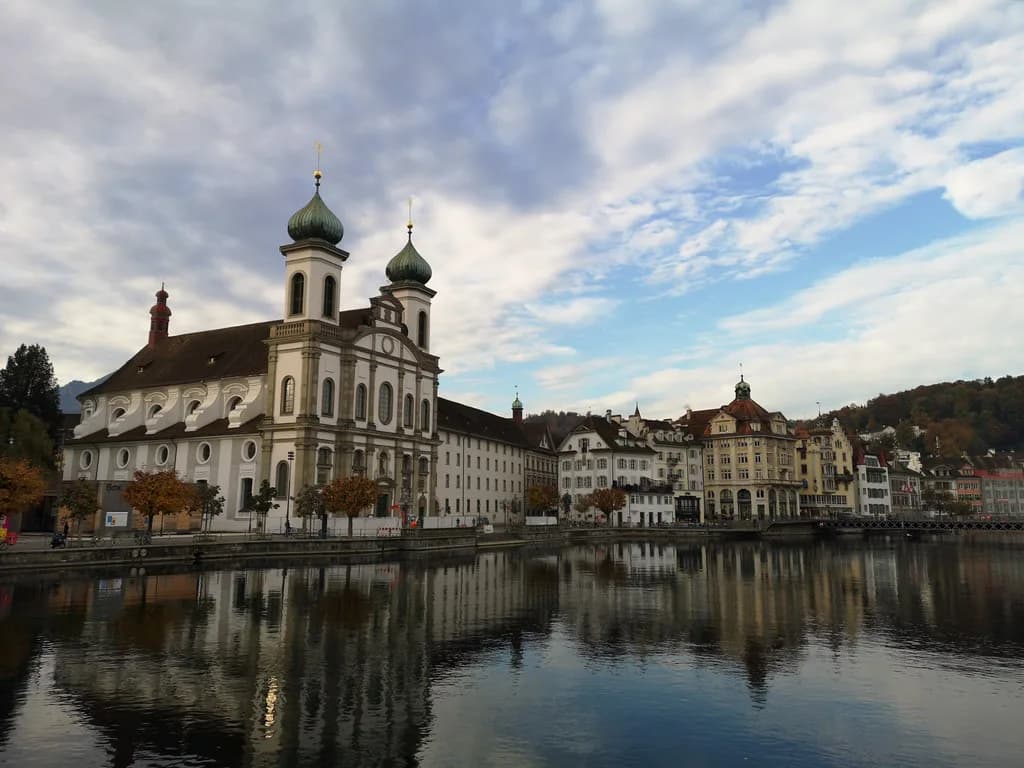
Move to Lucerne on the second morning and give the afternoon to the old town, which is compact enough to cover on foot. The Kapellbrücke, the covered wooden bridge with its painted interior panels, and the Water Tower beside it are the first stop, and the riverfront squares behind them lead into the car-free lanes of the Altstadt.
Keep the day flat: the Musegg ramparts above the town and the lion monument reward a short walk, and the lakefront promenade gives you the mountain backdrop without a ticket. If you are weighing Lucerne against other stops on a longer trip, the wider switzerland itinerary lays out the alternatives before you commit the nights. For a closer look at how to fill these two days by area, our Lucerne city guide plans them at the same unhurried pace. The same logic of matching a stop to your dates applies to the whole country, so it is worth checking the best time to visit Switzerland for a city break before you lock in the week, and Switzerland scenic trains are the other decision worth weighing before you settle the route.
Day 3: Lucerne Mountain Day
Choose one summit for the day and give it the whole day, because the cable cars and funiculars eat time at both ends. Mount Pilatus is the pick if you want a cable car and a cogwheel railway in a single circuit, and it can be done as a loop rather than an out-and-back if you check the seasonal operating pattern before you go.
The trade-off is cost against altitude: a high summit with multiple cable-car stages is the most expensive day of the week, and the weather can close the top even when Lucerne is sunny. Decide the night before, keep a town day in reserve, and buy the mountain ticket at the valley station so you can walk away if the webcam shows cloud.
Day 4: Lucerne to Interlaken
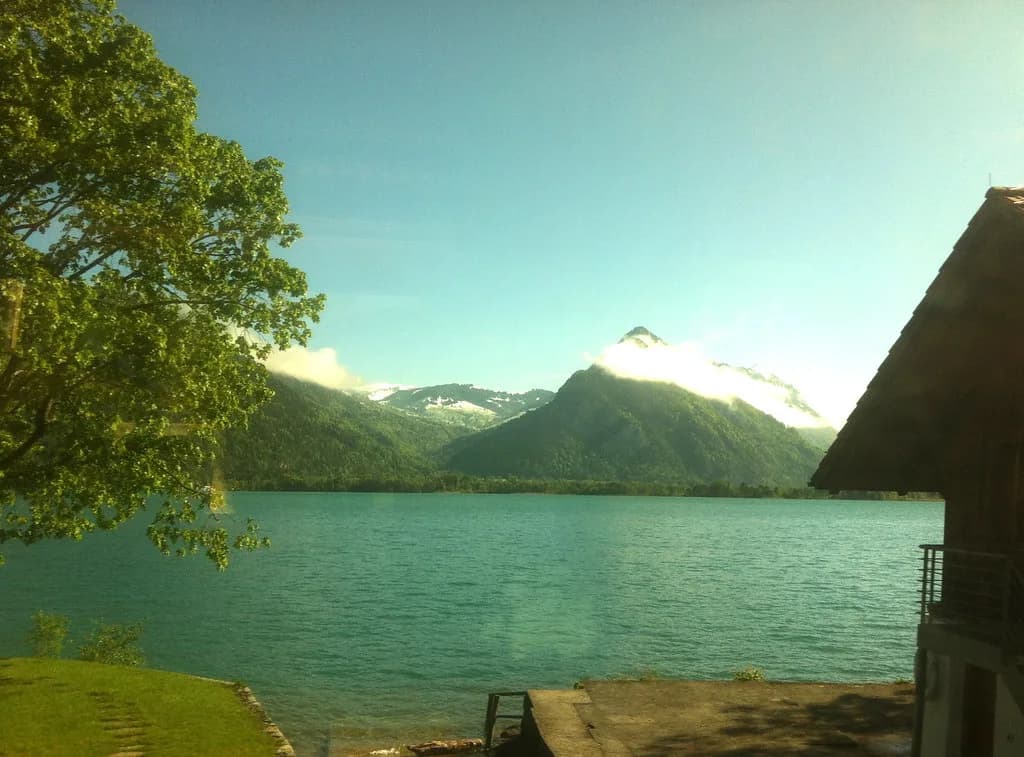
Interlaken sits between Lake Thun and Lake Brienz, which is where the name comes from, and it works as a base for the central Alps rather than as a sight in itself. Arrive by mid-afternoon, walk the main street between the two lakes, and use the evening to plan the next day's summit rather than to add another transfer.
If you are deciding between two bases for the mountain days, Interlaken puts you closer to the Bernese Oberland summits while Lucerne gives you the lake and Pilatus. Pick one and day-trip from it; changing hotels twice inside four days costs more time than most people expect.
Day 5: Interlaken Base Day, Jungfraujoch or a Lower Summit
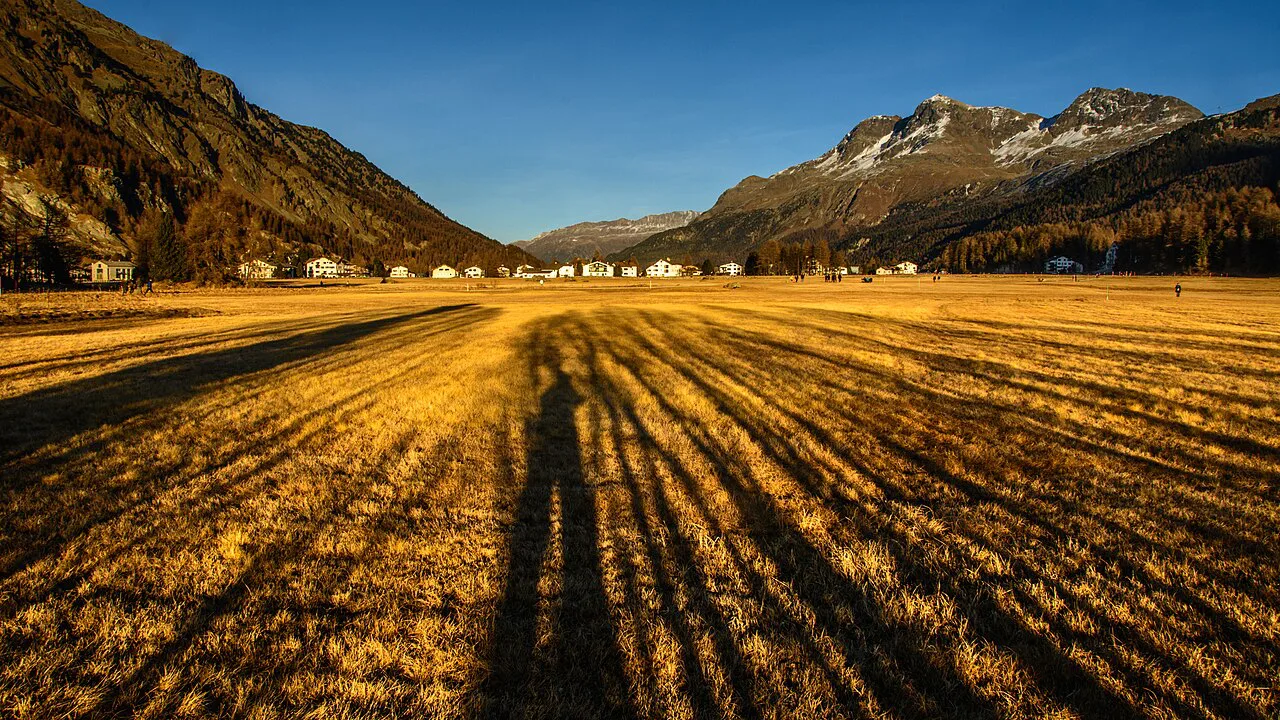
Jungfraujoch, billed as the Top of Europe, is the headline excursion and the most expensive single ticket of the week; it is also the one most exposed to cloud, since you pay for a view you may not get. The honest alternative is a lower summit or a village on the valley floor, which costs less and still gives you glaciers and peaks on a clear day.
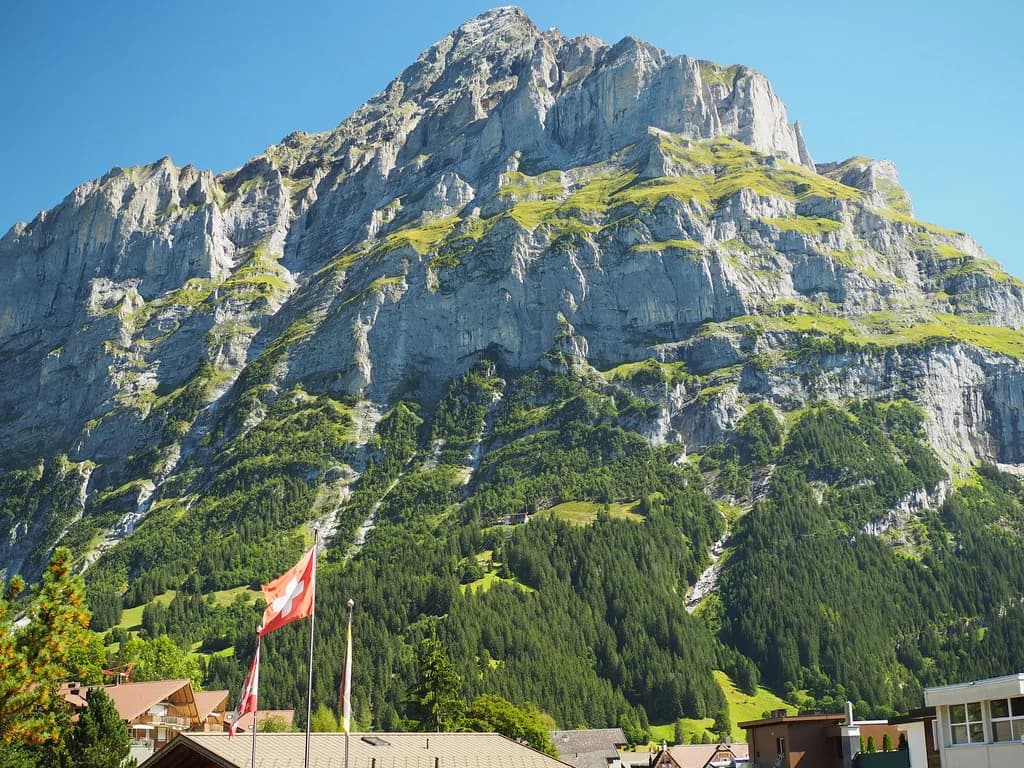
Grindelwald is about 45 minutes from Interlaken by train and makes an easy half-day out, with the village sitting under the Eiger north face. It is small enough that an afternoon covers it, which is the argument for sleeping in Interlaken and visiting rather than moving your bags again.
For travelers extending the trip later, the 10 day switzerland itinerary shows how the extra days open up the far south and the Valais without breaking this linear route.
Day 6: Interlaken to Bern
Bern rewards a full day on foot, and the old town is a UNESCO-listed arcaded spine that stays walkable in any weather because the arcades run for long stretches along the shopping streets. Start at the Zytglogge, the medieval clock tower, and time your pass for the hour when the figures move, then walk east through the arcades to the Münster.
The Münster's platform gives you the best roofscape view in the city, and the riverside terrace below the cathedral is the place to sit afterward. Bern is also the stop where a city day and a museum hour fit together easily, since the old town sights sit within a few minutes of each other.
Day 7: Bern to Zürich for Departure
Return to Zürich on the last morning and keep the final hours close to the station: a last walk through the Altstadt, a coffee on the river, and a chocolate purchase you have not already made. Zürich and Geneva are Switzerland's two major airports, so a loop that starts in one city and ends in the other can save a backtrack if your flights allow it.
Train Tickets and Whether a Pass Pays Off
Swiss trains, buses and boats are easy to use without a car, and the Swiss Travel Pass gives unlimited travel on consecutive days with 3, 4, 6, 8 and 15 day options. It also covers free entry to more than 500 museums and up to 50% off most mountain excursions, which is where the value sits on a week like this one.
The Swiss Half Fare Card instead gives half-price tickets on trains, buses and boats plus up to 50% off most mountain excursions, and it stays valid for one month. For a week with several transfers, the way to choose is to add up the full fare of every ride you plan: if the total exceeds the pass price, the pass wins, and if half the total exceeds the card price, the card wins.
Check the current price of both products before you buy, because they change by season and by class. A week that includes one expensive summit usually tips toward the Half Fare Card, while heavy long-distance rail days favor the Travel Pass.
Switzerland uses the Swiss franc rather than the euro, and cards are widely accepted across the route, so you need far less cash than the prices suggest. Keep a small amount of coin for lockers and small kiosks, and pay the rest by card.
Where Seven Days Gets Tight
Adding Zermatt, Geneva or the far south to this week means cutting something else, and the cut should be a city day rather than a mountain day. Zermatt alone needs a long transfer at each end, and a December-style route that pairs Zermatt, Interlaken, Grindelwald and Zürich spends much of the week on trains rather than in the places themselves.
If your heart is set on the Matterhorn, build the week around Zermatt and drop Bern, or run the itinerary west to east and finish near Zürich for the flight home. Before you commit the nights, weigh it against our Zermatt city guide, which plans two or three days in the valley at a realistic pace. Trying to hold both the Valais and the Bernese Oberland in seven days leaves each with a single rushed morning.
Comparing cities first helps: the best cities in switzerland for a short break are the ones that sit on a direct rail line from your arrival airport, and Zürich, Lucerne and Bern all qualify.
Money-Saving Moves That Actually Apply Here
The largest single saving on this route is not a discount but a substitution: swap the top-of-the-week summit for a lower viewpoint and you cut the most expensive day without losing the Alps. The second is the pass decision above, which is worth a half hour with a calculator before you commit to the Swiss Travel Pass or Half Fare Card.
Museums covered by the Swiss Travel Pass are effectively free while the pass is active, so put a museum block on a pass day rather than a separate city day. Spread across the route that includes the Zürich and Bern collections, and check each museum's opening days before you build the block.
Plan museum visits around the days they are open rather than assuming a Monday opening, since many Swiss museums close on Mondays and many shops close on Sundays. Check the specific institution's days on its own site when you fix your city days.
Plan Your Visit
Seven days across Zürich, Lucerne, Interlaken and Bern gives you two real city days, one strong mountain day and a base day you can spend high or low. Keep the route linear, book the pass once you have added up your fares, and hold the summit decision until you see the morning sky.
Travelers with more time can stretch the same line into a longer trip, and those with less can cut it to a 5 day switzerland itinerary without losing the shape of the trip.
Explore more Switzerland guides
Frequently Asked Questions
Is seven days enough to see Zürich, Lucerne, Interlaken and Bern?
Yes, if you keep the route linear and accept one mountain day rather than two or three. Zürich and Bern work as full city days, Lucerne splits into an old-town day and a summit day, and Interlaken acts as a base rather than a destination in its own right. That leaves the transfers short and the walking time intact.
Should you base in Interlaken or Lucerne?
Interlaken puts you closer to the Bernese Oberland summits, while Lucerne gives you the Kapellbrücke old town and a cable-car day on Pilatus. Pick one for the mountain half of the week and day-trip from it rather than changing hotels twice, since each move costs half a day in packing and check-in.
What does a 7-day Switzerland trip cost?
Rail passes, summit tickets and museum entries are the variable costs, and they change by season and class. The largest controllable expense is the summit day: a high multi-stage cable car costs far more than a lower viewpoint, and the Half Fare Card or Swiss Travel Pass reduces both depending on how much you travel.
Is the Swiss Travel Pass worth it for a week?
It depends on your total fares. Add up the full price of every train, bus and boat ride you plan; if that total is higher than the pass, the pass pays. If roughly half of that total is higher than the Half Fare Card price, the card pays instead, and a week with one expensive summit often tips toward the card.
Do museums in Switzerland close on Mondays?
Many do, but not all, so check the individual museum's opening days before you fix your city days. If you hold a Swiss Travel Pass, put museum visits on a day the pass is active so the entry is covered, and confirm the institution's schedule on its own site.
When is the best time for this itinerary?
Late spring and early autumn give the most comfortable city walking and the best odds of clear high viewpoints. Summer brings the fullest cable-car schedules and the largest crowds, while winter turns the mountain days into snow experiences and shortens the daylight you have for the old towns.
Sources
Notes for your Swiss city break
Optional updates to our Swiss city guides.
You might also like
Continue reading
More guides you'll find useful