Gotthard Panorama Express: Route, Tickets and What You Actually Get
The Gotthard Panorama Express pairs a Lake Lucerne boat with a first-class panoramic train. See the route, the reservation supplement and the trade-offs.
On this page
The Gotthard Panorama Express is a single scenic journey built from two halves: a boat across Lake Lucerne between Lucerne and Flüelen, and a first-class panoramic train along the historic Gotthard mountain railway to Lugano or Bellinzona. It runs as a seasonal scenic product rather than a normal scheduled service, so the fare, a compulsory reservation and the direction you ride all shape the day. This guide separates what you pay for the train from what you pay for the view.
The appeal is the combination: lake scenery past the Rütli meadow, the Schillerstein rock and the Tellskapelle chapel, then spiral tunnels, stone viaducts and the Wassen church, which the train passes three times at different angles as it climbs. End to end the trip takes roughly five and a half hours, with the boat leg alone around two hours. That is a real block of a short Swiss trip, so the honest question is whether the panoramic version earns the time and money over a fast ordinary train.
What the Gotthard Panorama Express Actually Is
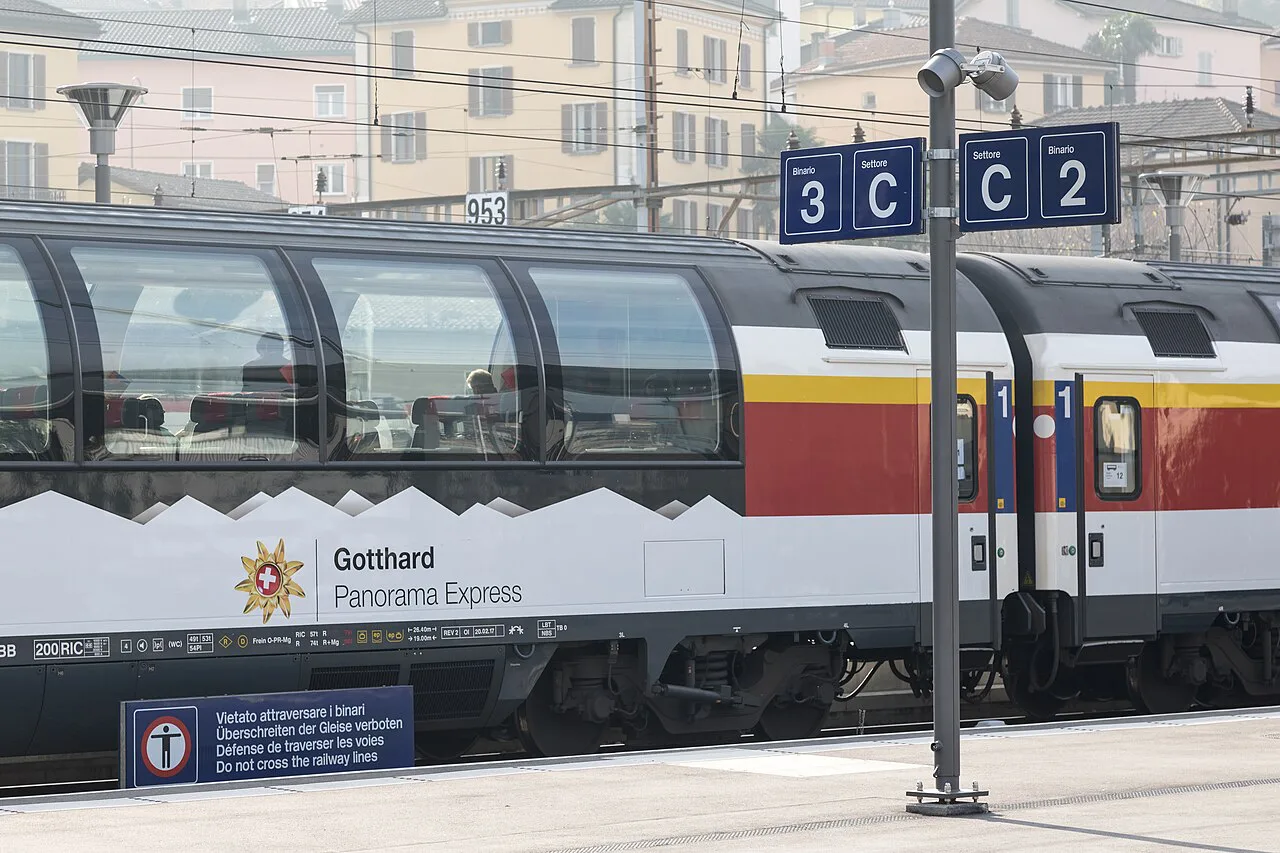
Think of it as a package, not a train. You travel by boat between Lucerne and Flüelen on Lake Lucerne, then change at Flüelen onto panoramic coaches that follow the old Gotthard line south through the Alps to Lugano or Bellinzona. On board, large panorama windows do the work and narration explains the route, while a dedicated photo carriage with openable windows lets you shoot without glass in the way.
What is the route of the Gotthard Panorama Express? It runs between Lucerne and Lugano or Bellinzona in two legs: a boat across Lake Lucerne between Lucerne and Flüelen, then a first-class panoramic train on the historic 1882 Gotthard mountain railway. The journey can be done in either direction.
How much does the Gotthard Panorama Express cost? You pay a first-class fare plus a compulsory panoramic train reservation of CHF 24 per person. Second-class Swiss Travel Pass or Eurail holders also pay a CHF 17 first-class upgrade.
Do you need a reservation on the Gotthard Panorama Express? Yes, the panoramic train reservation is mandatory. A boat seat reservation is not required, though it is recommended for busy summer crossings between June and August.
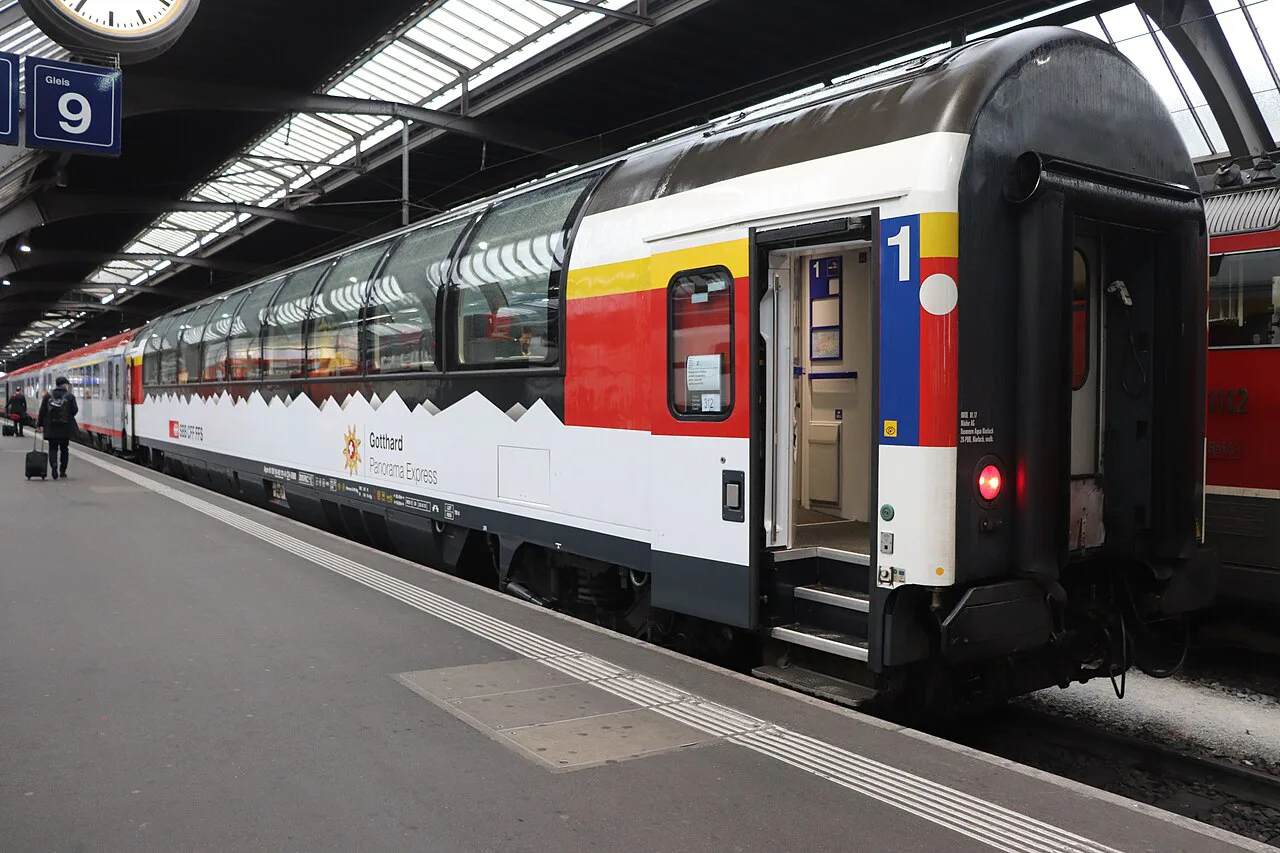
The panoramic train carries first-class coaches only, which is why second-class rail pass holders need an upgrade to board. Boats on the lake leg have onboard restaurants and outdoor decks, so the crossing doubles as a meal break rather than dead time. Luggage travels with you on the same boat and train, so you can use the route as a transfer between Central Switzerland and Ticino instead of a there-and-back outing.
The Route, Leg by Leg
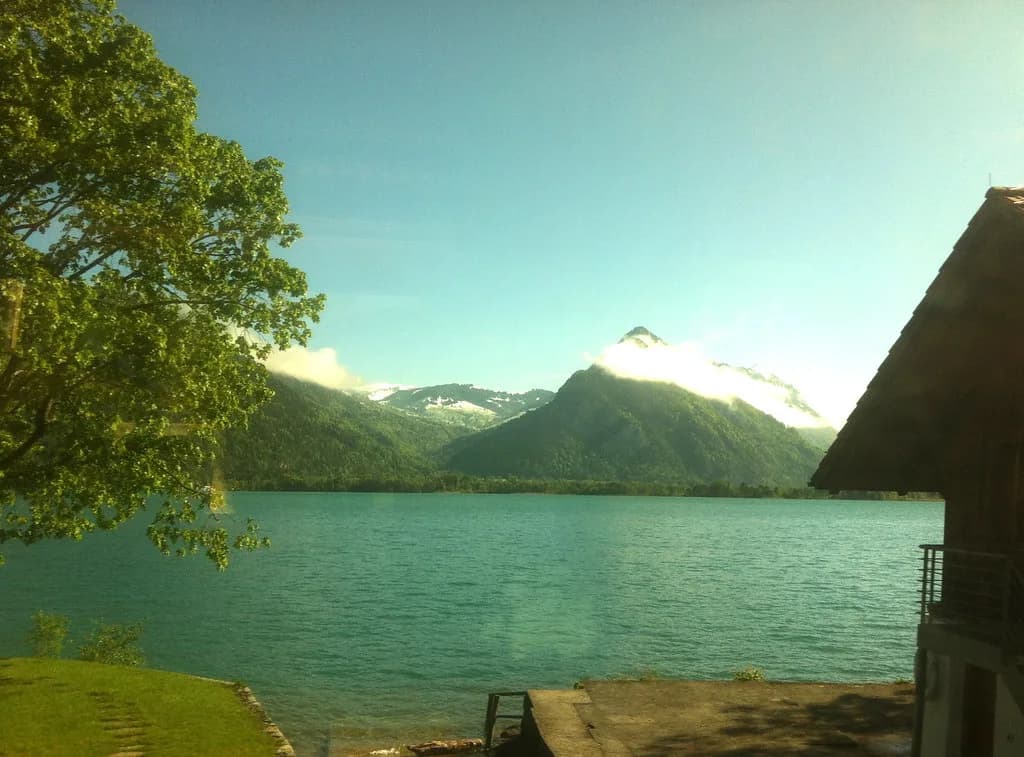
From Lucerne the boat leaves from the Bahnhofquai pier next to the main station and crosses the lake to Flüelen, calling at lakeside villages along the way. From the water you pass the Rütli meadow, the Schillerstein rock and the Tellskapelle chapel, the landscape of the William Tell legend, before the boat docks at Flüelen. From there the panoramic train takes over and climbs the historic mountain route.
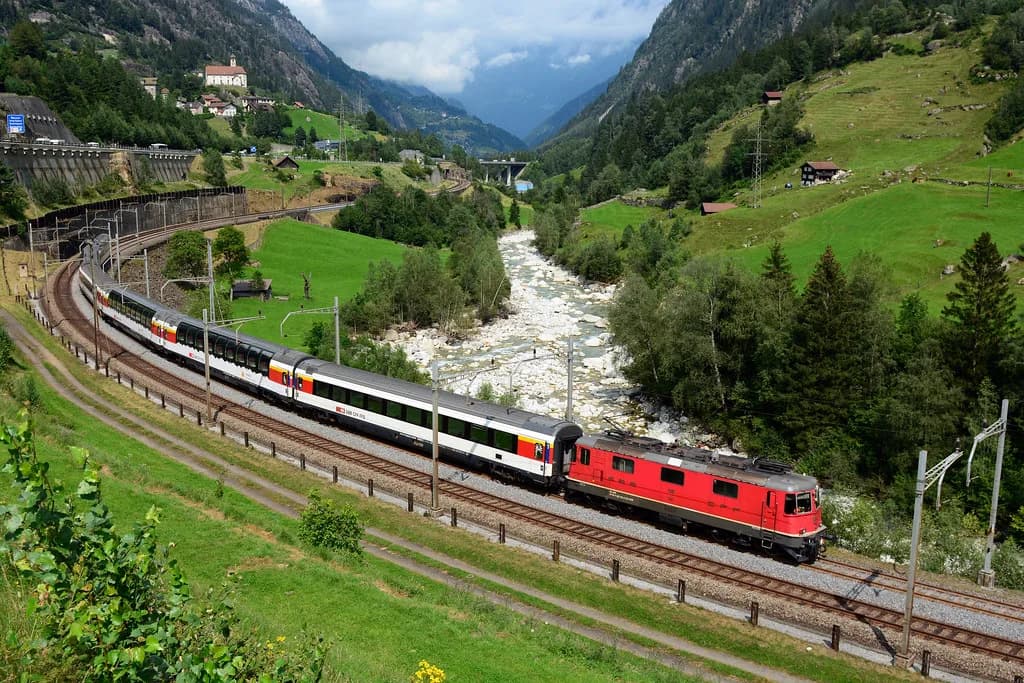
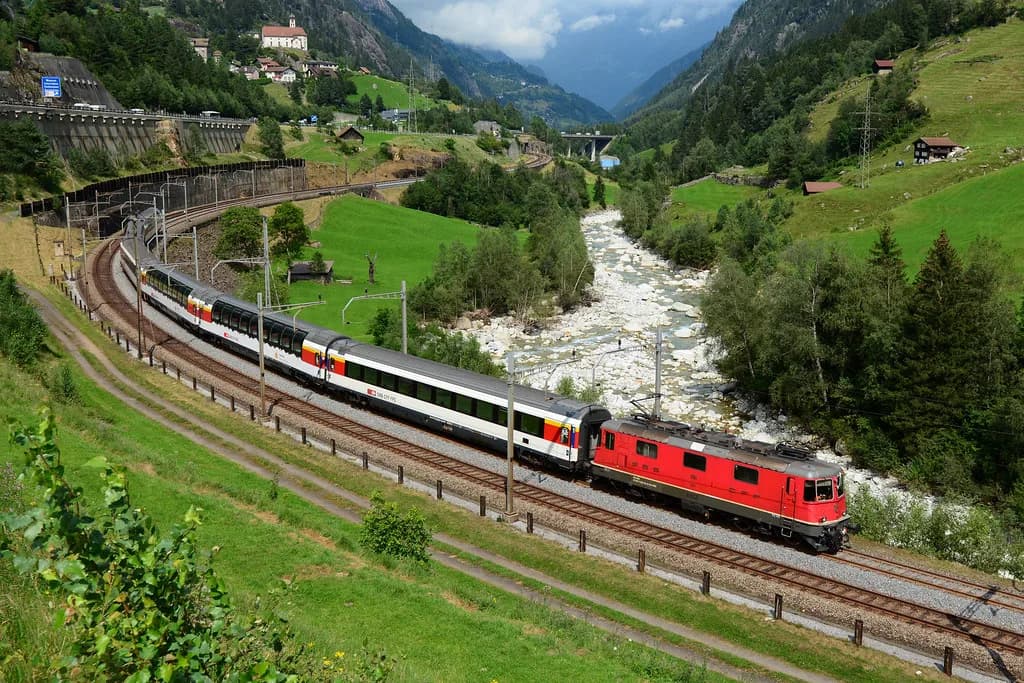
South of Flüelen the line runs through the Biaschina Valley gorge, past the spiral tunnels near Giornico and Faido, and around the Wassen loops, where the church appears three times from shifting angles. The route tops out at roughly 1,141 meters, high enough for alpine views but not for altitude problems. It finishes in Ticino at Lugano or Bellinzona, the Italian-speaking side of the country, where palm-lined lakeshores replace the mountain valleys.
The journey works in both directions, so you can start in Lucerne or in Ticino. The sequence simply reverses: panoramic train first, boat second, or the other way around. Most travelers ride it as a one-way scenic transfer rather than a loop, which keeps the day manageable.
Why the 1882 Gotthard Line Matters
The panoramic train follows the original Gotthard mountain railway opened in 1882, with its spiral tunnels, stone viaducts and tight valley curves. Modern fast trains use the Gotthard Base Tunnel instead, a flat, quick bore that gets you between Central Switzerland and Ticino without any of that scenery. The historical line is the whole point of this trip: slower, twistier and built for looking out of the window.
That engineering history explains the Wassen church trick, where the line loops through the valley so the same building slides past the window three times at different heights. It is the single most photographed moment on the route and the reason the photo carriage exists. If railway history bores you and you only want to reach Lugano, the base tunnel route is genuinely faster and cheaper.
Tickets, the Reservation and What the Pass Covers
Three things stack up on this journey: the first-class fare, the compulsory panoramic train reservation of CHF 24 per person, and, for holders of a second-class Swiss Travel Pass or Eurail pass, a first-class upgrade of CHF 17 per person. The Swiss Travel Pass covers the panoramic train fare and the Lake Lucerne boat cruise, but the reservation supplement is still required on top. Budget the supplement as a fixed cost of riding, not an optional extra.
The boat does not need a seat reservation, though summer crossings between June and August fill up, so booking ahead is sensible for those months. Book tickets, reservation supplements and class upgrades through the SBB website or at any Swiss railway station counter; in peak summer the supplements can sell out early. For a Half Fare Card comparison, a reseller lists a boat-and-train first-class package from Lucerne to Lugano with a Half Fare Card at a reduced rate, and the SBB booking page is the place to confirm the current figure for your dates.
Which Side to Sit On and How to Use the Photo Carriage
Riding from Lugano or Bellinzona toward Lucerne, sit on the right-hand side of the train for the valley and mountain views as the line climbs north. Head for the photo carriage, in the center of the formation, when the train reaches the Biaschina gorge and the Wassen loops, because its openable windows give unobstructed shots. Panorama windows are great for watching but poor for photography through reflections.
Food and drinks are served at your seat on the panoramic train, so there is no buffet queue to fight and no need to pack a lunch for that leg. On the boat, outdoor decks are the better seat in good weather and the onboard restaurant covers the indoor option.
Timing the Day and the Operating Season
Allow roughly five and a half hours for the whole route, with about two hours on the water and the remainder on the train. The service runs seasonally from April to October, with no winter operation, and does not run on Mondays during the season. Treat both the season and the Monday gap as planning constraints to confirm against the SBB timetable for your exact date before locking in a day.
Because the trip eats most of a day, it fits best as a transfer day between Lucerne and Ticino rather than a round trip squeezed into a city break. Starting from the Ticino end in the morning gives you the gradual shift from Mediterranean lakeshore to alpine valley as you head north. Many travelers ride the panoramic route one way and return through the base tunnel to save time.
Lugano to Lucerne, or Lucerne to Lugano?
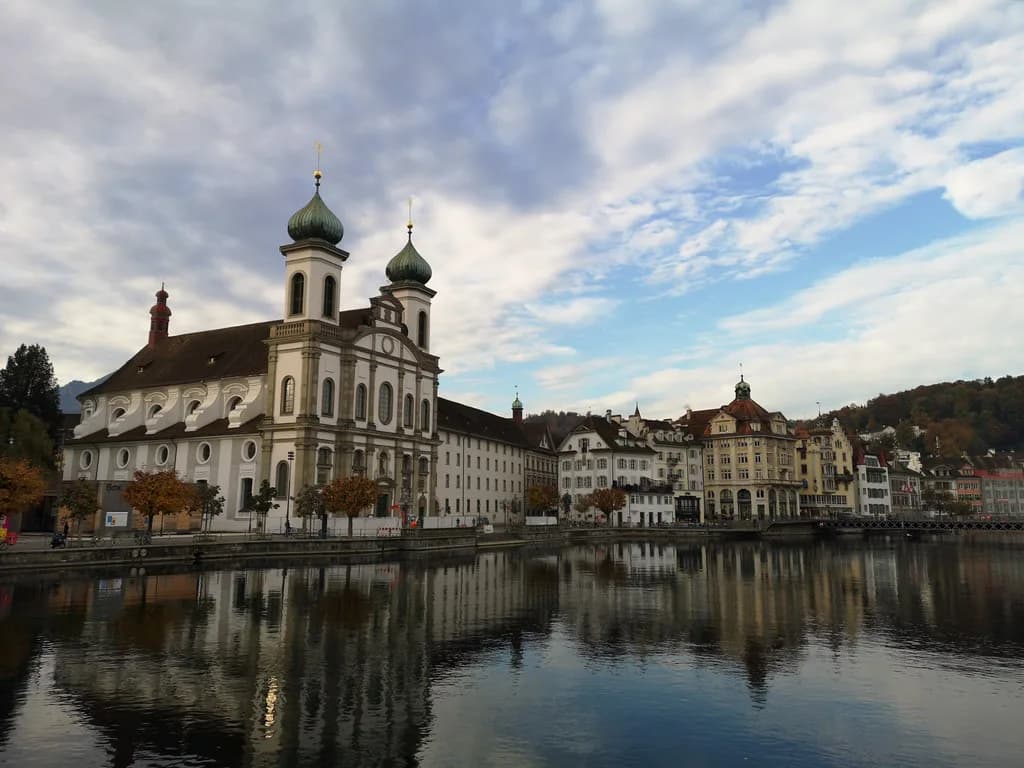
Most people prefer the south-to-north direction, from Lugano or Bellinzona to Lucerne, because the landscape builds from palm-lined lakes to dramatic alpine terrain rather than unwinding from it. The right-hand seating advantage also belongs to this direction, which makes the case stronger. North-to-south still works well if your itinerary runs that way, and the boat leg ends with views of the Chapel Bridge and the old-town waterfront as you arrive in Lucerne. Whichever direction you choose, it is worth checking the best time to visit Switzerland so the seasonal boat and train window matches your dates.
If you are building a wider rail trip, this route slots in beside the other classic Swiss lines covered in the guide to Switzerland scenic trains. It pairs naturally with a Glacier Express or GoldenPass Line day on a longer loop, though the Gotthard trip stands alone fine as a single scenic transfer.
Panorama Express Versus the Regular Gotthard Train
The regular train through the base tunnel is the fast, cheap, unremarkable option: quick, flat and scenic only in the ordinary sense. The Panorama Express is slower, first-class only, and carries a compulsory CHF 24 reservation on top of the fare, which buys the boat crossing, the historic mountain line and the photo carriage. That is the real trade-off: pay a supplement and spend most of a day, or arrive in Ticino in a fraction of the time and spend the savings elsewhere.
For a short city break built around Lucerne, the panoramic day works best if you treat it as the main event of that day rather than something tacked onto sightseeing. If you would rather keep the day for the city itself, the base tunnel train leaves you time for the waterfront and old town, and our Lucerne city guide covers those sights in more detail. There is no wrong answer, only how much of your trip you want to give to a train window.
Is It Worth It? Honest Trade-Offs
Worth it if you want one big scenic day that combines a lake cruise with a historic alpine railway, and you are happy to pay a reservation supplement for first-class panorama coaches. Skip it if you are short on time, traveling on a tight budget, or mainly need to get from Lucerne to Lugano efficiently. The view is the product, and the price reflects that.
Consider how the trip fits your season: the service runs roughly April to October, which lines up with the warmer months covered in the guide to the best time to visit Switzerland. If your dates fall outside that window, the base tunnel train still connects the two regions year-round.
Travelers weighing alternatives often compare it with the Bernina Express, which crosses the Landwasser Viaduct and reaches St. Moritz on a different alpine route, or with the GoldenPass Express between Montreux and Interlaken. Each has its own scenery and supplement structure, so pick the one that matches the cities already on your map.
Fitting It Around a Lucerne or Lugano Stay
The cleanest plan is to ride the Panorama Express one way as your transfer between Lucerne and Ticino, not as a day trip from either city. That way the five and a half hours replace travel you would have done anyway, and you arrive with the day still usable. If you want a full Lucerne itinerary around the boat pier, the Bahnhofquai start point sits beside the main station and the old town. For the city at the other end of the line, our Lugano city guide covers the old town, viewpoints and lakefront.
From Lucerne, a city break can combine the boat departure with the lakefront, Chapel Bridge and old town on the days either side. Travelers extending into Graubünden often add the Glacier Express Guide route toward St. Moritz, which uses the same scenic-railway mindset and a similar reservation logic.
Plan Your Visit
Book the panoramic reservation with your ticket through SBB rather than assuming a rail pass is enough: the Swiss Travel Pass covers the fare and the boat, but the CHF 24 supplement is compulsory and the CHF 17 upgrade applies to second-class pass holders. Choose your direction first, ideally south to north for the right-hand views, then build the day around the roughly five and a half hours the journey takes.
Confirm the operating day for your date on the SBB timetable, since the seasonal April-to-October window and the no-Monday pattern decide whether the trip is even possible that week. If it is not, the base tunnel train gets you between Lucerne and Lugano quickly and leaves the scenic budget for another line.
Frequently Asked Questions
What is the route of the Gotthard Panorama Express?
It runs between Lucerne and Lugano or Bellinzona in two legs: a boat across Lake Lucerne between Lucerne and Flüelen, then a first-class panoramic train on the historic 1882 Gotthard mountain railway. The journey can be done in either direction.
How much does the Gotthard Panorama Express cost?
You pay a first-class fare plus a compulsory panoramic train reservation of CHF 24 per person. Second-class Swiss Travel Pass or Eurail holders also pay a CHF 17 first-class upgrade. Fares and supplements are set by SBB, so check current details when booking.
Do you need a reservation on the Gotthard Panorama Express?
Yes, the panoramic train reservation is mandatory. A boat seat reservation is not required, though it is recommended for busy summer crossings between June and August.
Does the Swiss Travel Pass cover the Gotthard Panorama Express?
The Swiss Travel Pass covers the panoramic train fare and the Lake Lucerne boat cruise. The reservation supplement is still compulsory on top, and second-class pass holders need the first-class upgrade.
Which side of the train has the best views?
Traveling from Lugano or Bellinzona toward Lucerne, sit on the right-hand side for the valley and mountain views. Use the center photo carriage with openable windows for the Biaschina gorge and the Wassen loops.
Is the Gotthard Panorama Express worth it compared with the regular train?
It is worth it if you want one big scenic day combining a lake cruise and the historic alpine line. The regular base tunnel train is faster and cheaper, so skip the panoramic version if time or budget is tight.
Does the Gotthard Panorama Express run every day?
It operates seasonally from April to October and does not run on Mondays during that season. Check the SBB timetable for your exact date before planning around it.
Sources
Notes for your Swiss city break
Optional updates to our Swiss city guides.
You might also like
Continue reading
More guides you'll find useful