5-Day Switzerland Itinerary: Cities, Trains and Days
A five-day Switzerland itinerary built on realistic train hops, with Zürich, Interlaken, Bern and Lucerne, named sights and honest trade-offs on what to cut.
On this page
Five days in Switzerland is enough for two bases and four or five named stops, not a sweep of the country. A route that starts and ends in Zürich, with Interlaken as the mountain base and Bern or Lucerne as the closing city, keeps most hops under two hours and leaves real time on the ground. Anyone travelling overland should look up Flixbus or train tickets early, because the long legs set the shape of the whole trip.
Why Five Days Means Two Bases, Not Five Cities
The temptation with five days is to tick off Zürich, Lucerne, Interlaken, Bern and Geneva. The cost is that each move eats half a day once you count getting to the station, waiting and walking to the next bed. Two bases, one city and one mountain town, give you full days instead of transit days.
Is five days enough for Switzerland? Five days covers two bases and three or four named stops comfortably. A realistic plan is Zürich, Interlaken with a Lauterbrunnen valley day, Bern and Lucerne.
Should you base yourself in Interlaken or Lauterbrunnen? Interlaken has the beds, the two stations and the evening trains, which makes it the easier base. Lauterbrunnen is quieter and closer to Staubbach Falls and the Mürren cable car, but it has fewer places to stay and fewer late connections.
Is Zürich or Lucerne better for a short trip? Zürich has more museums, the lake boats and the airport, so it works as a start or end point. Lucerne has the compact old town, the Kapellbrücke and the Lion Monument within a short walk of each other.
A workable shape is Zürich for the first night, two nights in Interlaken for the valley, then Bern or Lucerne before flying home. Bern to Zürich by train averages about an hour, which makes the capital an easy final stop rather than a detour. Locarno to Interlaken by tram and train takes a little over four hours, so a southern start costs you most of a day.
Travellers who want Lucerne, Interlaken, Bern, Lausanne and Geneva in one week should be honest that this is a rail tour, not a city break. Four changes in five days leaves about half a day per city. The full switzerland itinerary on this site maps the longer version if you can stretch the trip.
Route Options: Zürich–Interlaken–Bern–Zürich Versus Zürich–Lucerne–Bern
The Zürich–Interlaken–Bern–Zürich loop is the mountain-heavy version. You get the Lauterbrunnen valley and Harder Kulm, and you close with the Bern old town before a one-hour train back to Zürich airport. It suits anyone who would rather see waterfalls than a second lake city.
The Zürich–Lucerne–Bern option trades the valley for a compact trio of walkable old towns. Lucerne adds the Kapellbrücke and the lakefront, and the hops between the three cities are short enough to leave afternoons free. It suits a first visit in poor weather, when mountain viewpoints are the first thing to lose. If Lucerne ends up as your longest stop, our Lucerne city guide turns those short hops into a workable plan.
Either route assumes you will use the train rather than a car. Swiss Federal Railways runs the network, and a Swiss Travel Pass covers trains, buses, boats and city transport for 3, 4, 8 or 15 consecutive days, with cable cars, cogwheel trains and funiculars discounted by half and museum entry included. Check the pass conditions against your actual legs before buying, since a five-day loop rarely uses a full pass value.
Day 1: Zürich Old Town on Foot
Start in the Altstadt, the old town on the left bank of the Limmat. Lindenhof gives you a free raised terrace over the river, and the Grossmünster and Fraumünster towers sit within a few minutes of it. The Kunsthaus Zürich, the city's main art museum, is a short tram ride or a twenty-minute walk from the river.
Keep the first day flat and close. Bahnhofstrasse, the Niederdorf lanes and the lakefront at Bürkliplatz all sit inside a single walking loop, and Zürich's trams and buses fill the gaps when your legs give out. If you land in the morning, this is a half-day plan; if you land at noon, trim it to the Lindenhof, one church and dinner. If you would rather base the whole opening stretch here, our Zürich city guide lays out those days hour by hour.
Day 1 Add-On: Uetliberg or a Stroll Along the Limmat
With energy left, Uetliberg is the classic Zürich viewpoint, reached by train from the main station. The alternative is a low-effort walk along the Limmat through Zürich-West, past the old industrial buildings that now hold shops and galleries. Pick the hill on a clear afternoon and the river on a grey one.
Zürich also has a Dolderbahn funicular and the Zürich Zoo if you are travelling with children. Neither fits a tight five-day plan alongside the mountains, so treat them as rain options rather than fixed stops. The 10-Day Switzerland Itinerary is the version where these smaller city sights get room.
Day 2: Train to Interlaken, Harder Kulm and the Two-Station Layout
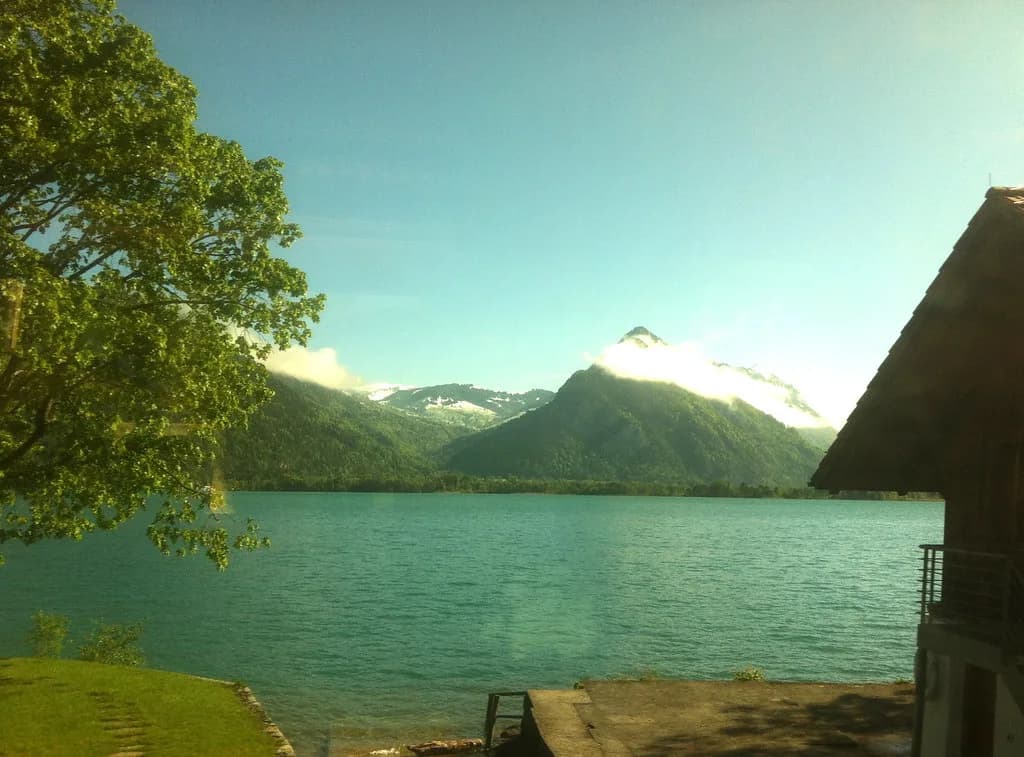
Interlaken is split in two. Interlaken West serves the town center, and Interlaken Ost is the station for the Lauterbrunnen valley trains and the boats on Lake Brienz. Book a bed near the station you will actually use, or you will spend your savings on taxis.
The afternoon belongs to Harder Kulm, the funicular viewpoint above the town and the classic look down onto Interlaken between the two lakes. Below it, the Höhematte open meadow gives you the same postcard view for nothing. Add the Alpenrose landscape gardens if you want a slower hour.
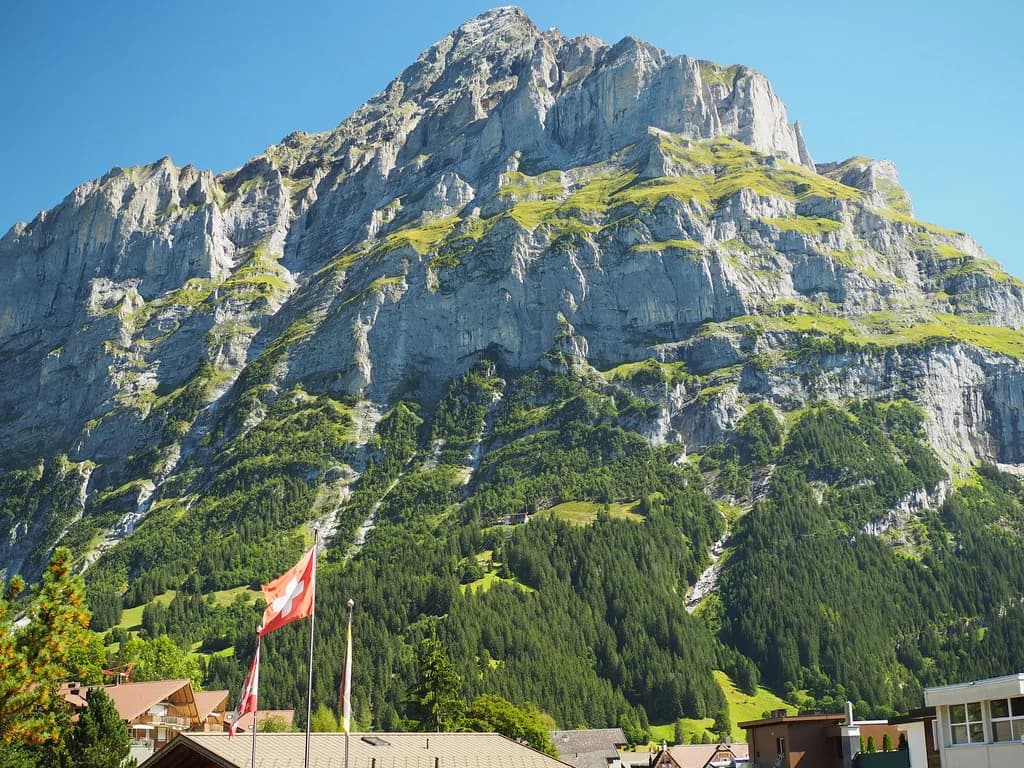
Interlaken works as a base because it puts Jungfraujoch, Grindelwald and the Bernese Oberland within day-trip range. That convenience is also why it is the busiest stop on the circuit. Lauterbrunnen, twenty minutes up the valley, is quieter but has fewer beds and fewer late trains.
Day 3: Lauterbrunnen Valley Day
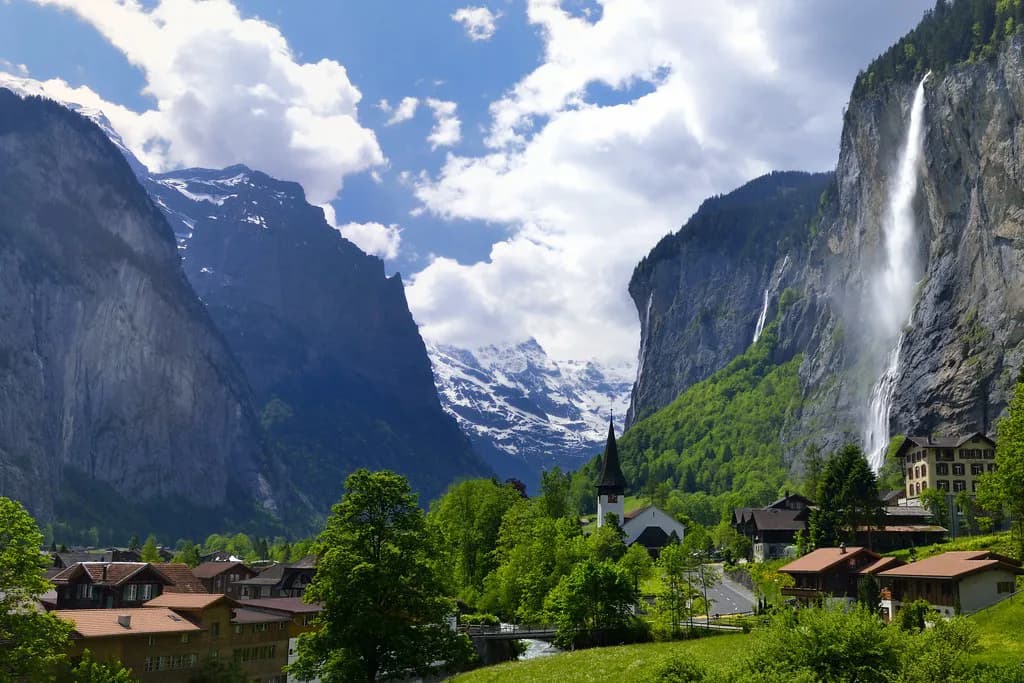
Take the train from Interlaken Ost to Lauterbrunnen, a run of about twenty minutes, and start with the village and Staubbach Falls, which drop straight off the cliff behind the church. Trümmelbach Falls, the glacier-fed falls cut inside the rock, are reached by the valley bus or a walk from the village. Both are the reason this valley earns a full day.
Finish higher up. The cable car and train to Mürren put you on a car-free terrace opposite the Eiger, Mönch and Jungfrau, and Wengen is the other classic village stop on the same network. A Swiss Travel Pass discounts the gondolas and mountain railways, and you should show the pass when buying those tickets.
Day 3 Trade-Offs: Jungfraujoch Versus a Valley-Level Day
Jungfraujoch, the highest railway station in Europe, swallows most of a day and a large share of a five-day budget. The trade is real: you get snow and the Aletsch glacier view, and you give up the valley floor, Mürren and any slow lunch. On a short trip with mixed weather, the valley day is the safer bet because it does not depend on a clear summit.
If the summit is the point of the trip, build the day around it and skip Bern instead. Trying to do Jungfraujoch in the morning and Bern in the evening leaves you on trains. One mountain day and one city day beats two half-days.
Day 4: Bern Old Town — Zytglogge, Münster and Rosengarten
Bern's old town is a UNESCO-listed arcaded street, and the Zytglogge clock tower sits in the middle of it. The Bern Münster, the cathedral at Münsterplatz, is a few minutes' walk east, and the Bärenpark on the Aare bend is a further fifteen minutes downhill. The Rosengarten across the river gives you the classic view back over the roofs.
The old town is compact enough to walk end to end in half an hour, so the day is about depth rather than distance. The Aare loop, the arcades and the riverside paths fill a full morning. Leave the afternoon for one museum, not three.
Bern is Switzerland's capital and Zürich is its largest city, which is why the two are often confused as a first stop. Coming from Lauterbrunnen, Bern is about an hour and a half by train, so it works better as an overnight stop than a day trip.
Day 4 Museums: Kunstmuseum, Einstein Museum and Zentrum Paul Klee
The Kunstmuseum Bern, the Einstein Museum inside the Historical Museum, and the Zentrum Paul Klee are three separate collections. The Zentrum Paul Klee sits east of the old town with the Klee collection as its core; the Einstein Museum covers the physicist's Bern years. Pick one, because two would eat the whole afternoon.
This is where Bern has the edge over a mountain day in bad weather. If rain is forecast, move Bern earlier in the plan and swap the valley for a museum afternoon. The Bern card and museum combination entry are worth asking about at the desk, since prices change by season.
Day 5: Lucerne or Back to Zürich
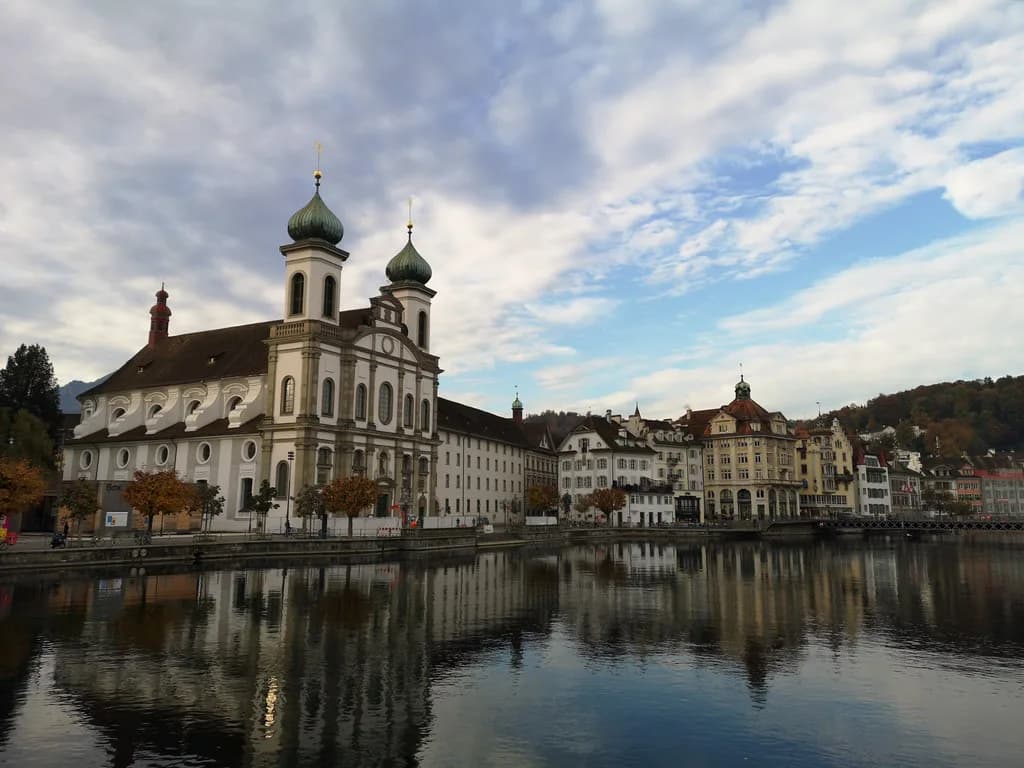
Lucerne is the best closing city if you have not yet seen it. The Kapellbrücke, the covered wooden bridge, and the Lion Monument sit within a twenty-minute walk of each other, and the lakefront promenade fills the rest of the morning. The old town walls above the river add a free viewpoint if your legs are still working.
The alternative is a slow last day in Zürich, with the Swiss National Museum by the main station and the lake boats from Bürkliplatz. That suits an afternoon flight and avoids a final train with luggage. If your flight leaves early, stay in Zürich on the last night.
Where Five Days Feels Rushed and What to Cut
Lake Geneva, Zermatt and the far south do not belong in a five-day trip from Zürich. Locarno and the Lago Maggiore shore are lovely but cost you a long transfer, and the Valais adds another. Cut them first, not the valley day.
The prettiest town question has no single answer, but Wengen and Mürren on the Lauterbrunnen network deliver more per hour than a long detour to a distant village. If you have already used your mountain day, the most beautiful towns in Switzerland list is where to look for a return trip.
If you can add two days, the 7 day switzerland itinerary folds Lucerne and a second mountain day into the same loop without the rushed final morning.
Swiss Francs: What the Days Cost Beyond Transport
Switzerland uses the Swiss franc, written CHF, and some shops, bars, hotels and restaurants accept euros but give change in francs. Budget separately for transport, museum entries, mountain railways and food. Card payments are standard in cities, and cash is useful mainly for small kiosks and village buses.
Museum and mountain-railway prices move by season, so check the official ticket page for each sight before you commit the day. What is worth knowing is the structure: big museums charge per entry, mountain railways charge per ascent, and the pass discounts apply differently to each. Our breakdown of whether is switzerland expensive gives the full CHF picture for a city break.
Walking Times Between the Sights Each Day
Zürich's old town is small: Lindenhof to the Grossmünster is under ten minutes on foot, and the Fraumünster is a bridge crossing away. In Bern, the Zytglogge to the Münster is a five-minute walk along the arcades, and the Bärenpark is another fifteen minutes downhill. Lucerne's Kapellbrücke and Lion Monument are about twenty minutes apart.
Interlaken's two stations are a short bus or train hop apart, and the walk between them takes about twenty minutes. Lauterbrunnen village to Staubbach Falls is a ten-minute walk; Trümmelbach Falls needs the bus or a longer valley walk. Build in the climb back up from the falls.
How the Swiss Travel Pass and Half Fare Card Change the Math
The Swiss Travel Pass works on consecutive days: three, four, eight or fifteen. It covers trains, buses, boats and city transport, halves the price of cable cars, cogwheel trains and funiculars, and includes museum entry. That combination is what makes it worth comparing against point-to-point tickets on a five-day loop.
The Half Fare Card is the other common tool, suited to travellers who will buy individual tickets and want a discount on every leg. Which wins depends on how many mountain railways you use, so price your actual days before buying either. The trip cost guide sets out the CHF totals side by side.
Rain Plan: Which Museums Absorb a Wet Afternoon
When the mountains disappear into cloud, move the city day forward. Zürich's Kunsthaus and the Swiss National Museum, Bern's Kunstmuseum and Zentrum Paul Klee, and Lucerne's Rosengart Collection all give you a solid indoor afternoon. A wet day in Interlaken has less to offer, which is why the valley day should be flexible.
Switzerland on a budget still works in the rain if you lean on free sights: churches, the Lindenhof terrace, the Bern arcades and the lakefront promenades cost nothing. Our budget guide lists the free and low-cost options worth building a wet afternoon around.
When to Go: Spring, Summer and Fall
Late spring to early fall gives you warm weather, open mountain railways and long evenings for city walks. Summer is the busiest season on the Interlaken and Lucerne corridors, so book beds and mountain tickets early. Spring and fall are quieter and cheaper, but high mountain sections can still be closed. If your dates are still open, our guide to the best time to visit switzerland weighs each season for a city break like this one.
August 1 is Swiss National Day, marked with fireworks and food across the country. It is a good reason to be in a town rather than on a mountain that evening. The travel tips page covers the practical side of timing, tickets and luggage.
What Not to Put in a Five-Day Trip
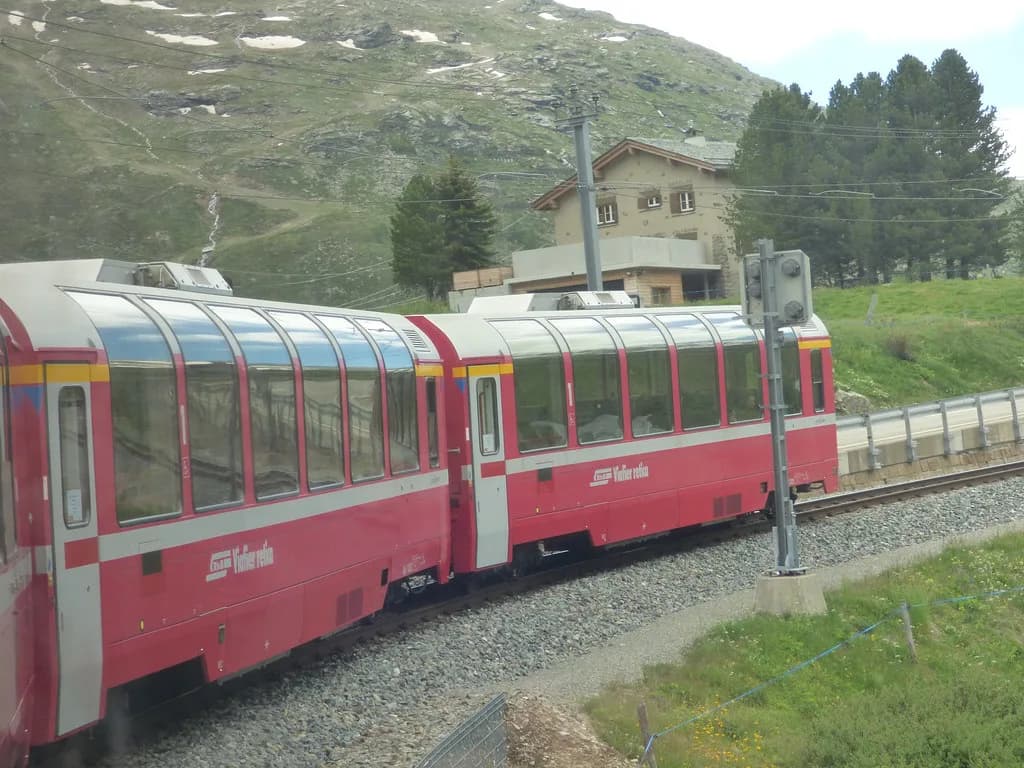
Skip Zermatt, the Glacier Express and the far south on a five-day loop. The Glacier Express is a full-day journey on its own, and adding it turns a city break into a rail tour. Save it for the scenic trains guide when you have a week.
Also leave out anything that needs a full transfer day: Lausanne, Geneva, St Gallen and the Ticino. If you want one of those cities, see the best cities in switzerland comparison and build a separate trip around it. A five-day plan should have three or four named places, not eight.
Plan Your Visit
The strongest five-day Swiss itinerary is Zürich, two nights in Interlaken with a Lauterbrunnen valley day, one night in Bern, and a last day in Lucerne or back in Zürich. That gives you three walkable cities, one big mountain day and one relaxed closing morning.
Book the train legs and the mountain railway tickets before you travel, and check opening days for the specific museum you plan to visit. The days that work are the ones with slack in them, so leave one afternoon free and let the weather decide between a viewpoint and a museum.
Frequently Asked Questions
Is five days enough for Switzerland?
Five days covers two bases and three or four named stops comfortably. A realistic plan is Zürich, Interlaken with a Lauterbrunnen valley day, Bern and Lucerne. Trying to add Zermatt, Geneva or the Glacier Express turns the trip into a rail tour and leaves you on trains instead of in squares.
Should you base yourself in Interlaken or Lauterbrunnen?
Interlaken has the beds, the two stations and the evening trains, which makes it the easier base. Lauterbrunnen is quieter and closer to Staubbach Falls and the Mürren cable car, but it has fewer places to stay and fewer late connections. Pick Interlaken if you want flexibility and Lauterbrunnen if the valley is the whole point.
Is Zürich or Lucerne better for a short trip?
Zürich has more museums, the lake boats and the airport, so it works as a start or end point. Lucerne has the compact old town, the Kapellbrücke and the Lion Monument within a short walk of each other. If you only have one city day, Lucerne is easier to cover on foot; if you need to fly out, Zürich is the practical choice.
How many cities can you realistically see in five days?
Three cities plus one mountain base is the comfortable maximum. Every change of city costs half a day once you count the station, the wait and the walk to your bed. Four or five cities in five days means you see the inside of trains more than the inside of anywhere.
Is the Swiss Travel Pass worth it for five days?
The Swiss Travel Pass covers trains, buses, boats and city transport on consecutive days, halves the price of many cable cars, cogwheel trains and funiculars, and includes museum entry. On a five-day loop that uses two or three mountain railways, it is often worth comparing against a Half Fare Card plus individual tickets. Work out your actual legs before buying.
What is a good itinerary for a five-night trip to Switzerland?
Spend the first night in Zürich and walk the old town, then move to Interlaken for two nights with one full valley day at Lauterbrunnen and Mürren. Spend night four in Bern and walk the old town, then close in Lucerne or back in Zürich. Book the train legs in advance and keep one afternoon free for weather.
What should you cut from a five-day Switzerland trip?
Cut anything that needs a full transfer day: Zermatt, Lake Geneva, the Ticino and the Glacier Express. Those are return-trip material or belong in a longer itinerary. Keep the Lauterbrunnen valley day and use the saved hours for a second afternoon in Bern or Lucerne.
Sources
Notes for your Swiss city break
Optional updates to our Swiss city guides.
You might also like
Continue reading
More guides you'll find useful