Bernina Express: Route, Timing and Tickets for the Alpine Train
The Bernina Express links Chur and Tirano across 196 bridges and 55 tunnels. Here's the route, how long it takes, reservation rules and ticket choices.
On this page
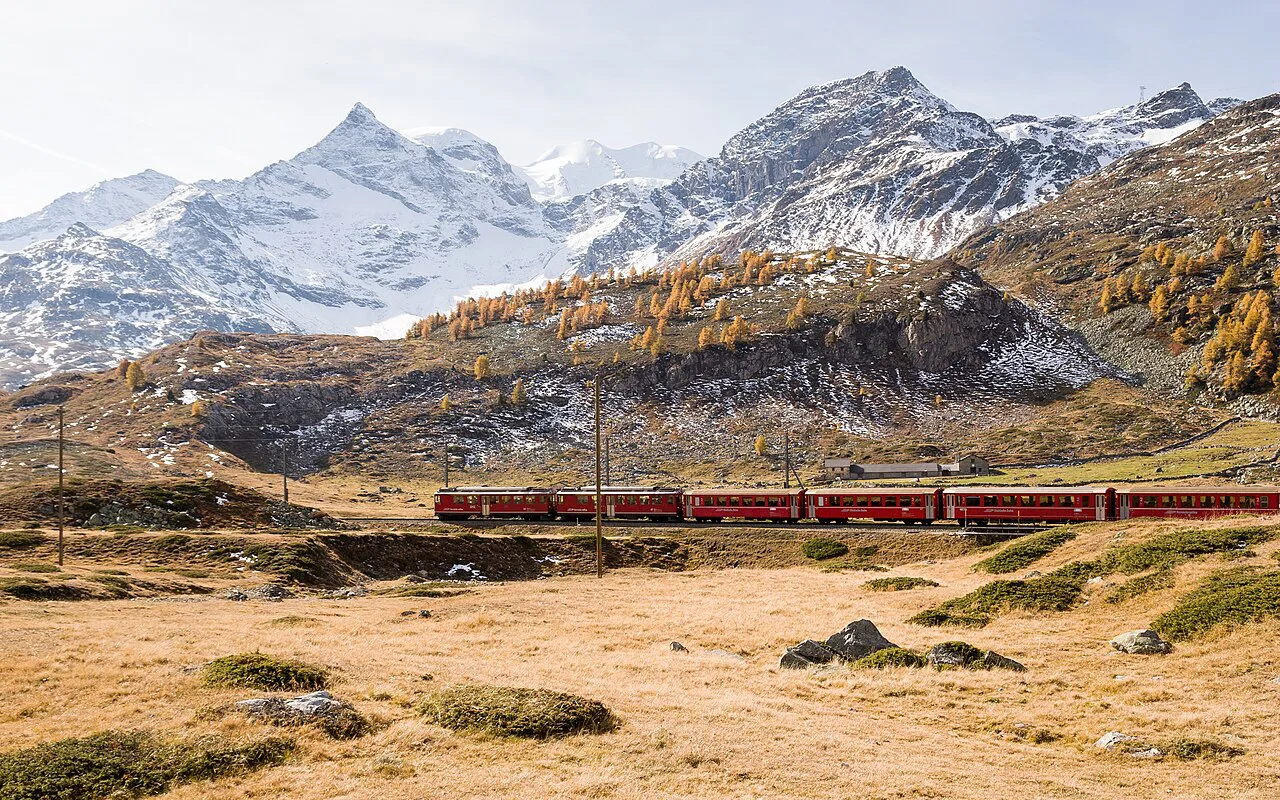
The Bernina Express is a panoramic train that runs from Chur in Switzerland to Tirano in Italy, crossing the UNESCO World Heritage Albula and Bernina lines over 196 bridges and through 55 tunnels. It is the same rail line served by ordinary regional trains, so the choice is between a reserved panoramic car with seat service and an unreserved regional carriage on identical tracks.
Allow roughly 4 hours for Chur to Tirano and roughly 2 hours 15 minutes for St. Moritz to Tirano, so a short city break can fit the southern half without committing a whole day. The route is operated by Rhaetian Railway (RhB), and tickets, seat reservations and the connecting bus are all sold through its site.
Where the Bernina Express Starts and Ends
The full run starts in Chur, which RhB calls the oldest town in Switzerland, and finishes in Tirano on the Italian side of the Alps. A shorter version begins at St. Moritz, joining the same line for the climb over the Bernina Pass and the descent to Tirano.
Does the Bernina Express run from Chur or St. Moritz? Both. The full journey begins in Chur and ends in Tirano, while a shorter version starts at St.
How long does the Bernina Express take? Rhaetian Railway gives about 4 hours for Chur to Tirano and about 2 hours 15 minutes for St. Moritz to Tirano.
Do I need a seat reservation on the Bernina Express? Yes. The ticket and the seat reservation are separate steps on the Rhaetian Railway site, and the reservation supplement is paid in full by every passenger, including children.
Switzerland Tourism describes the train as connecting northern Europe to the south through the UNESCO World Heritage site of the Rhaetian Railway, passing glaciers along the way. That framing matters for planning: this is a cross-border journey, so bring the documents you need for entering Italy, and note that larger dogs need a valid dog ticket plus the paperwork for crossing the border.
The Route in Order: What You See From the Window
Leaving Chur, the line runs through wild gorges before the Landwasser Viaduct, the helical tunnels and the climb to the Bernina Pass. Beyond the pass the route passes the Palü Glacier and finishes with the Brusio Circular Viaduct, a loop that lets the train lose height on the descent toward Italy.
The Albula and Bernina Lines have held UNESCO World Heritage status since July 2008, which is the reason the journey is treated as a sight in itself rather than a transfer. Seats on the right or left change which highlights appear at the window, so plan to look out on both sides rather than settling in for the whole four hours.
How Long the Trip Takes: Chur Versus St. Moritz
Chur to Tirano takes about 4 hours; St. Moritz to Tirano takes about 2 hours 15 minutes. If you are based in Zürich or Lucerne, the Chur departure means a long day with an early start, while positioning yourself in the Engadin first shortens the rail time considerably. Consider the best time to visit switzerland when you fix those dates, since season shapes both the views from the window and how busy the Panorama cars get. The same seasonal thinking guides a longer first trip, so read a Switzerland itinerary alongside it if you plan to add more rail days.
The Wikipedia summary of the journey matches the Rhaetian Railway's description of a four-hour crossing over 196 bridges and through 55 tunnels across the Bernina Pass. Treat both figures as journey length on the train, not door-to-door time, and leave slack on either end for connections and for the border crossing into Italy.
Panoramic Car Versus Regional Train on the Same Line
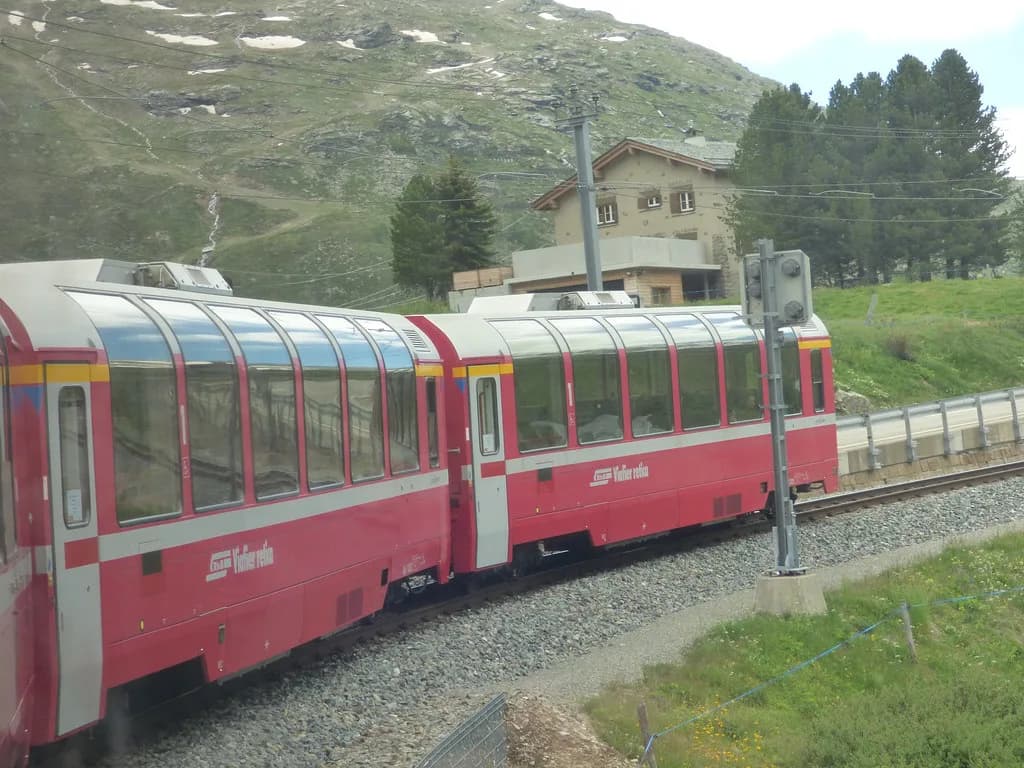
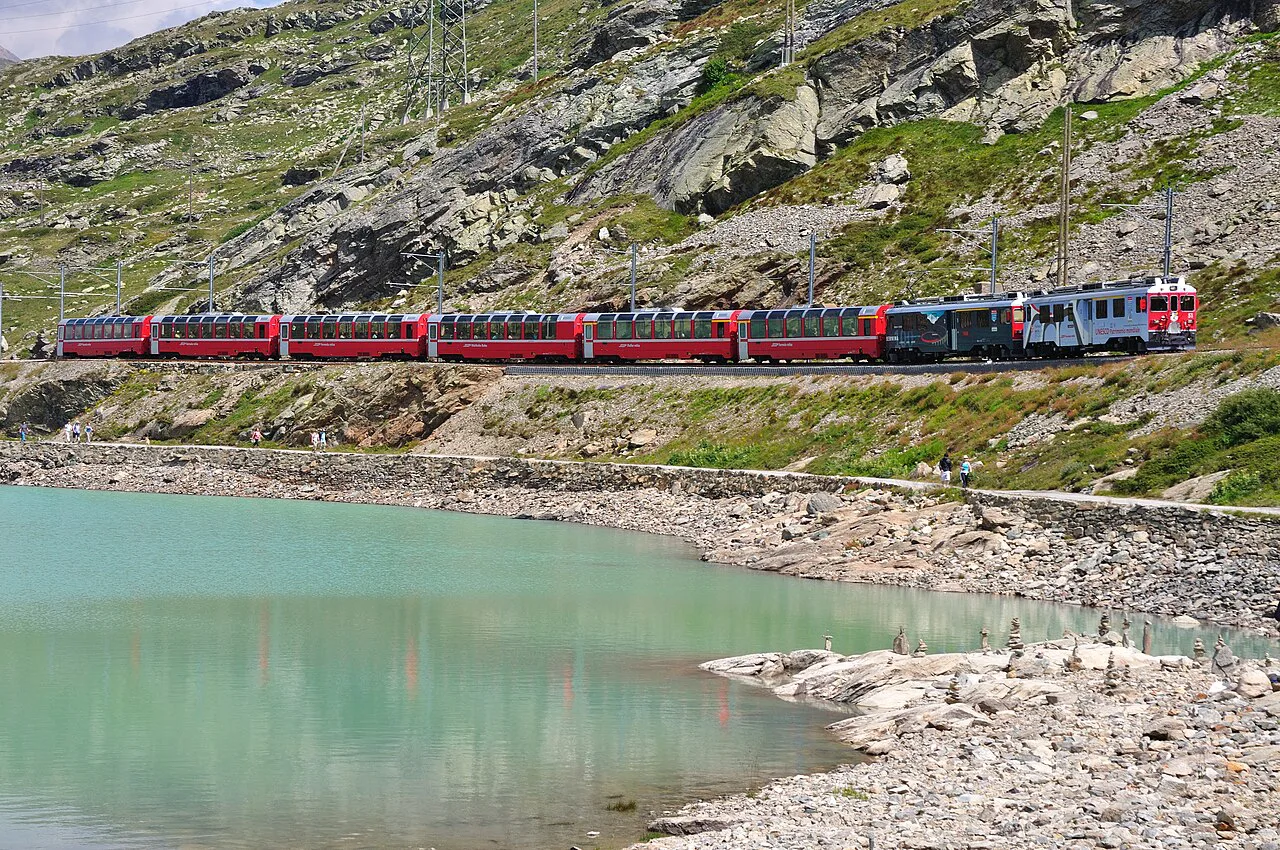
The Bernina Express itself is the reserved panoramic service, with modern first- and second-class cars and large windows that bring the landscape close. Regional trains use the same route, accept self-service bicycle transport and need no panoramic seat reservation, which makes them the flexible, cheaper-feeling option when your dates are fixed.
What you give up on a regional train is the reserved seat, the at-seat catering and the through-carriage experience that makes the Bernina Express a named journey. What you gain is the freedom to break the trip, carry a bike and board without planning weeks ahead.
Booking, Seat Reservations and Group Tickets
Buy a ticket and reserve a seat; the two are separate steps on the RhB site, and the seat reservation supplement applies to every passenger, including children. Groups of 10 or more get a 30% discount on regular public transport tickets, but those bookings must go through Railservice and cannot be made in the online shop.
RhB warns that large groups split across several separate online bookings will have those bookings cancelled retrospectively, so keep a group on one Railservice booking. The same Railservice channel handles wheelchair-accessible seats, reachable by phone or email as listed on the Rhaetian Railway's page.
Fares, Children and the Return-for-Two Offer
Children under 6 travel free and need no ticket, while children and adolescents from 6 until the day before their 16th birthday pay half fare; the seat reservation supplement is paid in full by everyone. Small dogs up to 30 cm shoulder height travel free in a transport box.
RhB lists a Bernina Express special offer of a return journey for two people including lunch at CHF 249. That is the price of that specific package, not a standard single fare, so compare it against two ordinary tickets plus reservations before deciding.
Standard single fares and the current reservation supplement are published on the RhB timetable and ticket prices pages, where you can price your exact date and route. Check those figures before you commit, because they vary by class and by the leg you book.
Onboard: Catering, Wi-Fi and Luggage
A catering team serves snacks and drinks at your seat, so you do not need to stock up before boarding. Free Wi-Fi is available on the train, and an onboard digital companion supplies information about the route on your own phone.
Luggage racks exist but storage space is limited, and RhB points to a baggage delivery service as the alternative for large pieces. If you are traveling between hotels with a full suitcase, sending it ahead is the cleaner answer than wrestling it into a crowded panoramic car.
First Class Versus Second Class in the Panoramic Cars
Both first and second class are panoramic cars with the same route and the same views, so the difference comes down to seating layout and space rather than scenery. RhB publishes interior views of both classes, which is the quickest way to judge whether the upgrade is worth it for a four-hour ride.
Because the seat reservation supplement applies in both classes, the class choice is the main lever on the total price. Families with children often do fine in second class; travelers treating the trip as the centerpiece of a Switzerland scenic trains itinerary may prefer the extra room up front.
Connecting Onward: The Bus to Lugano
RhB runs a Bernina Express Bus between Tirano and Lugano, which connects the rail journey to the Ticino lakes without backtracking through the Alps. It is sold as part of the Bernina Express product on the RhB site, and bicycles cannot be carried on the bus. If you plan to linger by the lake after arriving, our Lugano city guide covers the old town, viewpoints and lakefront.
RhB also offers a Gotthard Bernina round trip that combines the two great Alpine crossings into one loop, which suits travelers who want the rail experience without arranging each leg separately. If your trip already includes the Glacier Express Guide segment toward St. Moritz, check the two routings together before booking so you do not double back on the same line.
Practical Limits: Bicycles, Accessibility and Assistance
Self-service bicycle transport is not allowed on the Bernina Express, though bicycles can travel on regional trains over the same route. Some seats are wheelchair-accessible and can only be booked through Railservice, by phone or email.
Boarding and alighting assistance on the train and the bus must be ordered in advance from the SBB Call Center Handicap, which RhB lists with a phone number and a form. Book that assistance when you book the seat rather than on the day, since it is arranged ahead of travel.
The 2026 Vereina Diversion and What It Changes
Engineering work diverts Bernina Express trains 951 and 952 via the Vereina Tunnel from Thursday 29 October to Friday 13 November 2026, running Chur, Landquart, Klosters, Sagliains and Pontresina. That routing skips the Albula line's classic approach, so travelers booking in that window should expect a different first half of the journey.
The notice is specific to those two train numbers and those dates, not a permanent change to the route. Outside that window the train follows the Albula and Bernina lines described above.
Bernina Express or Glacier Express?
Both are RhB panoramic trains and both can be woven into a few days in Switzerland, but they serve different geographies: the Bernina Express crosses the Bernina Pass into Italy, while the Glacier Express Guide covers a separate east-west Alpine route. Travelers wanting one big rail day should pick based on which end of the country fits their itinerary rather than on train prestige.
If your plan runs Zürich to Lugano or Chur to Lake Como, the Bernina Express sits directly on the logical path. A route built around St. Moritz and Zermatt points the other way, so match the train to the map instead of adding a detour.
Is the Bernina Express Worth It?
Book the reserved panoramic train if the journey itself is the point of the day and you value at-seat service, free Wi-Fi and a guaranteed window. Take a regional train on the same line if you want to hop off along the way, carry a bike or keep costs down, accepting that you will arrange your own food and may stand.
Either way, the 196 bridges, the Landwasser Viaduct and the Brusio Circular Viaduct appear from both types of train. The reservation buys comfort and certainty, not a different landscape.
Plan Your Visit
Decide first whether you are riding for the train or for the transport: the panoramic Bernina Express rewards a dedicated day, while a regional train fits a tighter schedule. Then fix your start point, since Chur adds roughly two more hours on the rails than St. Moritz. If you are starting in Chur, leave time on either side of the departure and see things to do in Chur before boarding.
Book the ticket and the seat reservation together, sort group or accessible seats through Railservice, and add the Tirano to Lugano bus if Ticino is next on your route. RhB publishes current fares, the reservation supplement and timetable details for your exact date.
Explore more Switzerland guides
Frequently Asked Questions
Does the Bernina Express run from Chur or St. Moritz?
Both. The full journey begins in Chur and ends in Tirano, while a shorter version starts at St. Moritz and joins the same line for the Bernina Pass and the descent to Tirano. Choose by where you are staying, because the Chur departure adds roughly two hours of rail time.
How long does the Bernina Express take?
Rhaetian Railway gives about 4 hours for Chur to Tirano and about 2 hours 15 minutes for St. Moritz to Tirano. Those are journey times on the train, so allow extra for connections and the border crossing into Italy.
Do I need a seat reservation on the Bernina Express?
Yes. The ticket and the seat reservation are separate steps on the Rhaetian Railway site, and the reservation supplement is paid in full by every passenger, including children. Regional trains on the same line do not require a panoramic seat reservation.
Can children travel free on the Bernina Express?
Children under 6 travel free and do not need a ticket. From age 6 until the day before their 16th birthday, children and adolescents pay half fare, but the seat reservation supplement is charged in full for everyone.
Can I take a bicycle on the Bernina Express?
No. Self-service bicycle transport is not permitted on the Bernina Express or on the Bernina Express Bus. Bicycles can travel on regional trains over the same route, which is the option for cyclists.
Does the Bernina Express connect to Lugano?
Yes, through the Bernina Express Bus between Tirano and Lugano, sold by Rhaetian Railway as part of the product. Bicycles cannot be carried on that bus, and wheelchair-accessible bus seats must be booked through Railservice.
Is the Bernina Express the same as the Glacier Express?
No. The Bernina Express crosses the Bernina Pass from Chur to Tirano, while the Glacier Express follows a separate east-west route. Pick the one that matches your itinerary rather than adding a detour.
How do groups of 10 or more book the Bernina Express?
Groups of 10 or more get a 30% discount on regular public transport tickets and must book through Railservice, not the online shop. Rhaetian Railway cancels large groups that split themselves across several separate online bookings.
Sources
Notes for your Swiss city break
Optional updates to our Swiss city guides.
You might also like
Continue reading
More guides you'll find useful