How Many Days in Basel? 1, 2 or 3 Days Compared
One day covers Basel's old town, Minster and Rhine bridges; two days adds the art museums. See what one, two and three days cover.
On this page
Two days is the right answer for most visitors to Basel. The old town, the Minster terrace and the Rhine bridges fill a comfortable first day, and the city's art museums justify a second; one day is enough only if Basel is a stop between Strasbourg, Colmar or Zürich and somewhere else.
The city is compact and walkable, and the main sights sit close together on both banks of the Rhine. That compactness is the argument for two days rather than three: you are not covering distance, you are choosing between another museum and another hour on a riverside terrace.
How many days in Basel: the short answer
One day covers the old town core; two days adds the museums and the botanical garden; three days is for travelers who want Dreiländereck, the three-country point north of the center, plus time on the Rhine. Basel is small enough that a third day is a choice rather than a necessity, and the extra day costs you a paid museum ticket or two.
Plan on foot. The historic center is largely free of car traffic, with bikes and trams doing most of the moving, so the distances between Münsterplatz, Marktplatz and the bridges are short strolls rather than tram rides.
What one day in Basel covers: Münsterplatz, Marktplatz and the Rhine
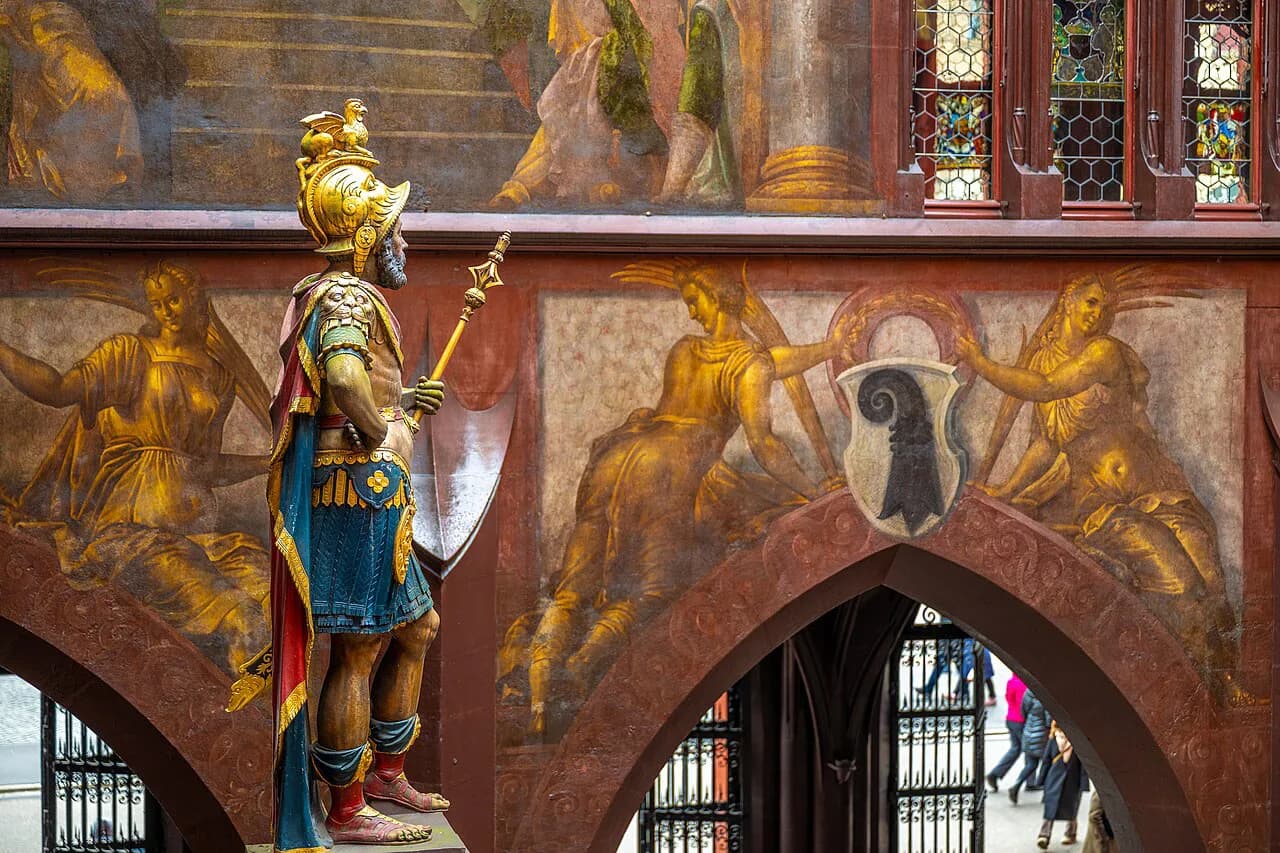
Start at Münsterplatz, the cathedral square above the Rhine, then walk down through the old town lanes to Marktplatz for the red Town Hall. The Rathaus courtyard is more ornate than the facade, and the building is free to look at from the square and the inner court.
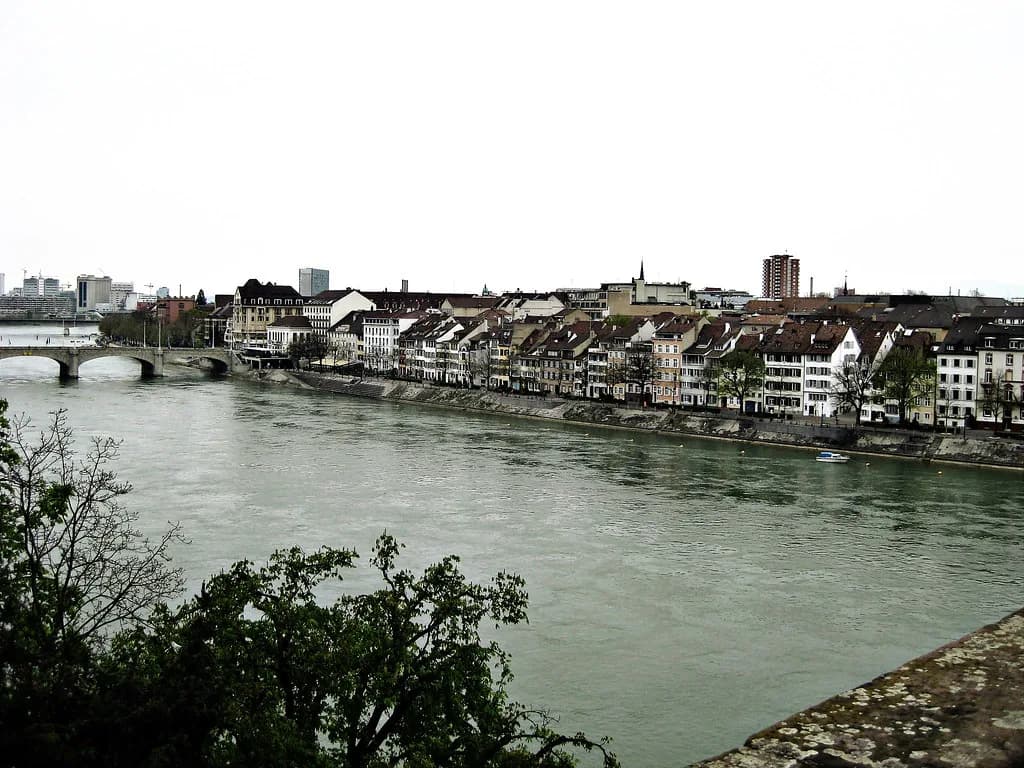
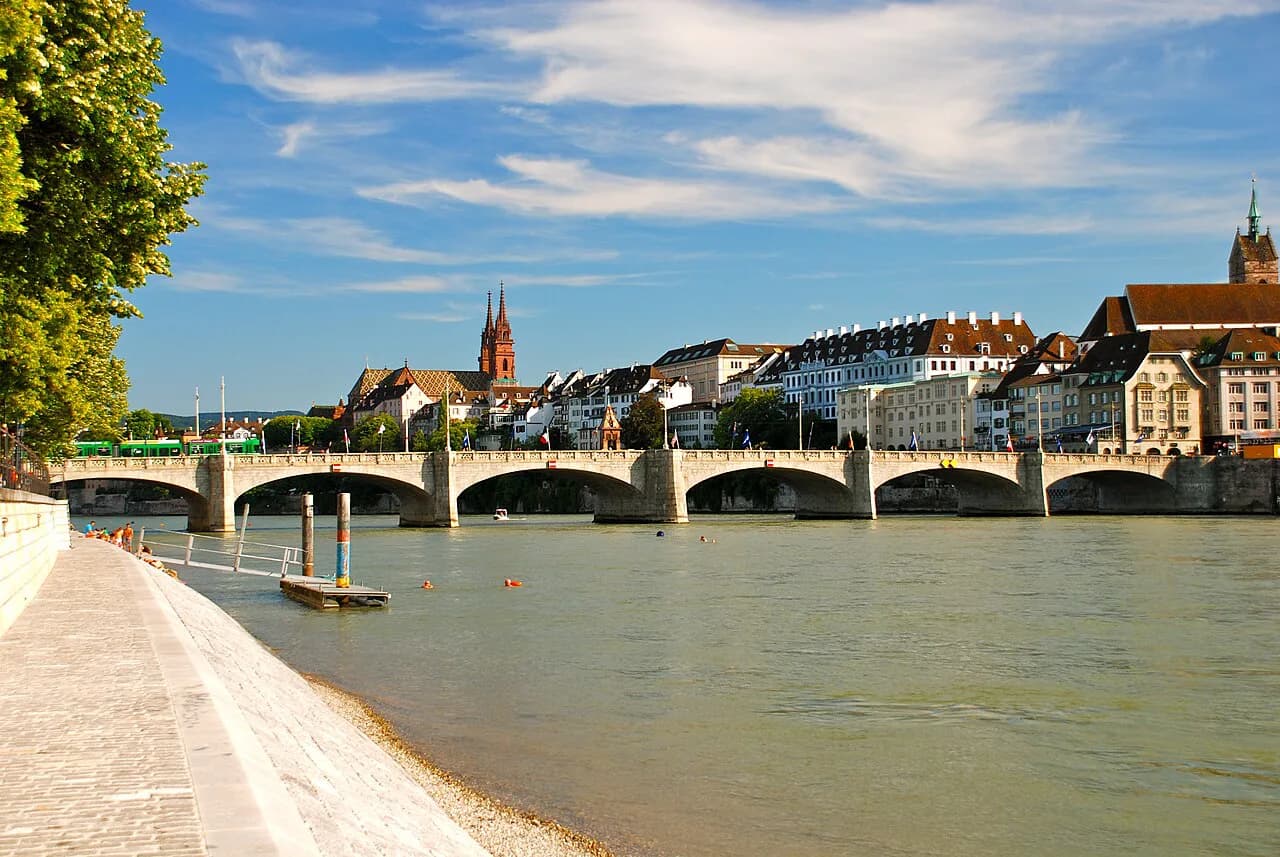
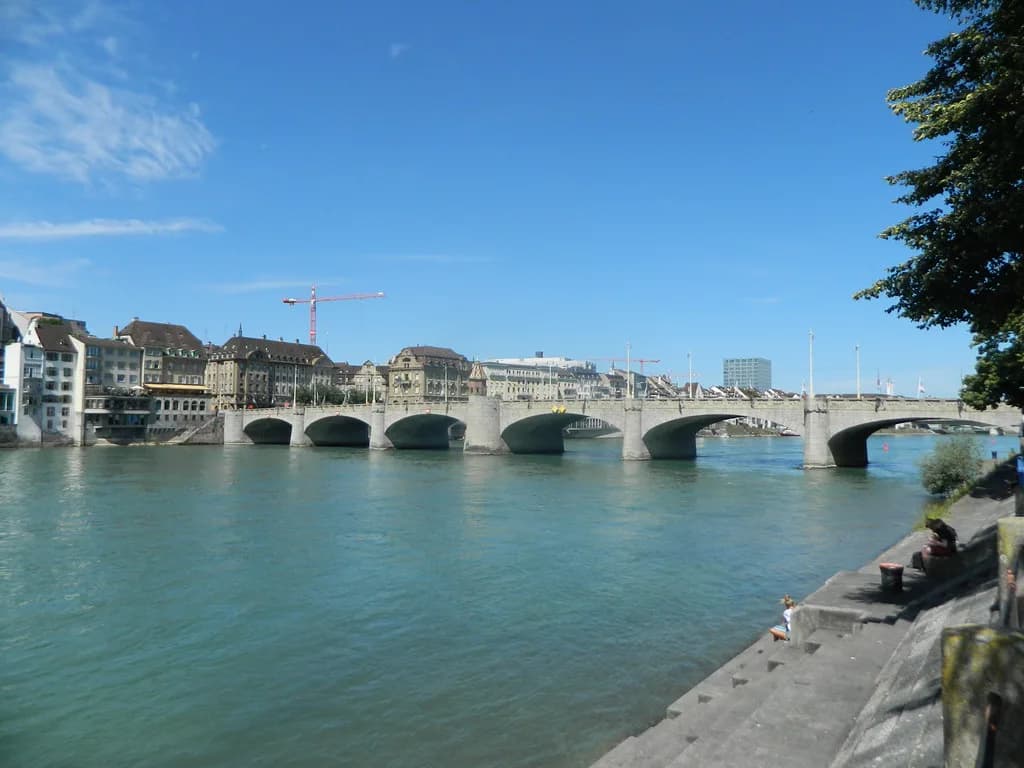
From Marktplatz it is a short walk to the Mittlere Brücke, the city's historic Rhine crossing, where only bikes, buses and trams share the roadway, so the river views come without traffic noise. Cross to the Kleinbasel bank for the classic postcard view back at the old town.
Add the Tinguely Fountain on Theaterplatz, where metal figures move in the water, and you have a full first day without paying a single admission. Basel rewards slow looking at facades, fountains and rooflines more than rushing between ticketed sights.
Basel Minster: free entry, the tower climb and the mosaic roof
Entry to the Basel Minster is free, and the roof is the reason to go: dark green, maroon and ochre tiles cover it in a mosaic pattern you can read from the terrace. Climbing the tower costs extra and is paid on site, and guided tours run for a fee, mostly on Saturdays.
The Minster generally closes in the late afternoon, with the crypt open only in the summer months, so put it early in your day rather than saving it for the evening. If the tower stairs are the point of your visit, budget the time and the small fee separately from the free nave.
Markthalle Basel and Spalentor on a short visit
Markthalle Basel, a few minutes from the SBB station, gathers international food stalls under one roof and is a practical lunch stop before you walk into the old town; the stalls are cheaper than most sit-down restaurants. Spalentor, one of three surviving city gates, is a short walk away and worth the detour for its carvings and tiled roof.
Pair the two on a one-day visit because they sit outside the Minster-to-Marktplatz loop and are easy to miss otherwise. Both are free to see; only your lunch costs money.
Crossing the Mittlere Brücke and the old town streets
The Mittlere Brücke has carried traffic across the Rhine here for more than 800 years, and the present structure has stood for over 120. Walk it in both directions and look up at the tower in the middle of the bridge, which repeats the tiled pattern of the Minster roof.
The old town streets between the bridge and Marktplatz are where Basel feels quietest; on a hot summer day the lanes can be nearly empty. Treat that as a feature if you want space to look at the ornate fountains and painted facades, and as a drawback if you came for bustle.
Two days in Basel: adding the museums
The second day is for museums, and most charge between 10 and 20 CHF per person, so each additional collection is a real line in your budget. Choose by interest rather than by checklist: kinetic art, old masters, cartoons, paper and printing, or natural history are all covered by a different house.
Art is Basel's strongest suit, and the same city that hosts Art Basel keeps world-class collections open all year. If you only pay for one ticket, spend it on the collection that matches your taste rather than trying to see two in a day.
Two days also leaves room for the free sights on the first day to breathe, so you are not racing the Minster's afternoon closing time to reach a museum before it shuts. That pacing is the main argument for two days over one.
Museum Tinguely: Tuesday to Sunday, 11 a.m. to 6 p.m., CHF 18
Museum Tinguely, in Mario Botta's building on the Rhine, is open Tuesday to Sunday from 11 a.m. to 6 p.m., with Thursdays until 9 p.m., and entry costs 18 CHF. It holds Jean Tinguely's machines from every phase of his career, including the room-filling Mengele Death Dance cycle from 1986.
The museum sits in a park with Niki de Saint Phalle's Gwendolyn figure, so the ticket pairs with a free walk along the river. Tinguely's public work is free citywide, including the fountain on Theaterplatz, which makes the museum a reasonable splurge only if the moving machines themselves appeal.
Kunstmuseum Basel and the other art collections
Kunstmuseum Basel traces its core to the city's purchase of Basilius Amerbach's collection in 1661 and now spreads across three venues, which makes it the anchor of a museum day. If one collection gets your second-day budget, this is the one that explains why Basel is called a cultural capital.
Smaller and more unusual houses fill out the rest of the day: the Swiss Museum of Paper, Writing and Printing in the old paper mill, the Cartoon Museum, and the Natural History Museum. Pick one of these alongside the Kunstmuseum rather than stacking three, or your day becomes a corridor of ticket desks.
The University of Basel Botanical Garden and its free entry
The University of Basel Botanical Garden, near Spalentor, is free to enter and opens from 8 a.m. most days, with the greenhouses opening at 9 a.m. Half an hour or more is enough for the outdoor beds.
It is the best-value stop in the city and a sensible filler between Spalentor and a museum, especially in poor weather when the greenhouses give you somewhere dry to walk. Plan it as a short visit rather than a half-day.
Three days or more: Dreiländereck, riverside bars and the wider city
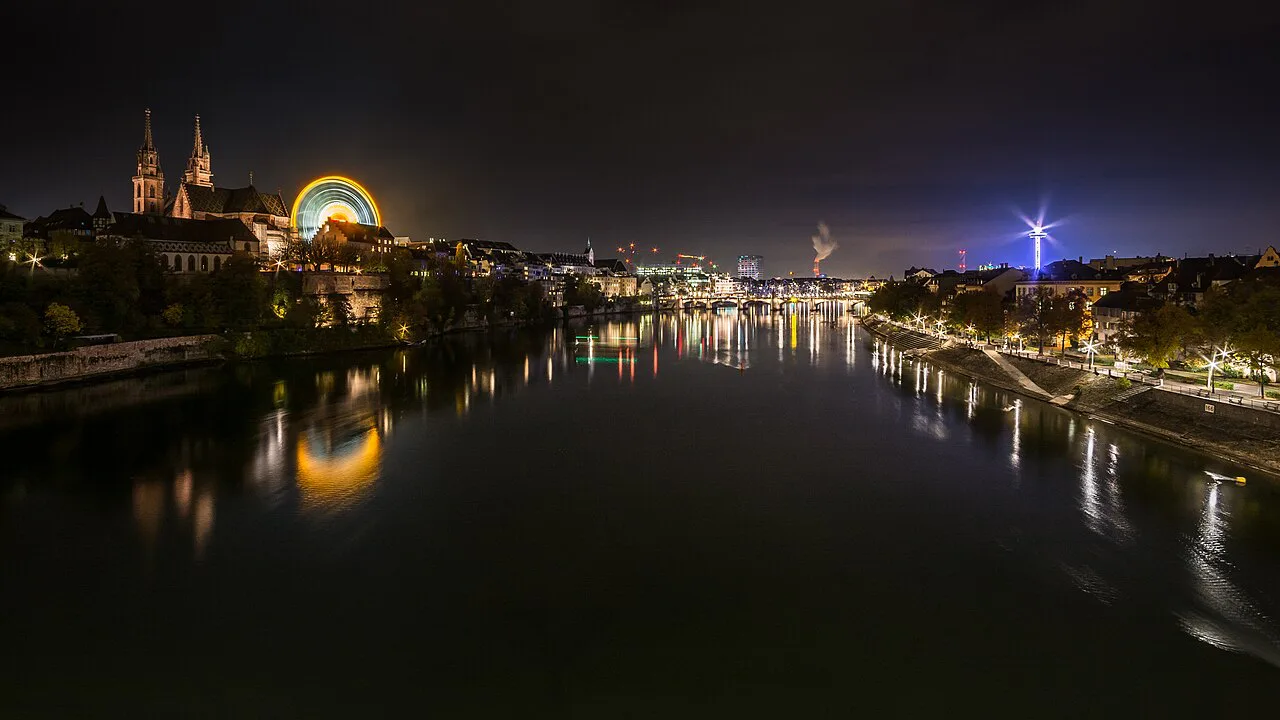
The third day buys you distance. Dreiländereck, the monument where Switzerland, France and Germany meet at the end of a long pier, sits well outside the center, so it takes a deliberate walk or a tram ride and pays off mainly if you have time to spare. There is a bar beside the monument and a string of riverside cafes between it and the Mittlere Brücke.
Use a third day for the border point, a slow afternoon at a riverside bar and one museum you skipped, rather than for more old-town walking. If your trip is built around museums, three days is generous; if it is built around atmosphere, two is enough.
What Basel costs: museums at CHF 10–20 and eating out
Museum tickets generally fall in the 10 to 20 CHF band, and eating out costs noticeably more than in neighboring France and Germany, with fewer budget restaurants to fall back on. That combination is what makes the day count matter: every extra day is another lunch and possibly another ticket.
Counter the restaurant prices at Markthalle Basel or a supermarket chocolate aisle, both cheaper than a sit-down meal and both part of the experience rather than a compromise. Budget the paid sights first, then fill the rest of the day with free ones.
How to spend less: free sights, guest cards and pass discounts
The free list is longer than it looks: the Minster, the botanical garden, the Mittlere Brücke, the Rathaus courtyard, the fountains and the Tinguely Fountain all cost nothing. Build each day around those and add one paid museum, and a two-day visit stays affordable by Swiss standards.
Some hotels, hostels and rentals in Basel hand guests a card that covers or discounts local transport, so ask your accommodation what is included before buying tram tickets. Rail passes are a separate calculation; check current Swiss rail pass conditions before deciding.
When a day is enough and when to stay longer
Take one day if Basel is a border hop from Strasbourg, Colmar or Zürich and you mainly want the Minster, the old town and a Rhine view before moving on. Take two if you want a museum and a slower meal; take three only if Dreiländereck and the riverside bars are on your list.
The honest trade-off is quiet. Basel's old town can feel almost deserted in summer, which suits some travelers and disappoints others, so decide which camp you are in before booking a third night.
Basel in a weekend: a day-by-day plan
Day one: Münsterplatz and the Minster roof, down to Marktplatz and the Rathaus courtyard, lunch at Markthalle Basel, then Spalentor and the botanical garden, finishing with the Mittlere Brücke at dusk. Day two: one art museum in the morning, the Tinguely Fountain and a riverside walk in the afternoon, and a third day only if you want the border point.
Bookend the weekend with the free sights so a single ticket or two carries the whole trip. If you are comparing Swiss cities for the same short break, the same day-count logic applies to the bigger neighbors, as in how many days in zurich.
Plan Your Visit
Two days is the sweet spot for Basel: free old-town sights on the first, one or two museums on the second, with Dreiländereck reserved for a third day if you have it. The city is walkable, the free list is genuine, and the only real cost is food and the museum tickets you choose to buy.
Confirm current opening hours and ticket prices directly with each museum and the Minster before you go, since seasonal hours change, then build your days around the free sights so a shift in plans costs nothing.
Explore more Basel guides
Frequently Asked Questions
How many days do you need in Basel?
Two days suit most visitors: the first for Münsterplatz, the Minster, Marktplatz and the Rhine bridges, the second for one or two museums. One day covers the old town core if Basel is a stop between Strasbourg, Colmar or Zürich, and a third day only makes sense if you want Dreiländereck and time at the riverside bars.
Is one day in Basel enough?
One day is enough for the compact old town: the Minster, the Rathaus courtyard, Marktplatz, the Mittlere Brücke and the Tinguely Fountain, all free to see. It is not enough for the museums, so treat a single day as a taster and accept that the art collections will wait for another trip.
What can you see in Basel for free?
The Basel Minster nave is free to enter, and the University of Basel Botanical Garden costs nothing, opening from 8 a.m. most days with greenhouses from 9 a.m. The Mittlere Brücke, the Rathaus courtyard, the public fountains and the Tinguely Fountain on Theaterplatz also cost nothing, which makes a free day easy to build.
How much do Basel museums cost?
Most museums charge between 10 and 20 CHF per person, and Museum Tinguely is a concrete example at 18 CHF, open Tuesday to Sunday from 11 a.m. to 6 p.m. with Thursdays until 9 p.m. Check each museum's own listing before you go, since prices and hours vary by house and season.
Is Basel expensive for a short break?
Eating out in Basel costs more than in neighboring France and Germany, with fewer budget options, so food is where a short break adds up fastest. Balance it with the free sights and Markthalle Basel's food stalls, and budget for one or two museum tickets rather than a full circuit of them.
Sources
Notes for your Swiss city break
Optional updates to our Swiss city guides.
You might also like
Continue reading
More guides you'll find useful