Is Interlaken Worth Visiting? A Short-Trip Guide
Interlaken packs Lake Thun, Lake Brienz, Harder Kulm and the Höhematte into a compact, walkable town. Here is what it rewards and what it costs in time.
On this page
Yes, Interlaken is worth visiting, provided you treat the town as a compact base rather than a multi-day destination. The settlement sits on a narrow strip of land between Lake Thun and Lake Brienz in the Bernese Oberland, and the town center is small enough to cover on foot in a short block of time. What you get for your day is a famous mountain view, one quick summit trip and easy access to the lakes and villages on either side.
The honest trade-off is that Interlaken's streets are busy and lined with souvenir shops selling watches and chocolates, and the scenery that made it famous is best seen from a park rather than from the pavement. Plan the town as one day and let the mountains and lakes take the rest, using our interlaken itinerary to slot the pieces together.
Where Interlaken Sits Between Lake Thun and Lake Brienz
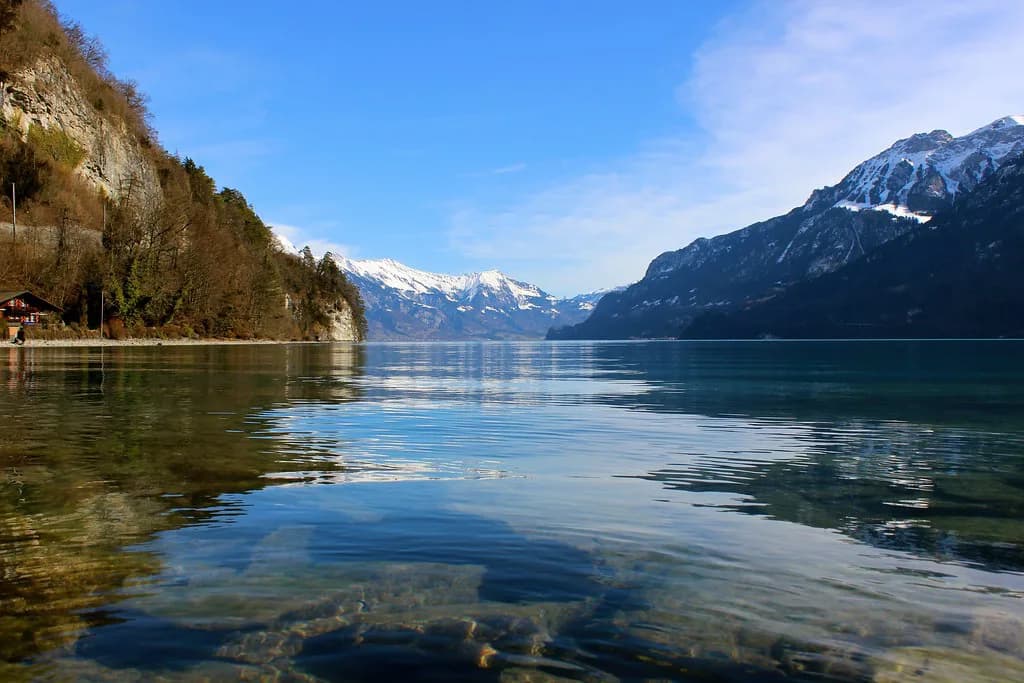
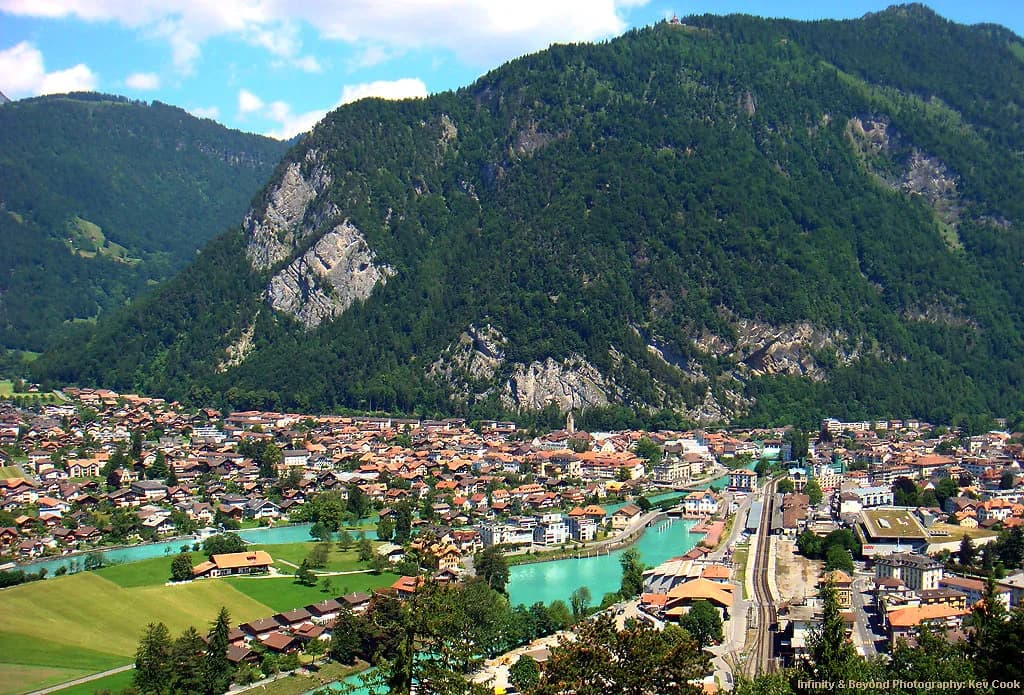
Interlaken occupies the flat land between two lakes: Lake Thun to the west and Lake Brienz to the east. That position makes it a natural hinge for the region, with the lakes, their villages and the alpine valleys all reachable in a day. If your picture of Switzerland is water on both sides of a town with peaks behind, this is the place that delivers it.
The two lakes behave differently. Lake Brienz is the longer, narrower of the pair, with the village of Brienz at its far end and wooden chalets lining the road along the shore. Lake Thun is ringed by towns with their own reasons to stop, including Spiez on its vine-covered bay, the castle-topped old town of Thun, and Beatenberg perched high above the water. Decide which lake gets your afternoon and you have half your day planned.
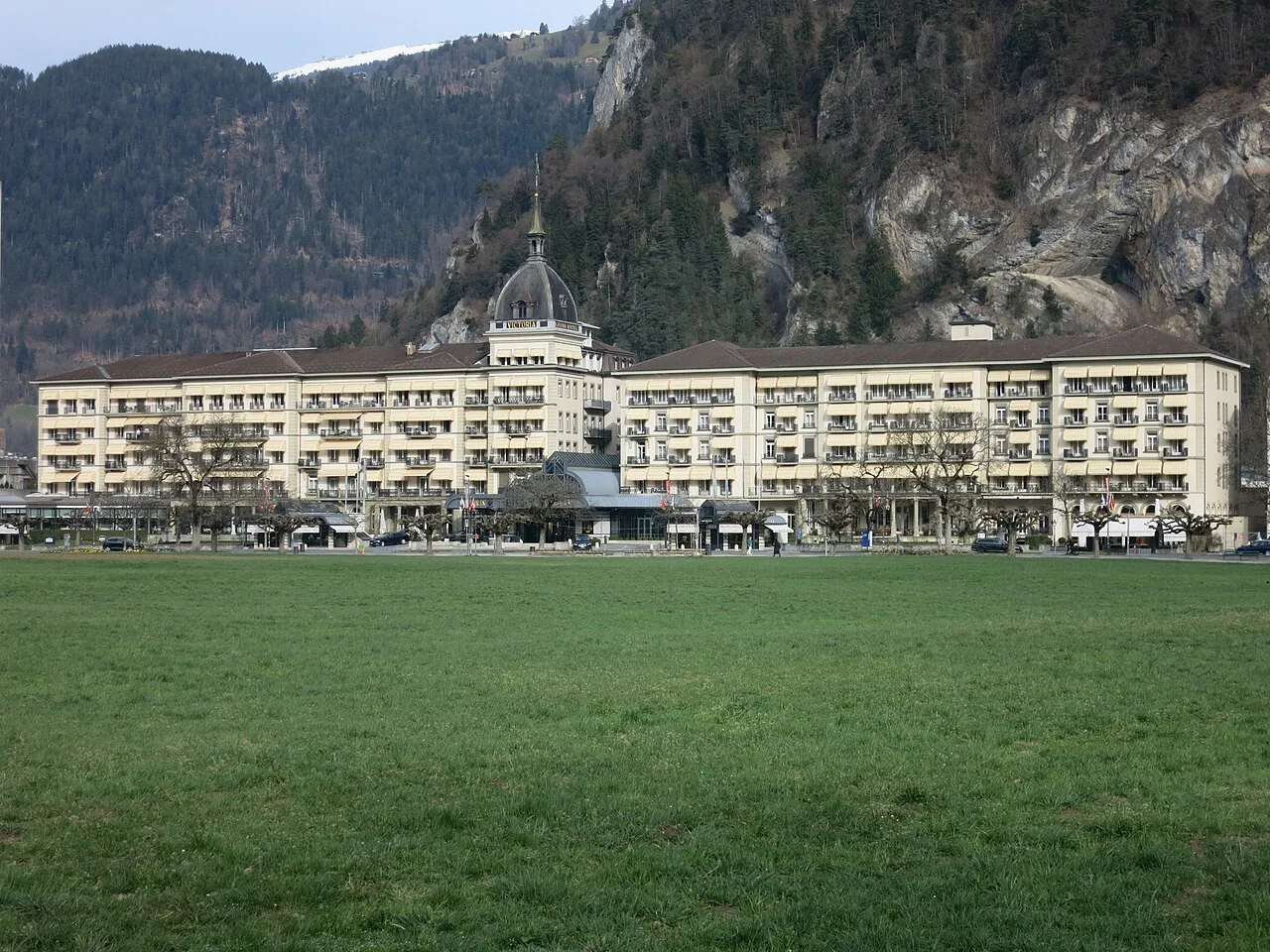
Two railway stations serve the town, Interlaken West and Interlaken Ost, at either end of the center. Knowing which one you arrive at tells you a lot about your first orientation walk, and the two are close enough that the choice rarely matters for sightseeing.
How Compact the Town Is on Foot: Höheweg as the Spine
Interlaken is a walking town. Höheweg, the main promenade, runs east to west across the center and acts as the spine from which everything else hangs, connecting the two stations through the shopping streets. You can stroll the core in about an hour, which is why travelers who expect a big city are sometimes surprised by how quickly they run out of town. That compactness is a strength: you spend your time looking at mountains rather than navigating boulevards.
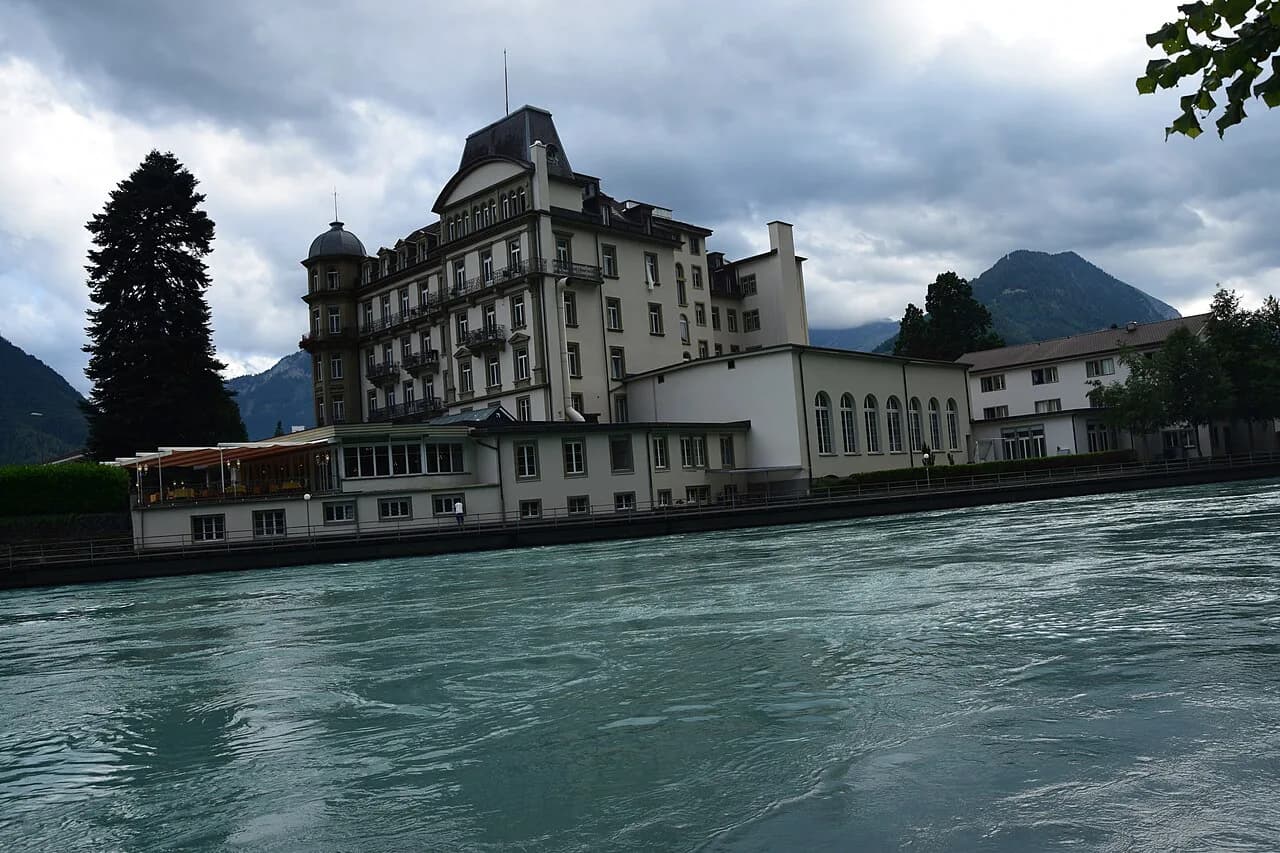
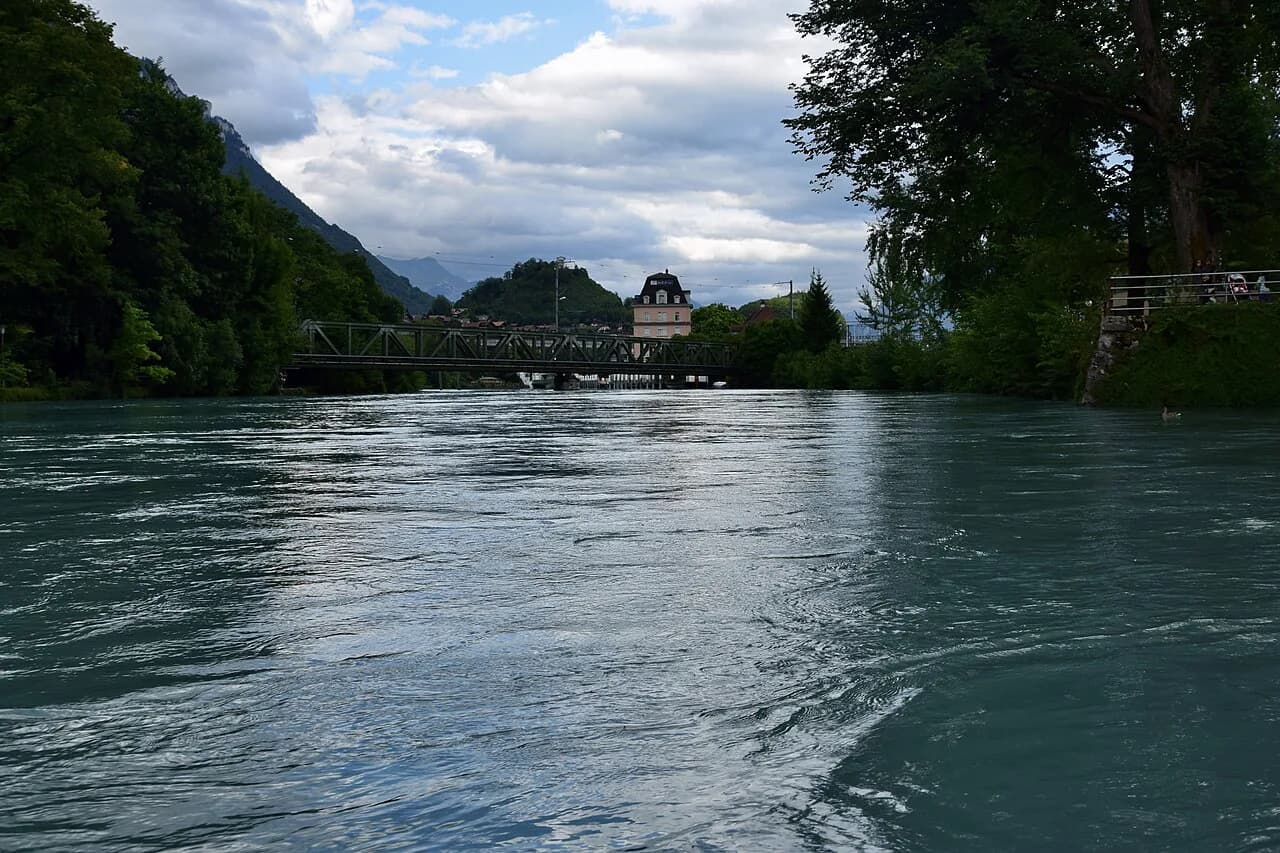
Walking also lets you slip off the main drag. The riverside paths and side streets are noticeably quieter than Höheweg, lined with trees and private homes rather than shop windows, and they give you a breather from the crowds. Use them to link the center to the stations rather than retracing the promenade each time.
Höhematte Park and the Jungfrau View Over the Flower Beds
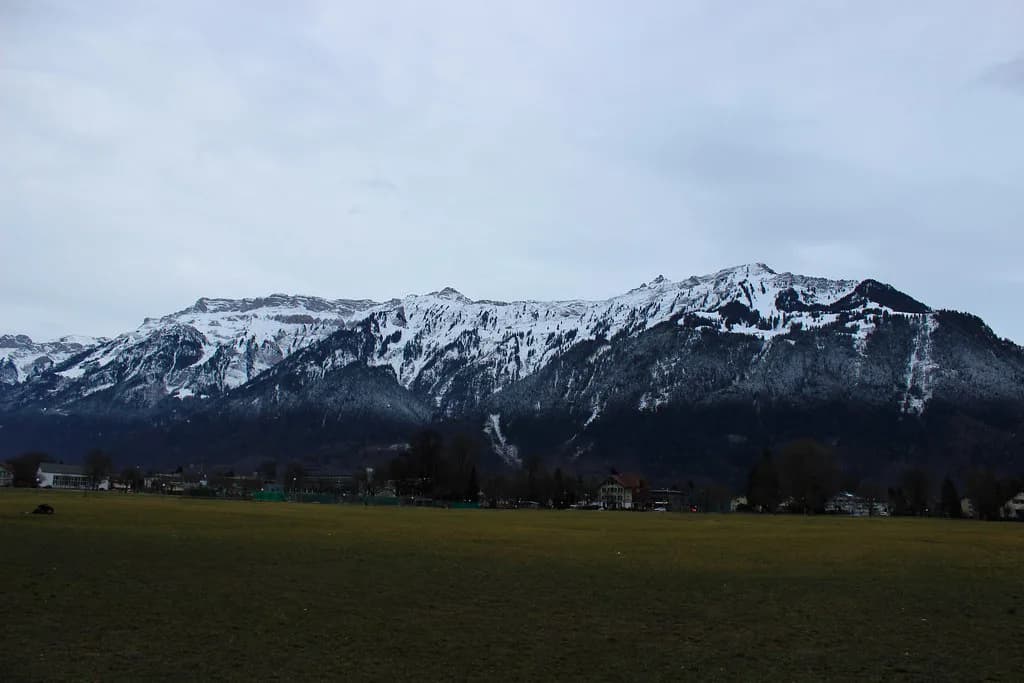
Halfway along Höheweg, Höhematte Park opens up as a large green field with flower beds and an uninterrupted view toward the Jungfrau massif. This is the heart of a visit to Interlaken: the mountains rise directly beyond the park, and the combination of open lawn and high peaks is what people come for. Give it real time rather than a photo stop, and sit on a bench if the weather allows.
The park is also where the town's air traffic lands. During the day you can watch paragliders take off from Harder Kulm and touch down on the parkland around the Höhematte, which adds a bit of theatre to the view without cost.
Because the Höhematte view depends on clear air, treat the Jungfrau as the prize of a good-weather hour rather than a fixture. On a cloudy day the same field is pleasant but unremarkable, and that is the moment to shift your plans toward the lakes or the covered streets.
Harder Kulm by Funicular: the Ten-Minute Ride and the Glass-Floored Platform
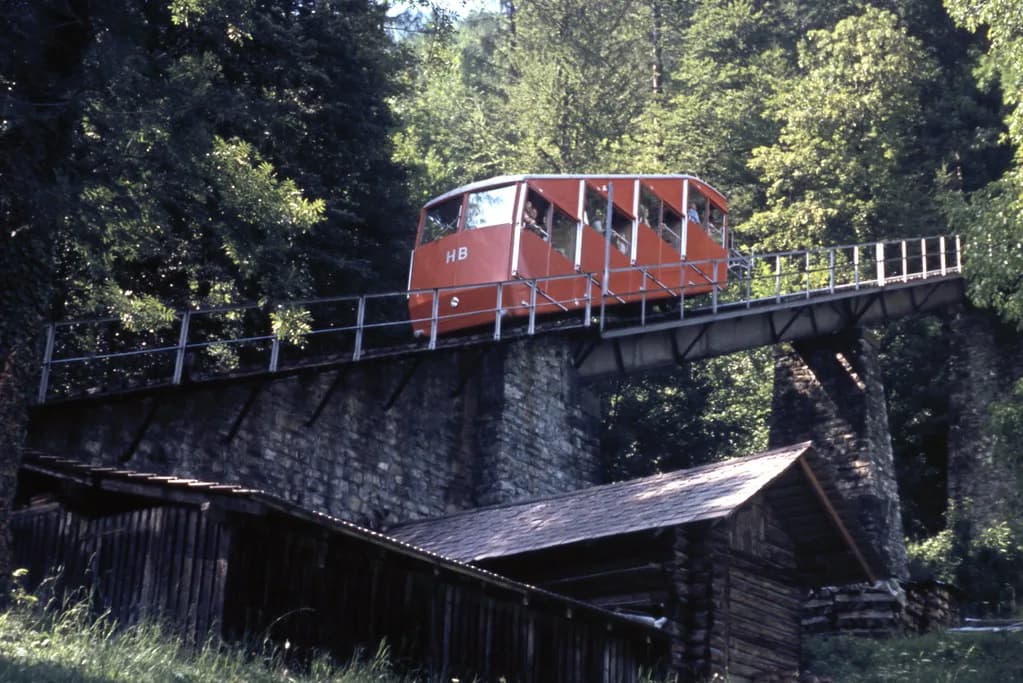
Harder Kulm is Interlaken's local mountain, and a funicular carries you to the top within about ten minutes. The ride itself gives you widening views through the carriage windows, and at the summit a viewing platform with a glass floor lets you look straight down the mountainside. This is the single most efficient mountain excursion you can make from the town center.
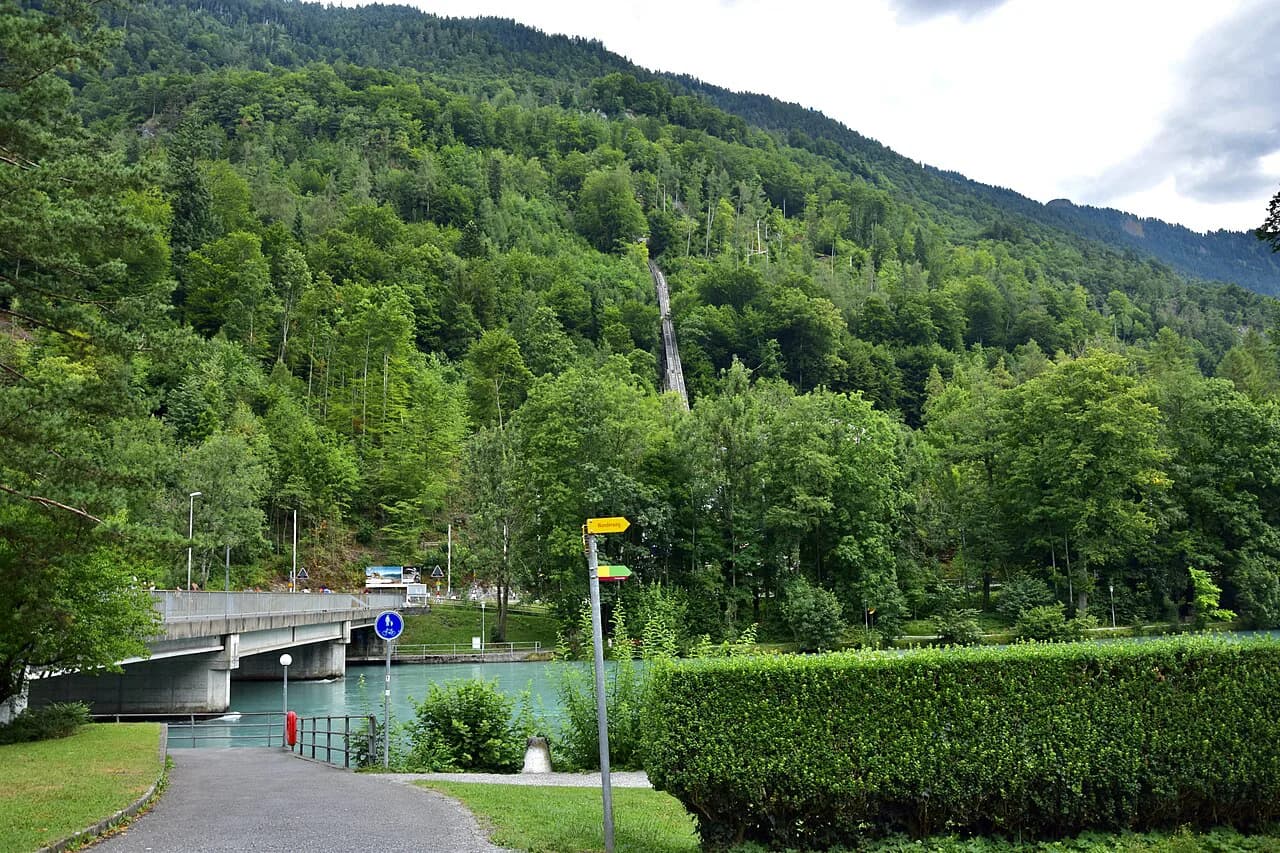
For those who want to earn the view, a steep trail starts near the valley station and continues on forest paths to the top. It is a real climb rather than a stroll, so weigh it against your energy budget and the weather rather than expecting a gentle alternative to the funicular. Either way, plan the summit for a clear window, since the point of going up is the panorama.
Kursaal Gardens and the Yash Chopra Statue
A few minutes from the busy center, the Kursaal Gardens offer a calm counterpoint: a park with a fountain, alpine views and a cultural center beside it. It is the kind of place that suits a slow hour between other plans, especially if you want greenery without the Höhematte crowds. The garden also holds a statue of the Indian film director Yash Chopra, honored as an ambassador of Interlaken after his films helped make the town a major destination for Indian travelers.
Pair the gardens with the riverside paths for a low-key loop that keeps you out of the shopping streets. Neither costs you a ticket or a queue, and both let you see the town as a place people live in rather than only visit.
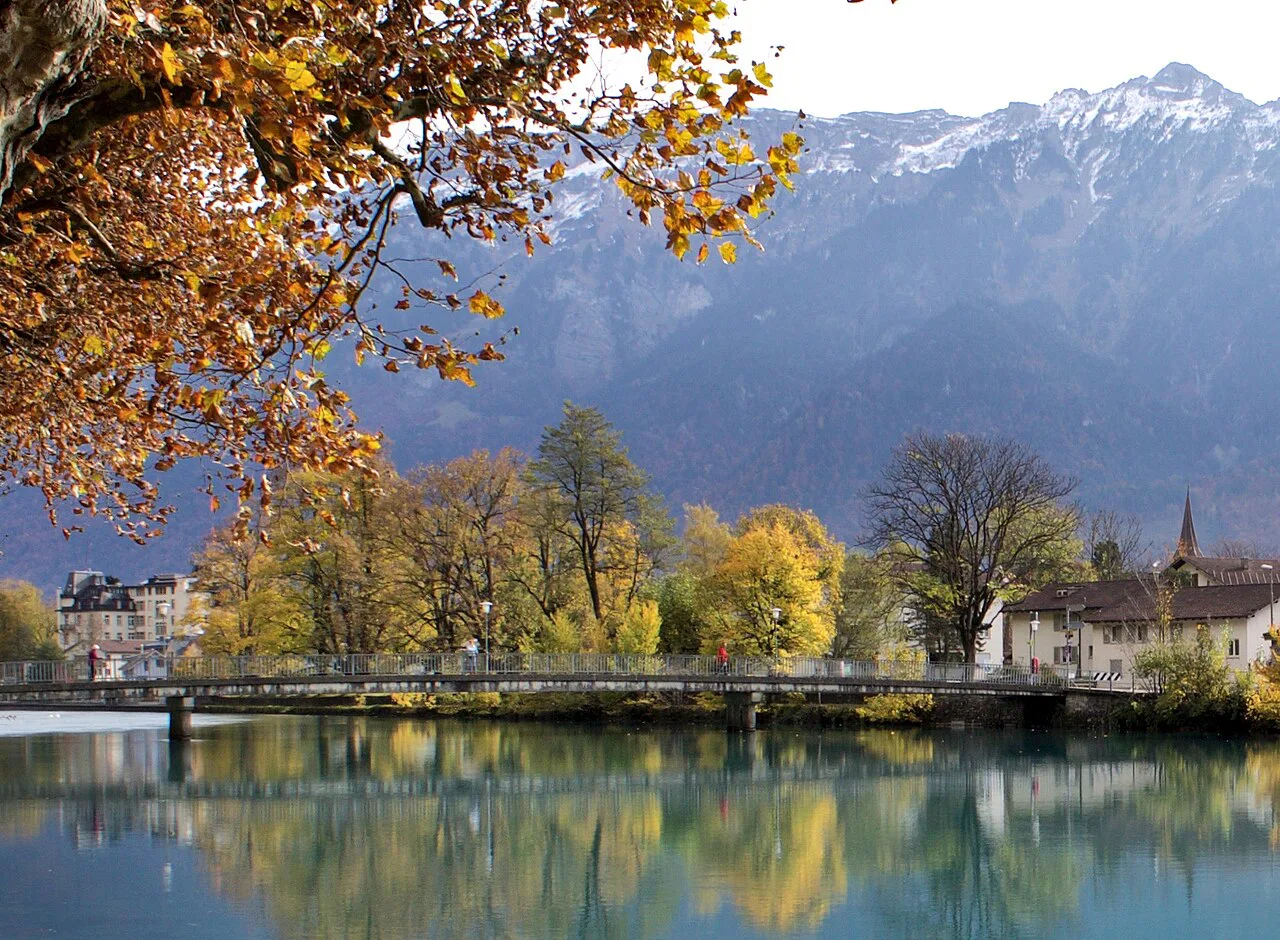
Interlaken as a Base: Lauterbrunnen, Grindelwald and the Lakes
The strongest argument for staying in Interlaken is what surrounds it. Lauterbrunnen, a short drive or a regular train ride away, sits in a valley walled by rock faces with dozens of waterfalls, the best known being Staubbach Fall, which drops close to 300 meters in the heart of the village. Grindelwald, at the foot of the Eiger, is the gateway to the Eiger Glacier and Jungfraujoch, reachable by the Eiger Express cable car and then a cogwheel train.
On the Lake Thun side, the villages each offer something different. Spiez has a castle on a vineyard-lined bay, Thun has a medieval castle above its old town and the shaded paths of Schadau Park on the lake, and Beatenberg sits high on the mountainside with broad views back over the water. Ringgenberg, on Lake Brienz, is a small village a five-minute train ride or a longer walk from Interlaken and feels removed from the tourist core.
Treat each of these as a half day to a day rather than a quick add-on. The temptation in Interlaken is to stack Jungfraujoch, Lauterbrunnen and a lake cruise into one itinerary; spreading them out gives each place room and keeps you from spending your trip in transit.
The Trade-Off: Tourist Volume and Souvenir Shops Along Höheweg
Interlaken is busy, and the town center reflects it. Höheweg is lined with stores selling souvenirs and Swiss-made products, including watches and chocolates, and the main streets fill with tour groups and holidaymakers through the day. If you came for quiet alpine streets, the center will not supply them.
The crowds are also concentrated. Step one block off the promenade onto the riverside paths or into the Kursaal Gardens and the atmosphere changes completely, and the Höhematte absorbs large numbers without feeling cramped. The practical answer is to time your Höheweg walk for early or late in the day and save the middle hours for the park, the funicular or the lakes.
Who Will Love Interlaken and Who Should Skip It
Interlaken suits travelers who want a walkable base with a famous view, a quick summit trip and easy connections to the lakes and mountain villages. It works well for a first Swiss trip, for mixed groups who want options without a car, and for anyone who values a compact center over a large city. If your ideal day is one strong landscape after another with minimal planning, this town is built for it.
It suits less well if you dislike tourist crowds, want a car-free old town to wander for hours, or expect the town itself to fill several days. Travelers who want a bigger city with museums and a riverfront should look at Lucerne, Bern or Basel instead, and there are honest comparisons in our guides to lucerne vs interlaken and is bern worth visiting. The key distinction is that Interlaken is a base with a great view, not a city with a deep sightseeing list.
The town also rewards a specific kind of short break: two nights, one day on the mountain and one on a lake, with the Höhematte view as the bookend. That shape uses Interlaken well and avoids the trap of expecting more from the streets than they offer.
How Much Time Interlaken Needs: One Day for the Town, More for the Mountains
Give the town one day and the surrounding mountains and lakes whatever else you have. The center is compact enough to walk in about an hour, so a full day in Interlaken itself comfortably covers Höheweg, the Höhematte, the Kursaal Gardens, the riverside paths and the funicular up Harder Kulm. Everything beyond that is out of town.
If you want a structured shape, our 2 days in interlaken plan pairs the town with a mountain excursion, while How Many Days in Interlaken Do You Need? lays out one, two and three-day versions so you can match the town to your schedule. Travelers fitting Interlaken into a longer Swiss route often find the answer is two nights rather than four.
When to Go and What a Day Looks Like
Build your day around the weather rather than the clock. Start with the Höhematte view and the Höheweg walk while the air is clearest, then take the Harder Kulm funicular if the peaks are out; save the lakes and villages for a cloudier slot, since water and castle towns hold up better than summits when the high peaks disappear. That order lets you see the Jungfrau when it shows and still fill the day when it does not.
A sensible full day runs roughly like this: a morning walk along Höheweg with a stop in Höhematte Park, the funicular up Harder Kulm before the midday crowds, lunch and the Kursaal Gardens, then the riverside paths or a short train ride to Ringgenberg or one of the Lake Thun villages in the afternoon. Keep the evening loose, since the town center is small and you will have seen most of it.
Money: Where the Costs Land, and How to Cut Them
Interlaken's costs concentrate in the mountain excursions and the shops rather than in the town itself. Walking Höheweg, sitting in Höhematte Park, wandering the riverside paths and visiting the Kursaal Gardens are all free, so a low-budget day in town is entirely possible while a day up the mountains is not. Check the current fare for the Harder Kulm funicular and any cable car or cogwheel train before you commit, since fares change.
The practical way to control spending is to decide which single paid excursion matters most and treat the rest of the day as free sightseeing. Swiss travel passes and discount cards can change the arithmetic on mountain railways, but the terms vary by route, so check what is covered for the specific lift or train you plan to use rather than expecting a pass to cover everything.
Practical Points to Check Before You Go
Confirm two things before you build your day: the operating status of the Harder Kulm funicular and the weather at the elevation you plan to reach. Both shift with the season, and a closed funicular or a socked-in summit changes your plan more than any other factor. The same applies to any cable car or cogwheel train you plan to ride toward Jungfraujoch or Grindelwald.
Also check the day of your arrival against your priorities. Two stations, Interlaken West and Interlaken Ost, serve the town, and knowing which is closer to your plans saves an unnecessary walk. Beyond that, the town is small enough that a map and a clear head cover most of what you need.
The Verdict on Interlaken
Interlaken is worth visiting if you want one compact, walkable town with a world-famous mountain view and fast access to the lakes and valleys around it. It is not worth a week of your Swiss trip unless you are using it as a base for day after day in the mountains. The best version of the visit is two nights, one day in town and one on the water or on a summit.
Plan the town as one day, budget your money for the paid mountain excursions rather than the streets, and use the quieter corners when the crowds build. For a fuller shape, browse our Interlaken Attractions hub before you lock in your dates and decide which single paid trip earns its place in your itinerary.
Explore more Interlaken guides
Frequently Asked Questions
Is Interlaken worth visiting?
Yes, for a day. The town is compact, walkable and set between Lake Thun and Lake Brienz, with the Höhematte giving a direct view of the Jungfrau and a funicular running up Harder Kulm to a glass-floored viewing platform. Its real value is as a base for the lakes and mountain villages, so plan one day in town and give the rest to what surrounds it.
How long do you need in Interlaken?
One day covers the town: Höheweg, the Höhematte, the Kursaal Gardens, the riverside paths and the Harder Kulm funicular. Two nights lets you add a lake or a valley, and three days lets you combine both lakes with a mountain excursion. Anything longer only makes sense if you are using the town as a base for daily trips out.
Is it better to stay in Interlaken or Lauterbrunnen?
Interlaken has more shops, a walkable center and the Höhematte view, and it sits between two lakes. Lauterbrunnen puts you directly in a valley of waterfalls, including Staubbach Fall, and closer to the cogwheel trains toward Jungfraujoch. Choose Interlaken for a base with amenities and both lakes, Lauterbrunnen for valley scenery and shorter trips up the mountains.
Is Interlaken expensive?
The town itself can be cheap: walking Höheweg, the Höhematte, the riverside paths and the Kursaal Gardens costs nothing. The expense lands on mountain transport, cable cars, cogwheel trains and shopping along Höheweg. Check current fares for the funicular and any mountain railway, and note what a travel pass covers for each specific route.
What can you do in Interlaken on a rainy day?
Shift toward the town and the lakes rather than the summits. The Höheweg promenade, the souvenir shops, the Kursaal Gardens and the riverside paths stay usable in poor weather, and the lake villages on Lake Thun hold up better than high viewpoints when cloud covers the peaks. Save the funicular and the Jungfrau view for a clearer window.
Do you need a car in Interlaken?
No. The town center is compact and walkable, the two stations connect it to the region, and trains run regularly from Interlaken to Lauterbrunnen and other villages. A car helps for stopping at scattered Lake Thun viewpoints such as Beatenberg, but it is not necessary for seeing the town, the lakesides or the main valleys.
Sources
Notes for your Swiss city break
Optional updates to our Swiss city guides.
You might also like
Continue reading
More guides you'll find useful