2 Days in Lucerne: A Realistic Weekend Plan
Plan two days in Lucerne with a walkable old-town route, the Kapellbrücke, the Lion of Lucerne, and a Lake Lucerne boat ride, plus what to skip.
On this page
Two days is enough for Lucerne because the historic center is compact and walkable, with the Kapellbrücke, the riverfront churches and the Lion of Lucerne all within a short stroll of each other. The lake and the surrounding peaks of Rigi, Pilatus and Stanserhorn sit right at the city's edge, so one of your two days can go to a mountain without eating the whole trip.
The plan below puts the town on day one and the water and mountains on day two, which keeps your one clear-weather window free for the heights. Mountain visibility collapses under overcast skies, so a flexible order matters more than a perfect checklist.
Why Two Days Fits Lucerne
Lucerne (Luzern) sits in central Switzerland on the shore of Lake Lucerne, and its old town is small enough to cross on foot while sightseeing. The brightly painted historic houses and the medieval landmarks are packed into that walkable core, which is why a single day already covers the headline sights.
The second day is what makes the stop worthwhile: the city is surrounded by Mounts Pilatus, Rigi and Stanserhorn, reachable by cableways, trains and boats. Treat the town as day one and the mountain as day two, and you get both without rushing either.
If you are weighing a shorter stop, the honest comparison is that one day in Lucerne gets you the bridge, the old town and the Lion, and nothing else. Two days adds either a lake crossing or a summit, and that second element is what people remember.
Day 1 Morning: Kapellbrücke, the Old Town and the Waterfront
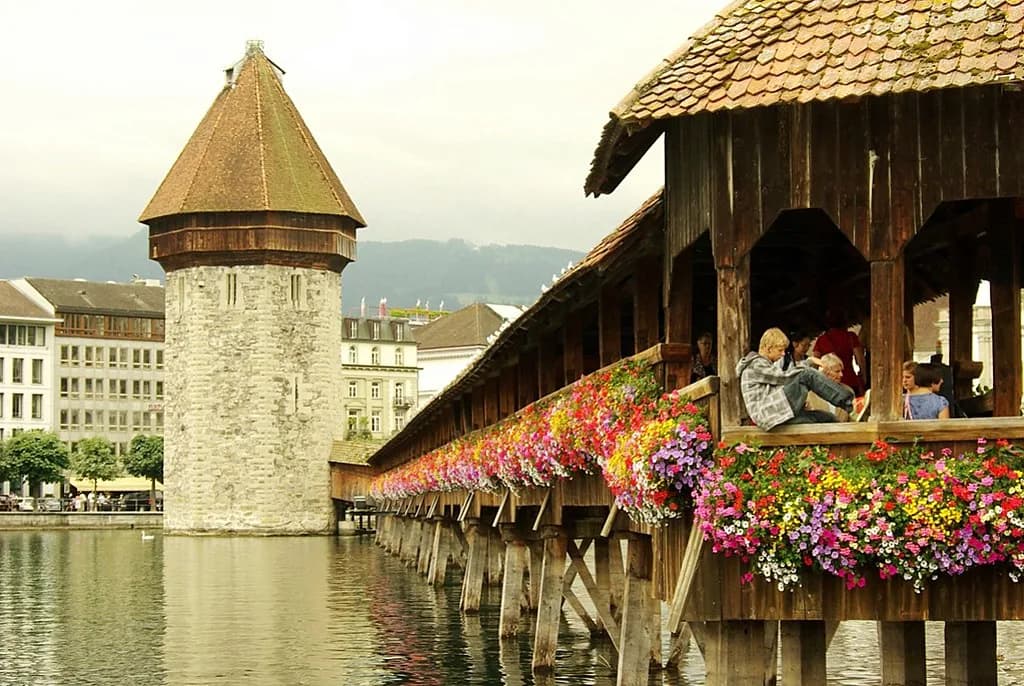
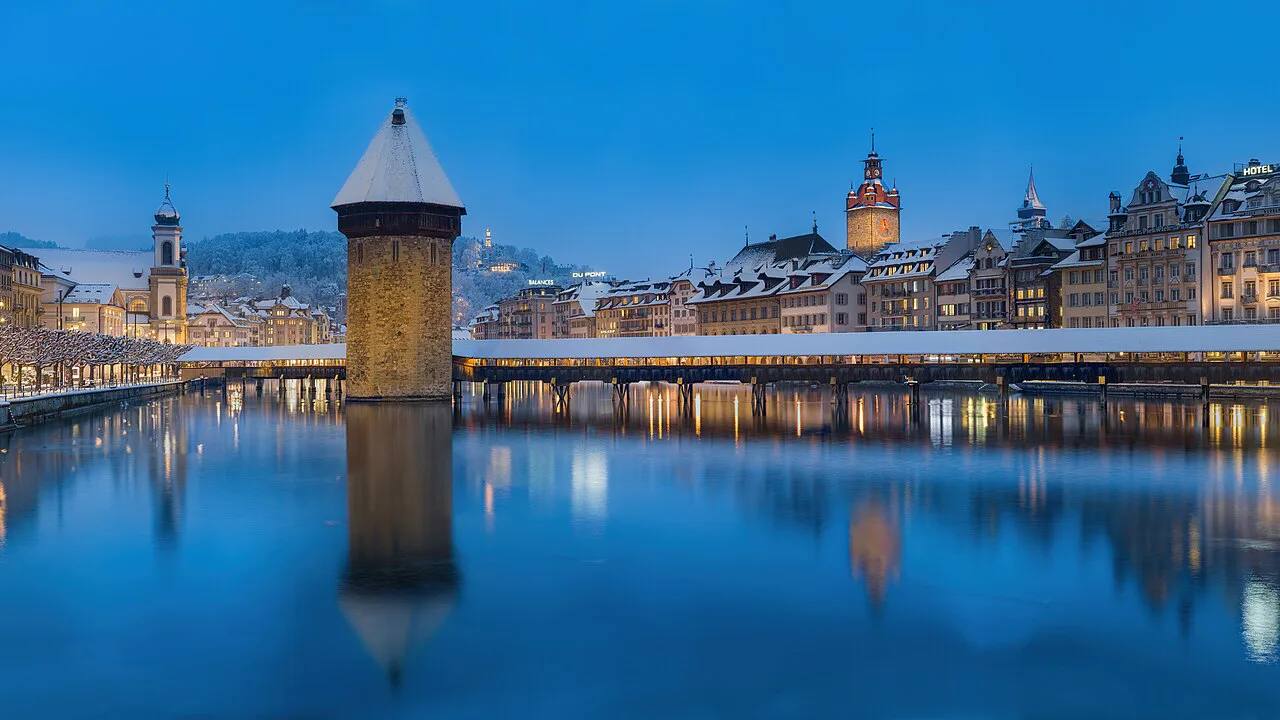
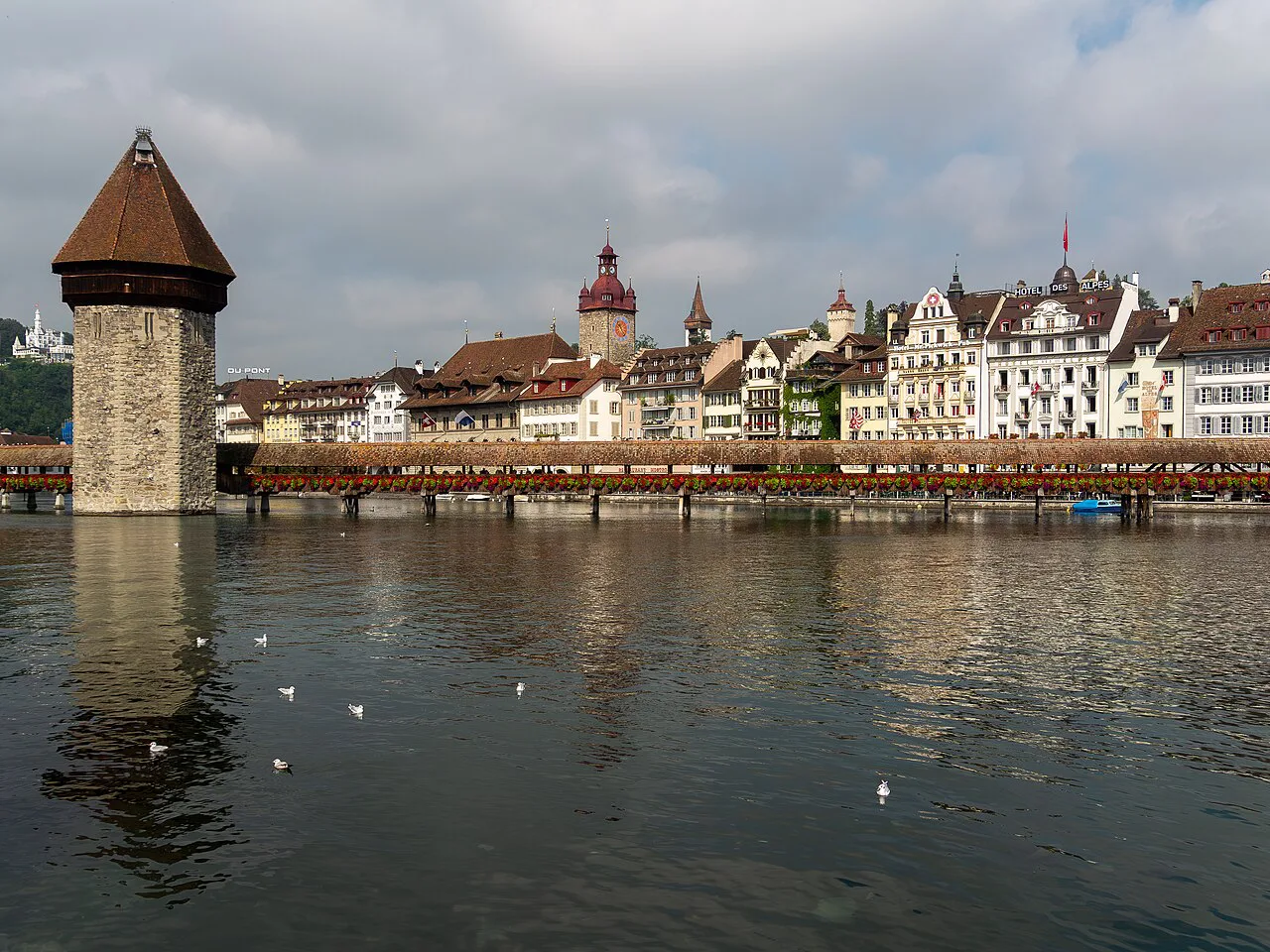
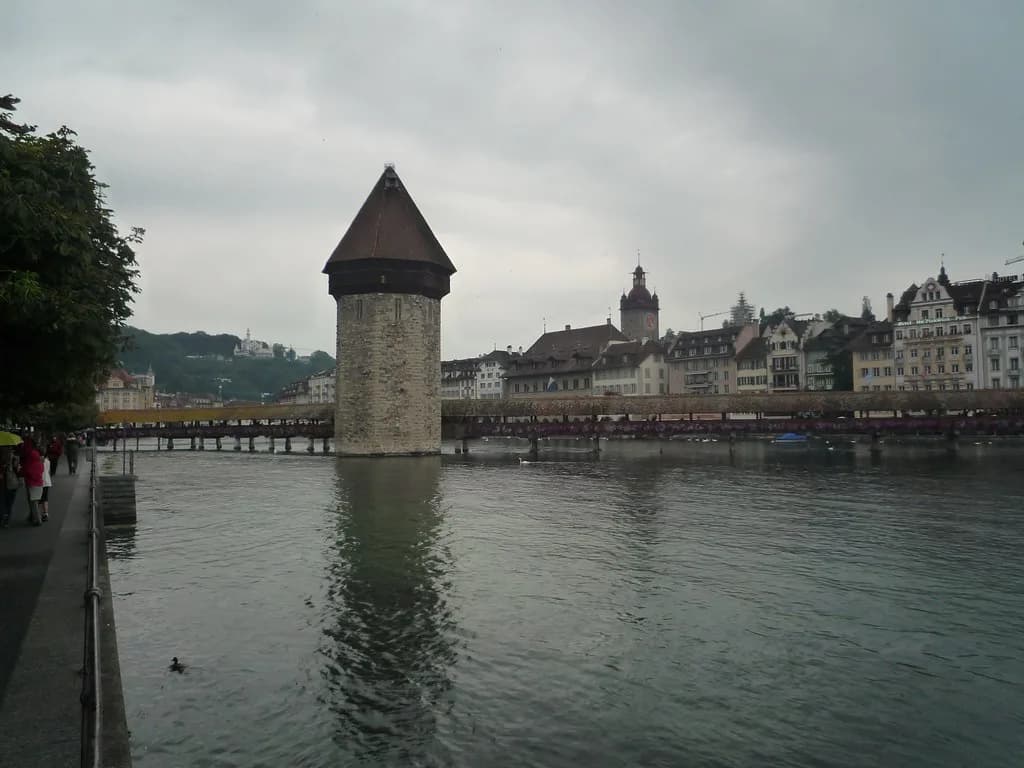
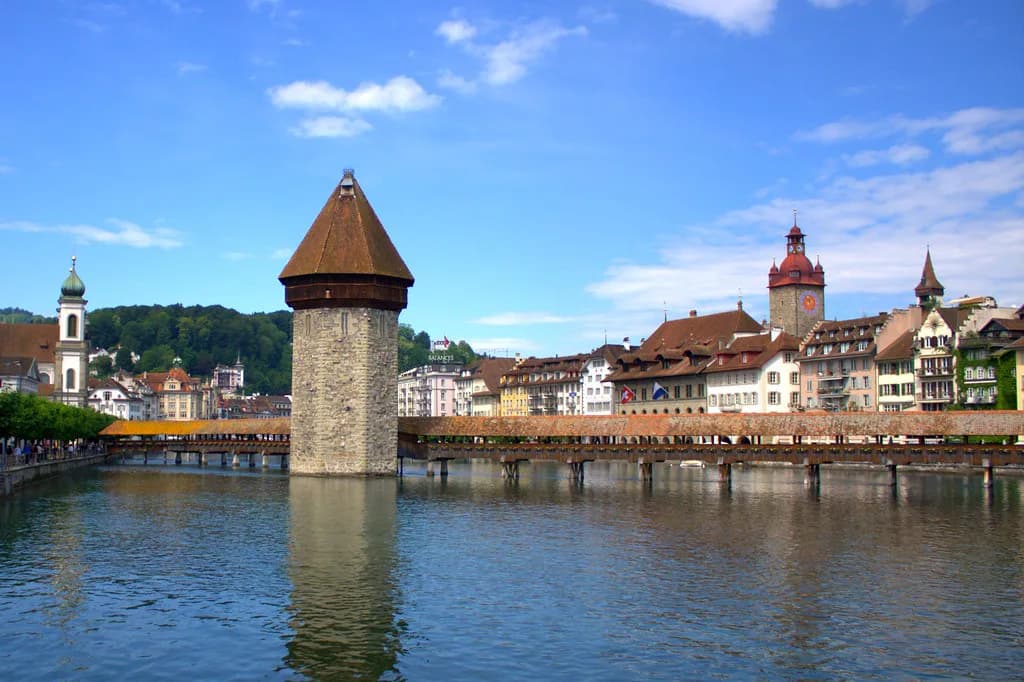
Start at the Kapellbrücke, the covered wooden footbridge that serves as Lucerne's symbol and anchors the waterfront. Walk it in both directions and cross to different banks, because the angle on the bridge, the water and the painted houses changes completely from one side to the other.
Early morning is the calmest hour on the bridge, when the light is soft and the tour groups have not arrived. Give the bridge and the surrounding waterfront squares about an hour, then drift into the old town streets behind it.
The old town rewards slow wandering more than a route: look up at the decorated facades and fountains rather than marching between pins. Keep the morning loose so the bridge does not become a photo stop you sprint past.
Jesuitenkirche and the Riverfront Squares
The Jesuitenkirche stands on the riverfront square and is the first large Baroque church built in Switzerland north of the Alps, finished in the late 1600s. Its position on the water makes it the natural second stop after the bridge, whether or not you go inside.
The square in front of the church is a good place to pause and look back at the bridge and the painted houses across the water. From here the old town, the waterfront and the station side of the city all sit within a few minutes on foot, which is the whole point of basing yourself centrally.
Day 1 Afternoon: Hofkirche St. Leodegar and the Lion of Lucerne
Walk toward the twin spires of the Hofkirche St. Leodegar, the church that marks the direction of the Lion Monument. The walk over is easy and short, so combine the two rather than treating them as separate outings.
The Lion of Lucerne is the city's second-most-famous sight: a colossal carved lion cut in 1820 to commemorate more than 700 Swiss soldiers killed during the French Revolution. It is a monument rather than a museum, so the visit is short but the impression is not.
The monument is tucked into a quiet pocket above the town and is harder to find on foot than you would expect, because signage toward it is sparse and unclear. Budget extra time for the approach and keep a map open; the lion is not signposted from the main streets.
Day 1 Evening: Sunset Around the Kapellbrücke
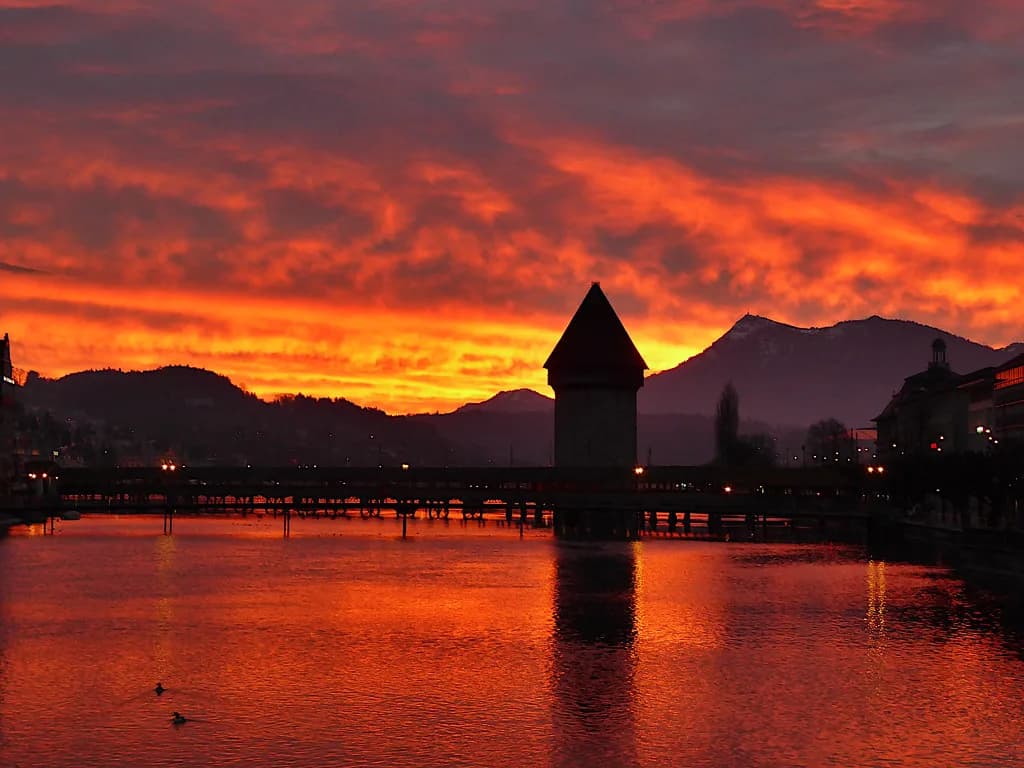
Come back to the Kapellbrücke area at the end of the day, when the waterfront goes quiet and the bridge and painted houses catch the last light. It is the single best free thing to do in Lucerne and needs no ticket or booking.
If your legs still work, walk a stretch of the old town walls and towers above the center for a rooftop view over the bridges and water. It pairs naturally with an evening on the waterfront and costs nothing.
Day 2: Get on the Water Early, with a Boat to Vitznau
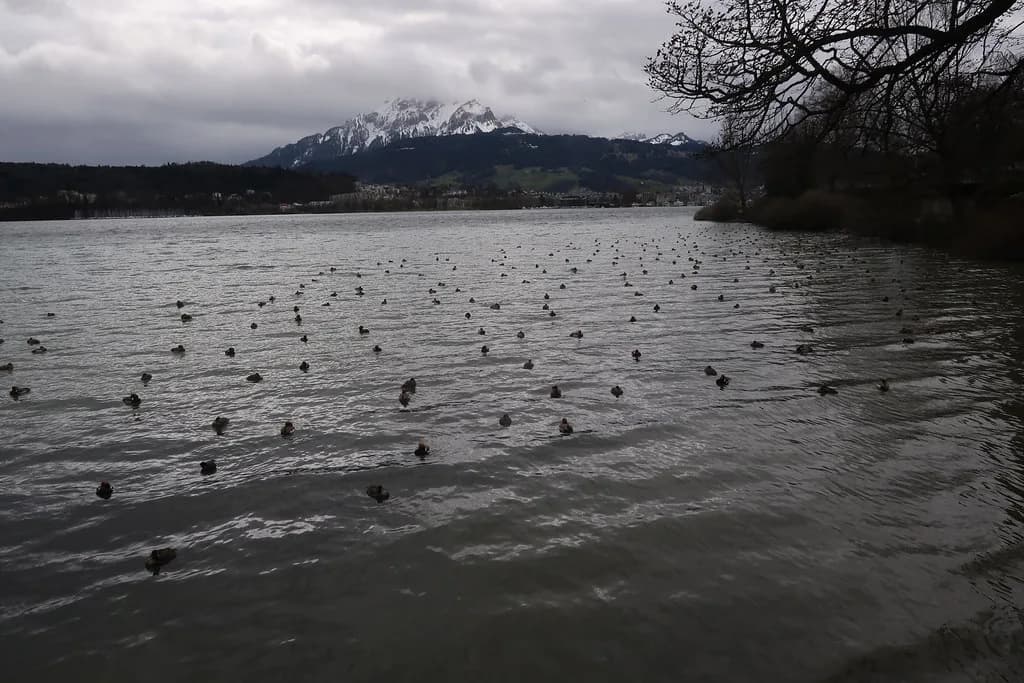
Dedicate the second morning to Lake Lucerne, taking a boat out from the city pier rather than starting with another church. The crossing gives you the best views back on the town and the mountain ring, and boats have a bar on board for coffee or a snack.
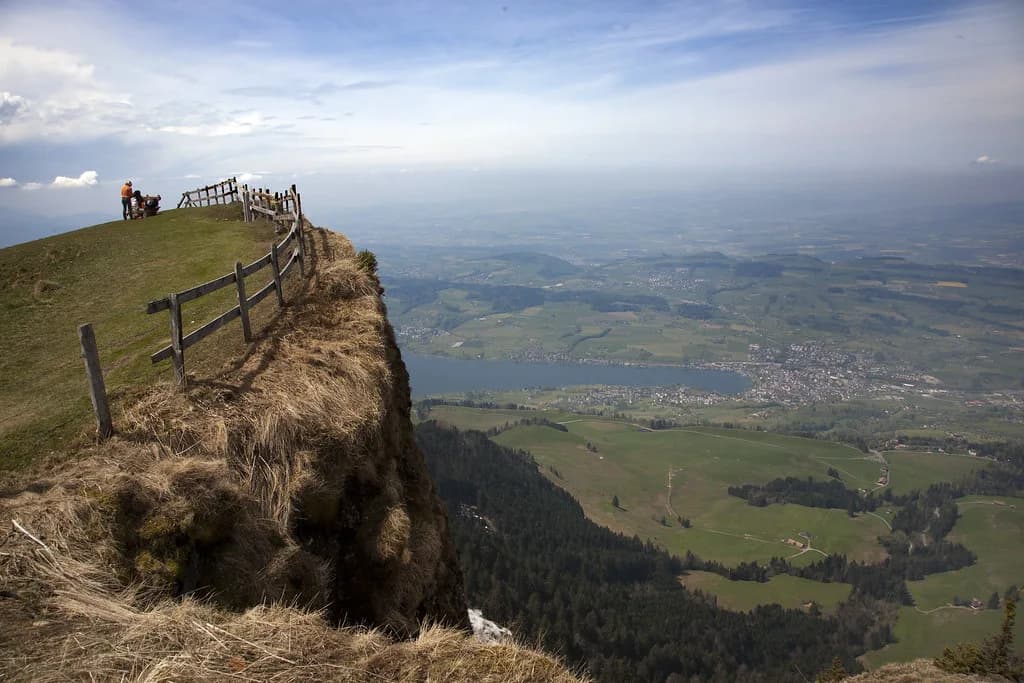
A boat to Vitznau puts you at the foot of Mount Rigi, where Europe's first cogwheel train climbs to views over the lake and more than two dozen Swiss cantons. Pair the boat with the cogwheel train and you have a full, satisfying day out of the city.
Check boat and cogwheel departure times on the day, since the return crossing is what limits how long you can stay up the mountain. If you are traveling on a tight schedule, a short round-trip cruise is the safer choice than a full Rigi ascent.
Mount Rigi and Mount Pilatus: Choosing a Mountain Day
Between Rigi and Pilatus, Rigi is the easier pairing with a lake boat, while Pilatus is the more dramatic summit. Stanserhorn is the third option and adds a different cableway ride rather than a repeat of the same view.
Pick one mountain, not two. Trying to combine Rigi and Pilatus in a single two-day trip leaves no room for the old town and puts you on a timetable that breaks the moment a cableway queue forms.
For a short trip, the local consensus is simple: the Lion Monument and a scenic boat ride on Lake Lucerne are the two things not to miss. Everything else, including a summit, is a bonus that depends on the day.
Day 2 Alternative: Stay in Town and Slow Down
If the clouds are sitting low on the peaks, skip the mountain and give the city a second, slower pass instead. Revisit the old town squares in different light, sit by the water, and use the day for the small details the first day rushed past.
A slower day is also the cheaper day, since mountain transport is where a Lucerne weekend budget gets tested. If cost is your constraint, the waterfront, the bridge, the churches and the towers fill two days without a single ticket.
Sunday and Monday: What to Plan Around
Two days can land you on a Sunday or Monday, so build the plan around things that never close: the Kapellbrücke, the waterfront, the Lion of Lucerne and the old town streets. These carry a full day regardless of the calendar.
Set museum visits and shopping against the individual venue's own published hours before you commit a morning to them. Check the day at the door or on the venue's site before you set out, since opening days can vary week to week.
What to Skip with Two Days
Skip the second mountain, the shopping detour and any plan that puts you inside a building during your only clear hours. With 48 hours, the scarce resource is daylight, not things to see.
Also resist over-scheduling the first morning. Two days is short enough that a rushed start costs you the calm hour on the bridge that makes the city worth the trip.
Plan Your Days Around the Weather, Not the Calendar
Mountain weather is unreliable and overcast skies wipe out summit visibility completely, so a mountain booked in advance is a gamble. Build the town day and the mountain day as swappable blocks and decide on the morning.
This is the strongest argument for putting the old town first and the height second: if day two dawns gray, you still have a complete Lucerne visit behind you. If day one is gray, you have not lost anything you cannot do later.
Where Two Days Fits in a Longer Swiss Trip
Lucerne slots neatly into a longer Swiss route because it is a short train ride from the station to the old town, so even a brief stop is efficient. Two days gives you the town plus one mountain day, and a three-day version adds the second summit without changing the shape of the trip.
If you are choosing between Swiss cities rather than adding to an itinerary, Lucerne's draw is the pairing of a small medieval center with a lake and peaks on the doorstep. That combination is the reason to give it two days rather than one.
Plan Your Days
Build the weekend around the bridge, the riverfront, the Lion and one day on the water or a mountain. The old town is walkable enough that the first day plans itself, and the second day is where the choice matters.
Keep day two flexible, pick one summit, and treat the weather as the deciding factor. A plan that can swap days is worth more in Lucerne than a longer list of sights.
Explore more Lucerne guides
Frequently Asked Questions
Is two days enough for Lucerne?
Yes. The old town, the Kapellbrücke, the Jesuitenkirche, the Hofkirche St. Leodegar and the Lion of Lucerne fit comfortably into one walking day, leaving the second day for a boat on Lake Lucerne or a mountain such as Rigi or Pilatus. Lucerne is compact and walkable, so you are not spending your two days in transit.
What should you do on a two-day trip to Lucerne?
Put the Kapellbrücke, the old town squares, the Jesuitenkirche, the Hofkirche St. Leodegar and the Lion of Lucerne on day one, ending with sunset on the waterfront. Give day two to Lake Lucerne, either as a short cruise or as a boat to Vitznau with the cogwheel train up Mount Rigi, and pick just one mountain.
Should you go up Mount Rigi or Mount Pilatus from Lucerne?
Rigi pairs most naturally with a lake boat, since the crossing to Vitznau puts you at the foot of the cogwheel railway, while Pilatus is the more dramatic summit. Stanserhorn offers a different cableway experience. Choose one, because trying to fit two mountains into two days leaves no time for the town itself.
What can you do in Lucerne on a rainy or overcast day?
Stay in town and treat it as your old town day. The Kapellbrücke, the waterfront, the churches and the lion are all outdoors but close together, and the covered bridge itself gives some shelter. Save the mountain for clearer skies, since overcast conditions can erase summit visibility entirely.
Is Lucerne walkable for a weekend?
Yes. The historic center is compact, and the bridge, the riverfront churches, the old town squares and the route toward the Lion of Lucerne sit within a short walk of each other. Boats and mountain transport leave from the edge of the center, so you can cover two days largely on foot.
How many days do you need in Lucerne?
Two days covers the town plus one lake or mountain outing, which is the right amount for most first visits. One day gets the headline sights only, and a third day adds a second summit without changing the overall shape of the trip.
Sources
Notes for your Swiss city break
Optional updates to our Swiss city guides.
You might also like
Continue reading
More guides you'll find useful