Is Lucerne Worth Visiting? An Honest Answer for First-Timers
Yes, Lucerne is worth visiting for a compact medieval old town, two covered wooden bridges and mountain trips by cogwheel railway and boat. Here is who it suits.
On this page
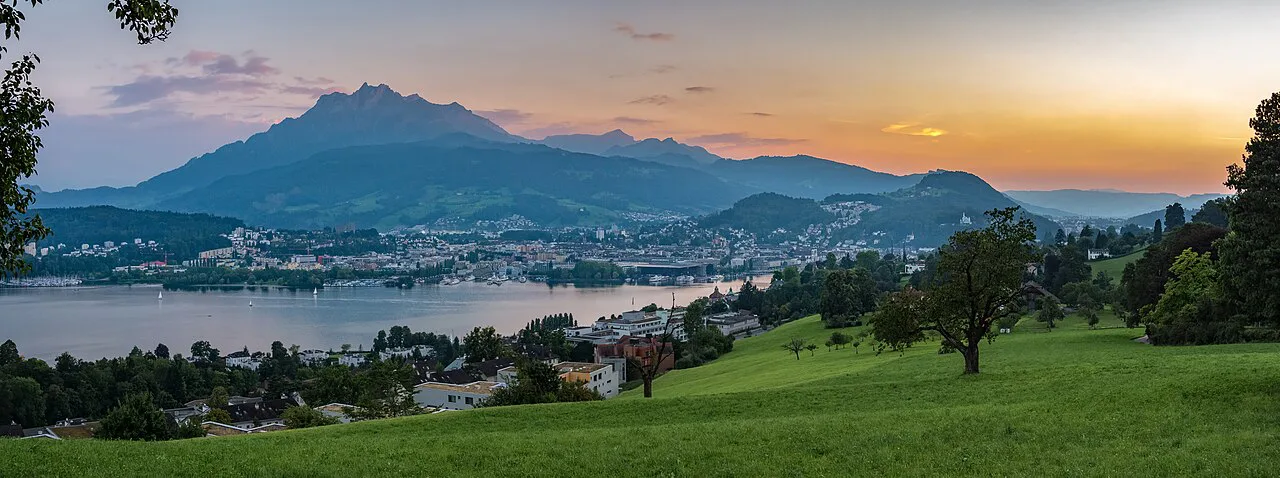
Yes, Lucerne is worth visiting if you want a compact, walkable medieval core with mountain scenery attached. The old town, the Reuss riverfront, two covered wooden bridges and the lakefront sit within a short stroll of each other, so you can see the headline sights in a day without touching a bus. What you get in return for Switzerland's high prices is density: few cities squeeze a 14th-century wall walk, a Baroque church and a cogwheel railway into one trip.
The fair question is not whether Lucerne is nice, but whether it fits your trip. It rewards travelers who like architecture, short walks and a mountain day bolted onto a town break. It suits travelers less well if they want nightlife, swimming or a base for long hikes.
The short answer: what a Lucerne city break delivers
Two days is enough to cover the old town, both wooden bridges, the Lion Monument, the Musegg Wall and a lakefront walk at an unhurried pace. Three or four days let you add Mount Pilatus and Mount Rigi without rushing the town. Lucerne's old town is pedestrianized and compact, which is why it works so well on foot.
Plan on at least three or four nights if you want to wander the old town, enjoy the lake and fit in a couple of mountain excursions. The city works as a short break rather than a week-long destination on its own, unless you treat it as a base for wider trips around central Switzerland.
How Lucerne is laid out: old town, Reuss and lakefront on foot
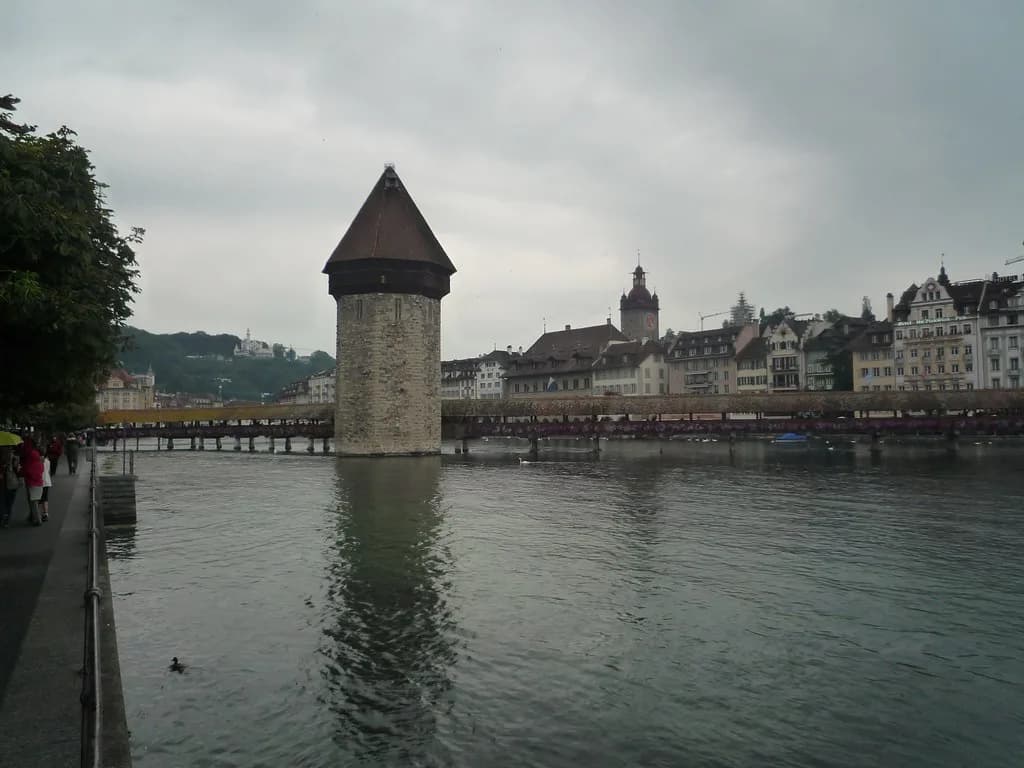
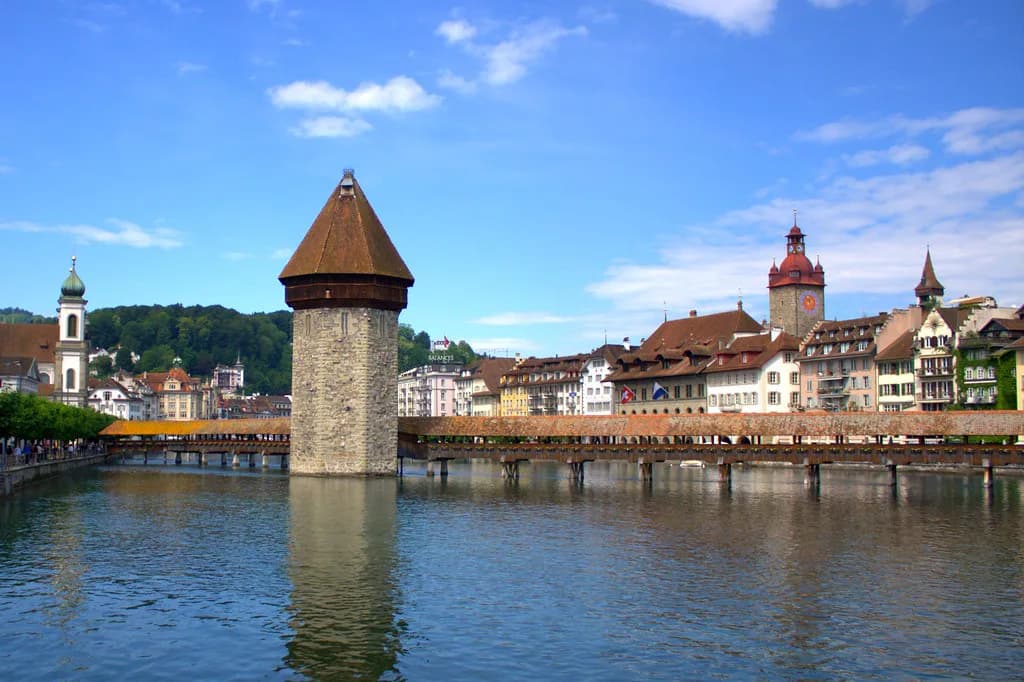
Lucerne sits on the shores of Lake Lucerne in German-speaking central Switzerland, a city of roughly 82,000 people. The old town spreads along the north bank of the Reuss where it leaves the lake, so the riverfront is the spine of any walk. The Chapel Bridge crosses the Reuss diagonally, linking the old town with the newer side.
Everything a first-timer needs is inside a loop of maybe two miles: old town lanes, Kapellbrücke, the Jesuit Church, the Lion Monument and the Musegg Wall ramparts above town. Add the lakefront promenade and you have a full day of walking without transport planning. Buses fill in the gaps toward the edges of town, but most visitors never need them.
What to see in the historic city center
The old town is small but charming, with narrow cobbled streets, colorful buildings and frescoed facades that carry you back toward the 14th century. Wander without a fixed route and you find hidden squares, old fountains and medieval architecture between the shops and cafés. Give it a slow hour or two rather than treating it as a corridor between sights.
The Lion Monument is carved directly into a rock face and commemorates the Swiss Guards killed in 1792 during the French Revolution. The dying lion with a broken spear sits beside a quiet pond in a small park, a short walk from the old town. It takes minutes to see but rewards a pause, so slot it into a loop rather than a special trip.
The two covered wooden bridges
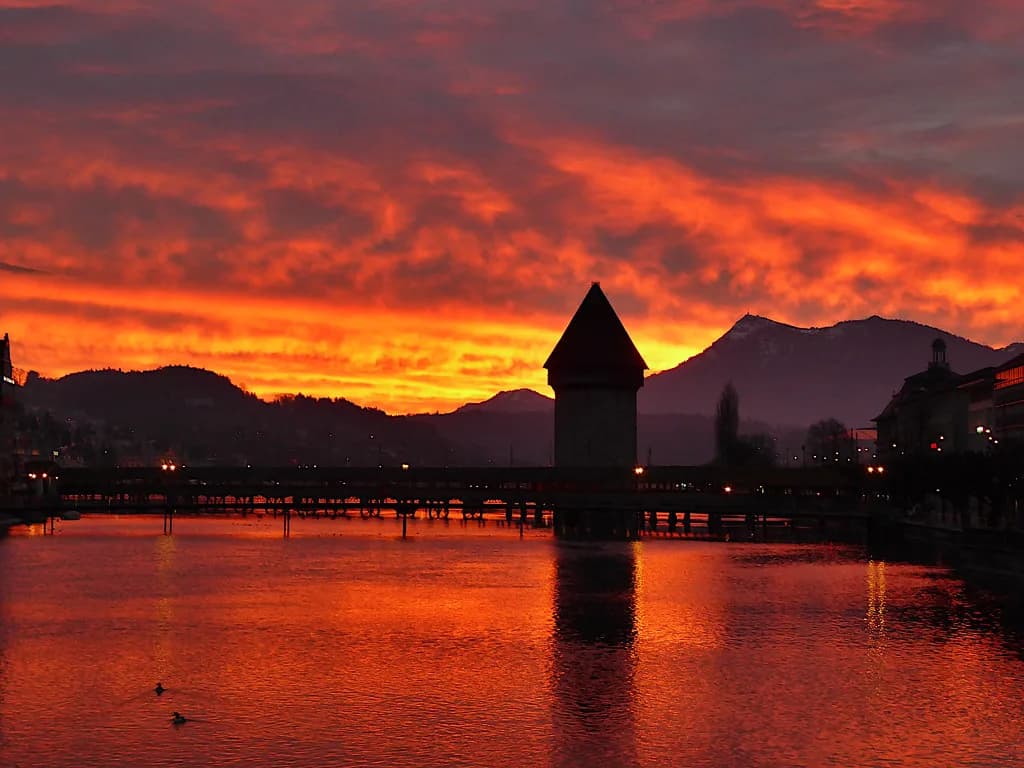
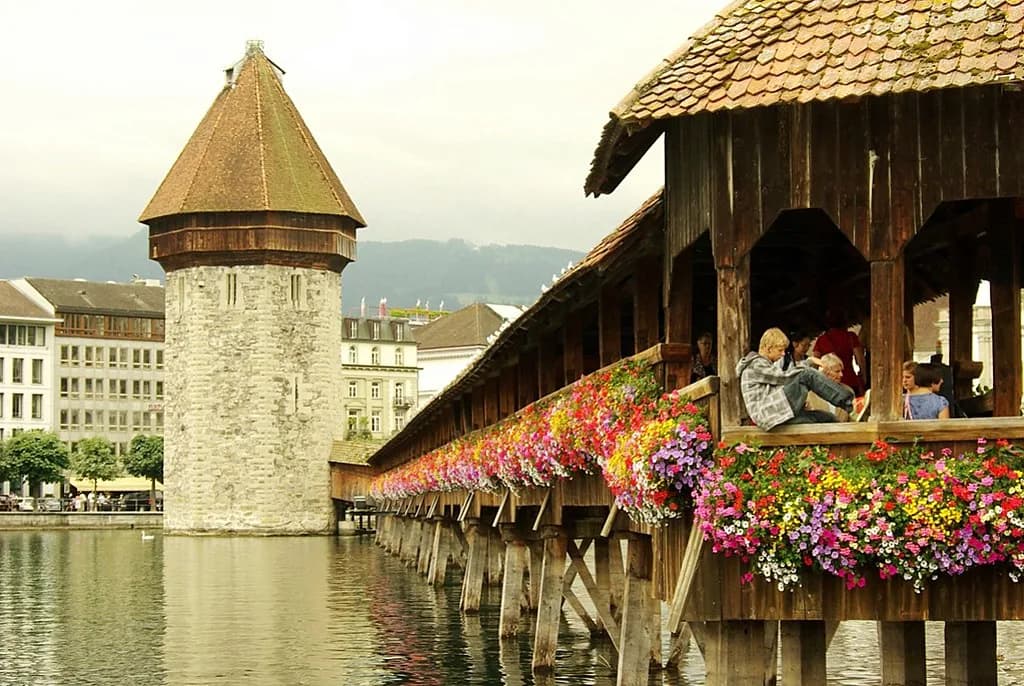
Kapellbrücke is the landmark: a covered wooden bridge with historic paintings inside that tell Lucerne's story, plus the octagonal Water Tower standing in the river alongside it. It is the busiest sight in town, which means early mornings and evenings give you the calmest crossing. Walk it once for the paintings, then again for the river views.
The Spreuer Bridge is Lucerne's second covered wooden bridge, built in the 14th century shortly after Kapellbrücke. It is smaller and noticeably quieter, and its 17th-century paintings form the Dance of Death cycle, a darker counterpart to the Chapel Bridge panels. A third covered bridge once stood in the city but was demolished in the 19th century, leaving these two as the survivors.
Churches worth stepping into
The Jesuit Church was the first large Baroque church built in Switzerland north of the Alps, founded in 1534, with a white facade and twin onion-domed towers on the river. Inside, stucco work and paintings create a calm, ornate space that makes a good break from the street. It stands right by the Reuss, so you pass it naturally between the bridges.
Hofkirche St. Leodegar was built in 1639 on the foundations of an earlier basilica that burned in 1633, and its twin towers and Renaissance details make it one of the city's most recognizable buildings. Carved wooden choir stalls and ornate altars fill the interior. It sits slightly uphill from the lakefront, on the way toward the Lion Monument.
The Musegg Wall and the Zytturm clock tower
The Musegg Wall with its nine towers was built in the 14th century to fortify Lucerne, and it survives remarkably intact above the old town. You can walk sections of the ramparts and climb several towers for views over the rooftops, the lake and the mountains. It is the best free-feeling viewpoint in the city center.
The Zytturm is the one to seek out: a 15th-century tower that was never built for defense but houses the city's historic clock mechanism, which still runs. You can climb inside to see the old gears and step out to panoramic views over Lucerne and the lake. Budget a little time here, since the stairways are narrow.
A lakefront walk from the center toward Lido
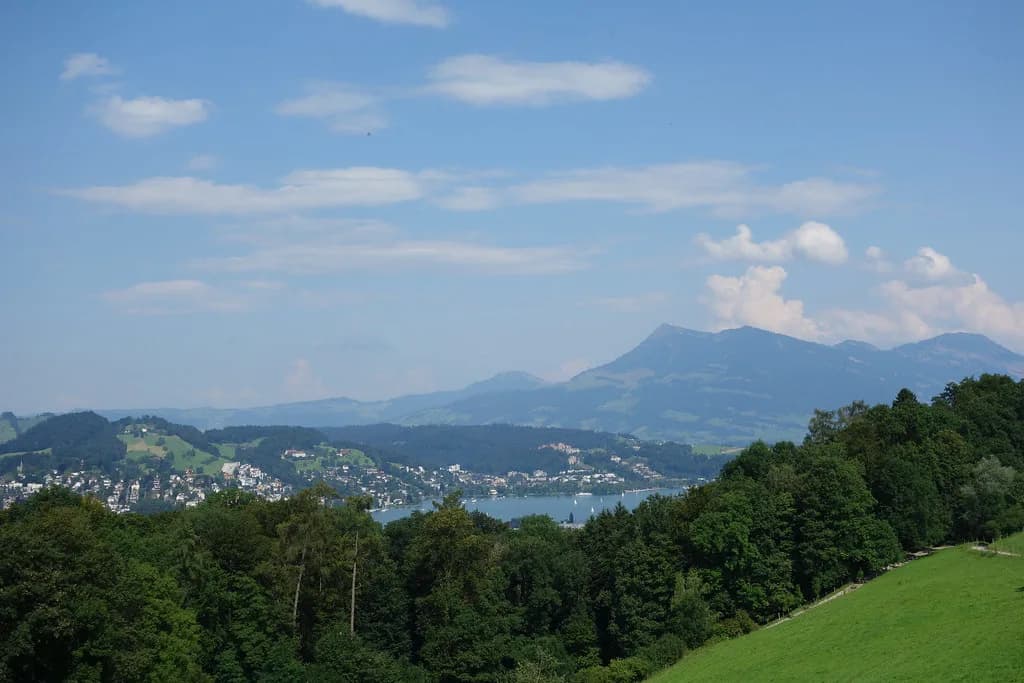
The easiest good walk in Lucerne runs from the city center out toward Lido along the lake. Trees shade the path on sunny days, benches are scattered along the way, and the Alps rise across the water. It is flat, obvious and hard to get wrong.
Treat this as your slow afternoon: a gentle out-and-back with lake views rather than a sight to tick off. It also gives you a sense of how quickly the city dissolves into shoreline, one reason Lucerne feels smaller than its sight list suggests.
Mountains from town: Pilatus and Rigi
Mount Pilatus is the closest big peak, reached by the cogwheel railway from Alpnachstad, which climbs gradients of up to 48 percent and is billed as the world's steepest. Regular trains run from Lucerne to Alpnachstad, making the connection simple. Trails from the summit station range in difficulty, and the return by cable car and gondola to Kriens gives you a loop rather than a backtrack.
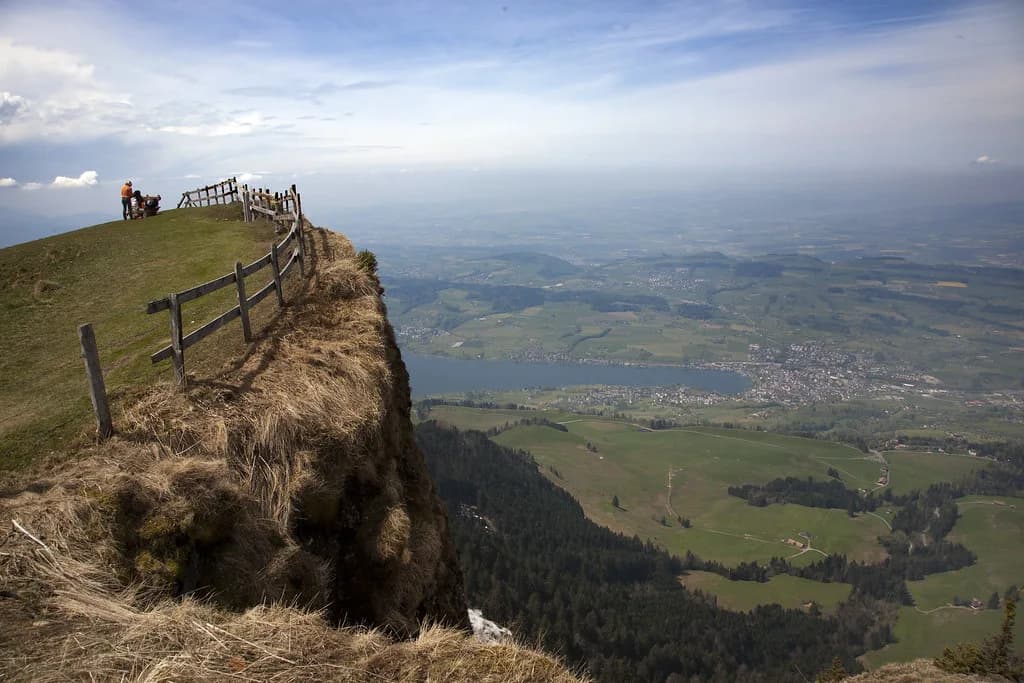
Mount Rigi, often called the Queen of the Mountains, is reached by boat from Lucerne to Vitznau and then a cogwheel train to the summit, or from Goldau. The reward is a 360-degree view over Lake Lucerne, the surrounding lakes and the Alps. Doing Pilatus and Rigi on separate days is the honest way to enjoy both.
How many days Lucerne needs
One day covers the old town core: both bridges, the Jesuit Church, the Lion Monument and the Musegg Wall, with a lakefront stroll to finish. That is a real day, not a rushed one, because the distances are short. It is also the version that works if Lucerne is a stop between Zürich and the mountains.
Three to four days is the sweet spot once you add mountains: one day for Pilatus, one for Rigi by boat and cogwheel train, and the town days in between. Fewer days forces a choice between the two peaks, which is fine if you only want one big view.
When to go: what each season gives you
Spring brings typical temperatures of about 8 to 20 °C with fewer crowds, which suits old town wandering and lakeside walks. Summer is the most popular season, with highs typically around 20 to 30 °C and the fullest boats and terraces. Autumn cools to roughly 7 to 20 °C and brings fall color around the lake with a more relaxed pace.
Winter typically runs about -2 to 7 °C, with a quiet city and snow-dusted rooftops; the mountains remain the draw on clear days. These are typical seasonal ranges, not a forecast, so treat them as packing guidance. Peak summer is the season to book ahead, since the city fills up.
Who will love Lucerne, and who should think twice
Lucerne suits travelers who like medieval streets, covered bridges, church interiors and a mountain day reached by train, boat and cogwheel railway. It rewards slow walkers and photographers more than checklist tourists. Couples and first-time Switzerland visitors get a lot from two or three days here.
Think twice if you want nightlife, swimming or a base for long hikes, because other Swiss towns serve those better. If your trip is built around a single city and you are weighing options, compare before committing: it is worth reading how Zürich or Lucerne stacks up for your style, and whether is basel worth visiting fits a Rhine-and-mountains route better.
Money and timing trade-offs
Switzerland is expensive and Lucerne is no exception: the mountain excursions are the big add-on cost on top of an already pricey city break. Set a budget before you decide between Pilatus and Rigi, because doing both doubles that line item. The town sights themselves are mostly outdoor and free to view from the street.
Timing matters as much as money. Summer concentrates crowds on the bridges and boats, while spring and autumn give you the same sights with breathing room. Booking mountain days for clear mornings and keeping one flexible day for the town is the practical compromise.
Where Lucerne fits in a Swiss trip
Lucerne works well as a two-to-four-night stop between Zürich and the mountains, with direct trains from the airport and from Bern, Basel and Geneva. From Zürich it is an easy day trip, though staying overnight gives you the bridges at their quietest.
If you are comparing central Swiss cities, Bern offers a different package of arcades and a river loop, and it is worth reading is bern worth visiting alongside this guide before you lock the route. Either way, Lucerne earns its place when the trip is built around a compact old town plus one or two mountain days.
Verdict: Book Lucerne for Two to Four Days
Lucerne is worth visiting for its walkable medieval core, the two covered wooden bridges, the Musegg Wall and the option of a mountain day by cogwheel railway or boat. Two days covers the town; three or four add Pilatus and Rigi without hurry.
Go in spring or autumn for lighter crowds, budget separately for the mountain excursions, and pick one peak rather than both if time is short. Travelers who want nightlife or a hiking base should look elsewhere first.
Explore more Lucerne guides
Frequently Asked Questions
Is Lucerne worth visiting?
Yes, for most first-time visitors to Switzerland. The old town is pedestrianized and compact, Kapellbrücke and the Spreuer Bridge sit within a short walk of each other, and the Musegg Wall gives you a free-feeling climb above the rooftops. Add Mount Pilatus or Mount Rigi and you have a full short break. Travelers who want nightlife or a base for long hikes will find other Swiss cities fit better.
How many days do you need in Lucerne?
One day covers the old town core: both covered bridges, the Jesuit Church, the Lion Monument, the Musegg Wall and a lakefront walk. Two days gives you breathing room. Three or four days is the sweet spot if you want to add Mount Pilatus by cogwheel railway and Mount Rigi by boat and cogwheel train.
Is Lucerne walkable?
Yes. The old town, the Reuss riverfront, Kapellbrücke, the Jesuit Church and the lakefront promenade sit within a short walk of each other. The Musegg Wall and the Lion Monument are slightly uphill but still on foot. You only need transport for the mountain excursions and the lake boats.
Is Lucerne worth a day trip from Zürich?
It works well as a day trip, since trains from Zürich take a bit over an hour and the main sights cluster near the station. Staying overnight is better if you want the bridges without the daytime crowds or plan to add a mountain day.
Should I go up Mount Pilatus or Mount Rigi?
Choose Pilatus for the steep cogwheel railway from Alpnachstad and a loop back by cable car to Kriens. Choose Rigi for the boat ride from Lucerne to Vitznau followed by a cogwheel train and wide views over the lake and Alps. With three or four days you can do both on separate days.
When is the best time to visit Lucerne?
Spring and autumn give you typical temperatures of roughly 8 to 20 °C with lighter crowds, which suits old town walking and lakefront strolls. Summer is busiest, with highs typically around 20 to 30 °C. Winter is quiet, usually about -2 to 7 °C, and still works for mountain days on clear weather.
What makes Lucerne special compared to other Swiss cities?
Lucerne packs two covered wooden bridges, a 14th-century fortified wall you can climb, Baroque churches and two mountain excursions into a small, walkable area. Few Swiss cities combine a medieval core and alpine day trips so tightly.
Who should skip Lucerne?
Travelers whose trip is built around nightlife, swimming or long hiking routes will find Lucerne less suited than other Swiss destinations. It is also a stretch as a base for a week, since the town itself is small; most visitors do best with two to four nights.
Sources
Notes for your Swiss city break
Optional updates to our Swiss city guides.
You might also like
Continue reading
More guides you'll find useful