Best Cities in Switzerland: Where to Go and How Long to Stay
Compare Switzerland's best cities for a short break: what each does best, how much time it needs, and how they link by train from Zürich to Lugano.
On this page
The best Swiss cities for a short break are Bern, Lucerne, Zürich, Basel, Thun, Lausanne, Vevey, Lugano and St Gallen, with Ascona-Locarno and Martigny rounding out the list for anyone heading south or into Valais. Each one is compact enough to cross on foot or by tram, and each has a clear specialty: Bern is the arcaded capital, Lucerne the lake-and-mountain classic, Basel the art city, Lausanne and Vevey the Lac Léman pair, Lugano the Italian-speaking south. Pick two rather than five and the trip plans itself.
Swiss cities reward short stays because the historic cores sit close together and the mountains start at the edge of town. Lucerne has Alpine excursions within reach of the center, Thun pairs an Old Town with Lake Thun ferries, and St Gallen sits near Lake Constance. A dense rail network links them all, so a week can hold two cities with a small town in between. This guide gives each city a specialty and a realistic number of nights, then shows which pairings make sense.
Why Swiss Cities Suit a Short Break
Most Swiss city centers are small enough to walk end to end in an afternoon, which makes a two-night stay feel substantial rather than rushed. Bern's medieval Altstadt sits inside a bend of the River Aare and is a UNESCO World Heritage site for its preserved cobbled streets and monuments. Lucerne packs the Kapellbrücke, the medieval ramparts and the KKL arts center around one lakefront. You spend time on the city, not on getting across it.
What are the best cities in Switzerland for a first trip? Bern and Lucerne make the strongest pair for a first visit. Bern has the UNESCO-listed Old Town inside the Aare bend, the Zytglogge clock tower, the Münster and the Lauben arcades.
Which Swiss city is best for art? Basel is the art city. The Fondation Beyeler holds a private collection with Picasso, Klee and Modigliani, the Kunstmuseum is Switzerland's largest public art gallery, and the Museum Tinguely shows Jean Tinguely's mechanical sculptures.
How many days do you need in Bern or Lucerne? Two nights is the comfortable answer for each. One full day covers the core sights in Bern, the Zytglogge, Münster and the arcaded streets, or Lucerne's Kapellbrücke and lakefront.
The second advantage is that landscape comes free with the city. Thun has Lake Thun ferries to villages, castles and vineyards around the shore, and Lucerne has Alpine excursions from the town itself. Vevey has a lakeside promenade with views of the French Alps, and Lugano rises straight from its lake past gardens and olive groves. Train connections make it easy to pair a city with a smaller town, so a seven-day route can mix both without a car.
How to Choose: Art City, Lakeside Old Town, Car-Free Capital, or Italian-Speaking South
Choose by what you want to do indoors and out, not by beauty. Basel is the art city: the Fondation Beyeler holds a private collection with Picasso, Klee and Modigliani, the Kunstmuseum is Switzerland's largest public art gallery, and the Museum Tinguely shows the mechanical creations of Jean Tinguely. Lausanne is the cultural capital of French-speaking Switzerland, with the Plateforme 10 art district and the Collection de l'Art Brut. Weighing them? Our Basel city guide covers the Old Town, museums and Rhine, while our Lausanne city guide maps the same decisions around the lake.
For a first trip, Bern and Lucerne cover the classic Swiss picture: arcades, fountains, a clock tower, a covered wooden bridge and mountains over the lake. The [switzerland itinerary](/switzerland-itinerary) hub shows how those two fit into a longer route. Add Zürich if you want the biggest city, with Bahnhofstrasse shopping, the Niederdorf lanes, Europaallee and Im Viadukt. Save Lugano and Ascona-Locarno for a trip that leans Italian, with palm-lined promenades and Ticino cooking.
Bern: The UNESCO Old Town Inside the Aare Bend
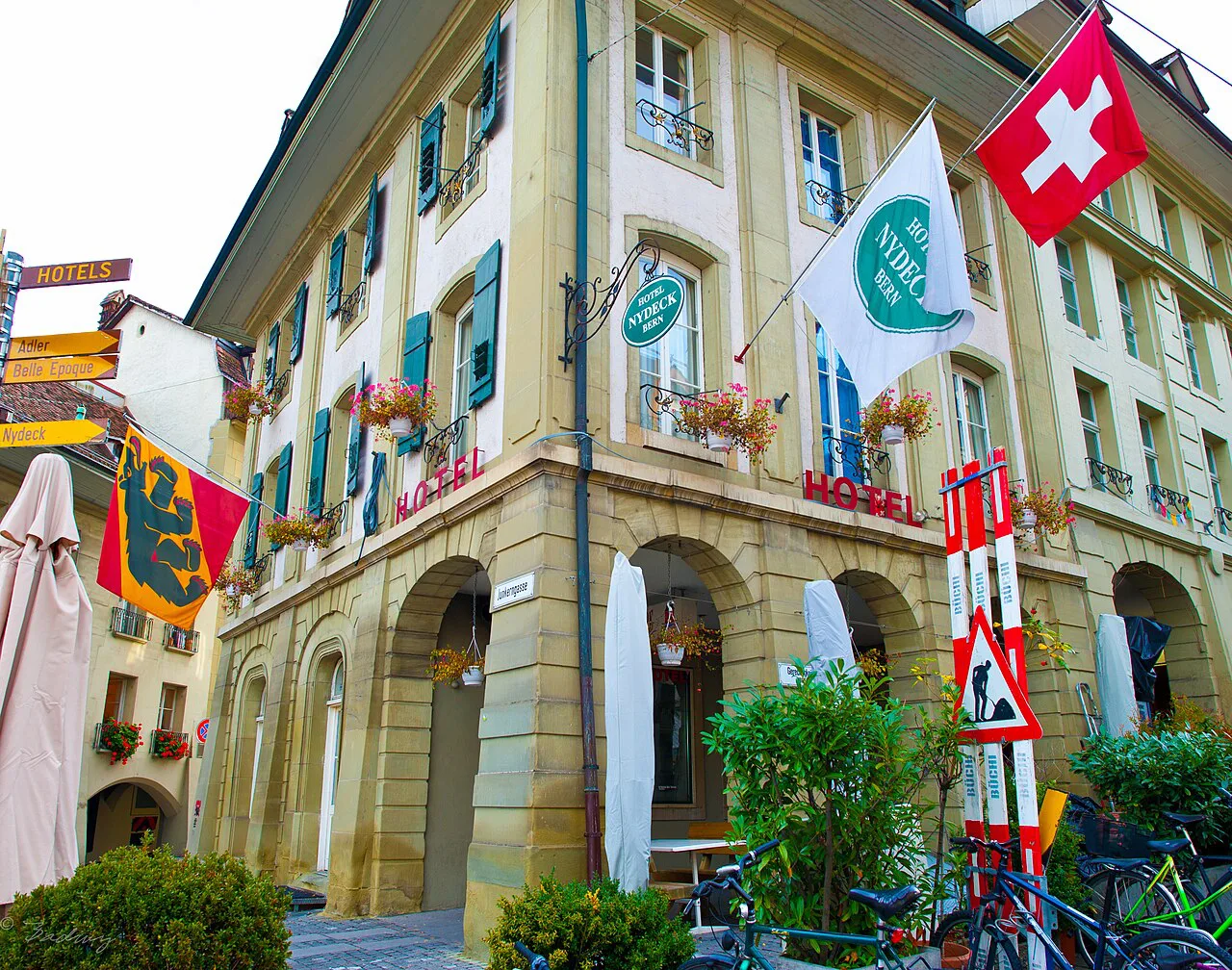
Bern's Altstadt curves inside the turquoise River Aare, and its cobbled streets hold the Zytglogge clock tower, the Münster cathedral and a run of colorful fountains. Boutiques, bars and restaurants sit under the Lauben, the covered arcades, or in the cellars beneath them, and café terraces spill onto the streets and squares. That arcade system matters in wet or cold weather: you can cross much of the center without an umbrella. If you want to plan the day in detail, see things to do in Bern for the Old Town, viewpoints and museums.
Bern earns one full day and one night on a short trip, or two nights if you want a slower look at the Münster and the riverside viewpoints. It also works as a rail hub: Spiez is about 30 minutes away by train, with half-hourly services, and Grindelwald is roughly 1 hour 45 minutes via Interlaken Ost, according to typical journey times published by Holidays to Switzerland. Those links make Bern a sensible base for the Bernese Oberland without moving hotels every night.
Lucerne: Kapellbrücke, the Ramparts, Rosengart and the KKL
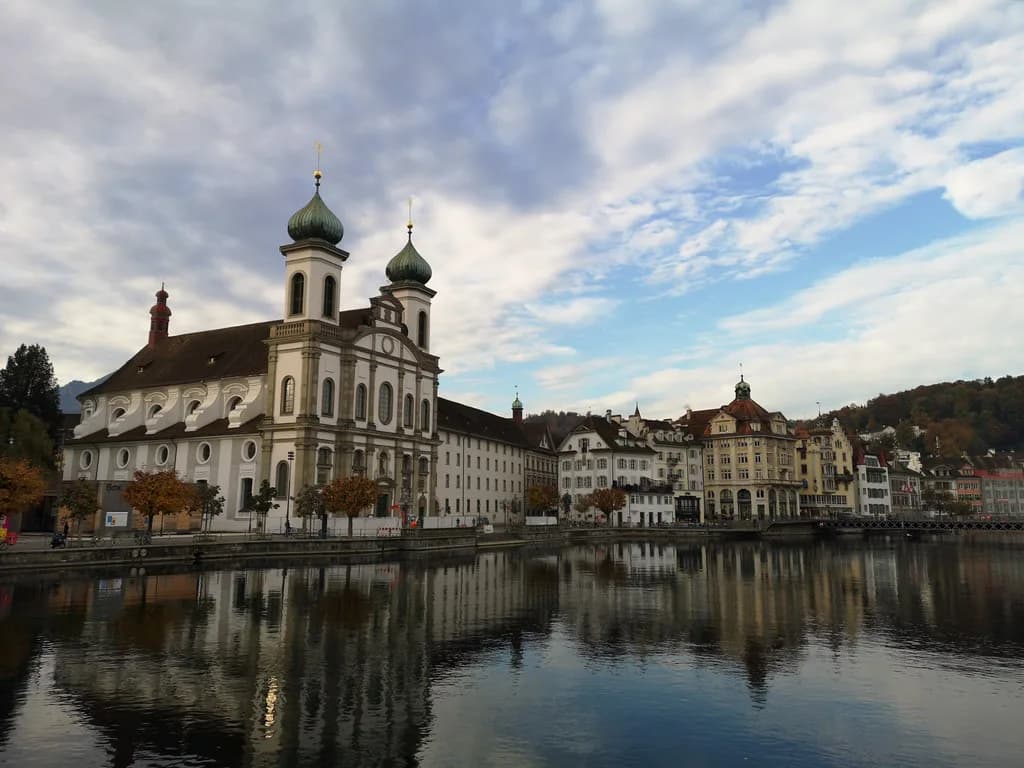
Lucerne compresses Switzerland into one lakeside package: the Kapellbrücke, the nine towers of the medieval ramparts, the Sammlung Rosengart with art by Picasso and Klee, and the KKL arts center for classical music. The Old Town puts bars and restaurants in frescoed buildings, from traditional to modern. Two nights is the right call for a first visit, one if you only want the bridge and the lakefront.
Lucerne also works as a base for mountain excursions, which is why it appears in most week-long routes. If you are sketching a route with a mountain day built in, the [5 day switzerland itinerary](/5-day-switzerland-itinerary) is a useful template to adapt rather than copy. Plan the town time for the morning and keep the afternoon flexible, because lakefront Lucerne fills up when the weather is good. If you would rather see the Alps from a panoramic carriage, our guide to switzerland scenic trains compares the Glacier Express and Bernina Express routes.
Zürich: Bahnhofstrasse, Niederdorf, Europaallee and Im Viadukt
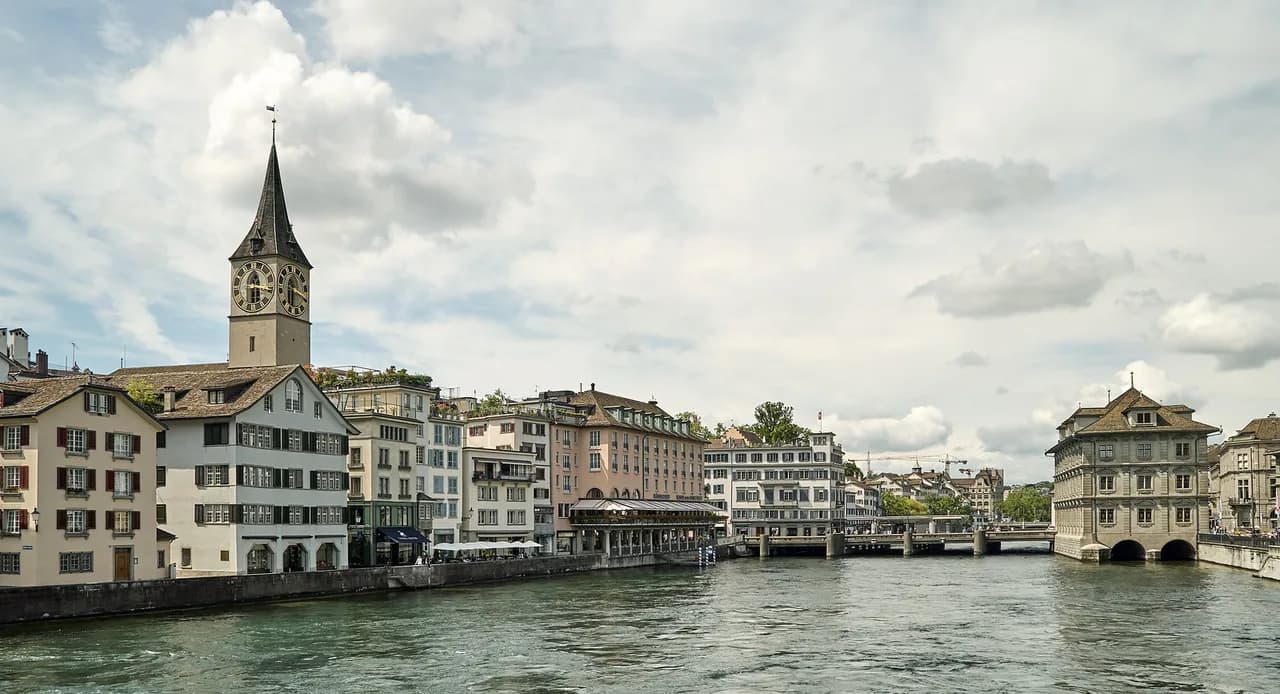
Zürich is Switzerland's biggest city, at roughly 400,000 people, and the one with the strongest shopping and museum offer. High-end fashion and watch boutiques line Bahnhofstrasse, cutting-edge brands sit along the pedestrian Europaallee, and independent shops fill the cobbled lanes of Niederdorf. Former industrial space has been reused well: Im Viadukt puts boutiques under railway arches, and the Freitag flagship occupies a tower of 19 stacked shipping containers.
Give Zürich one night if it is a stopover, two if you want museums and shopping without rushing. It is also the most convenient arrival point for a short break, and it pairs naturally with a small lakeside town rather than another big city. Travelers weighing Zürich against Geneva should decide on scale and language region: Zürich is German-speaking and the larger, busier city, while Geneva anchors the French-speaking end of Lac Léman.
Basel: Fondation Beyeler, Kunstmuseum and Museum Tinguely on the Rhine
Basel earns a place on the list for art alone. Each June the art world arrives for Art Basel, but the museums carry the city year-round: the Fondation Beyeler in its private collection, the Kunstmuseum as Switzerland's largest public art gallery, and the Museum Tinguely with its kinetic sculptures. The city sits where France and Germany meet, and that shows in its food, dialect and cosmopolitan feel.
Two nights suits Basel if museums are the point; one night is enough for a single collection and a walk along the Rhine. Basel is also easy to reach by train from London via the continent, which makes it a practical first stop on a European trip. Build the day around one big museum rather than three, since collection visits take longer than the map suggests.
Thun: The 12th-Century Schloss and Its Tower Viewpoint
Thun, about 30 kilometers upriver from Bern, has an Old Town of cobbled streets, flower-decked buildings and unusual raised walkways, all overlooked by the 12th-century Schloss. Climbing the castle towers gives the best viewpoint in town. Passenger ferries from the lake call at villages, castles and vineyards around the shore, which makes the town a full day rather than a photo stop.
One night in Thun works well between Bern and the Bernese Oberland, and the castle and Old Town fill a morning before a boat or train onward. Thun is also less well known than Lucerne, so it suits travelers who want the lakeside picture without the crowds. It is a strong argument for building a route around smaller cities instead of only the famous four.
Lausanne: Plateforme 10, Collection de l'Art Brut and the Lac Léman Shore
Lausanne sprawls over a hill above the shore of Lac Léman and functions as the cultural capital of French-speaking Switzerland. The new Plateforme 10 art district joins theatres, music venues and museums, including the Collection de l'Art Brut, which shows work by self-taught, anti-establishment artists. In summer the lakeshore fills with pop-up bars, pétanque players and paddleboarders, and the UNESCO-protected Lavaux vineyards lie nearby.
Lausanne deserves two nights if you want museums plus the lake, or one night as a stop between Vevey and Bern. The city is hilly, so plan walks downhill toward the water rather than back up. For a wider look at how the French-speaking side fits a route, see [where to go in switzerland](/where-to-go-in-switzerland), which maps the regions against each other.
Vevey: The Lakeside Promenade, the Alimentarium Fork and Chaplin's World
Vevey is smaller than Lausanne and less touristy than Montreux, and it has arguably the best lakeside promenade in French-speaking Switzerland. A giant fork protrudes from the lake as the emblem of the Alimentarium, the food museum, and Chaplin's World stages an interactive exhibition in the manor house where Charlie Chaplin once lived. The promenade turns into a sunbathing and swimming spot on warm days.
One night in Vevey covers the promenade, the Alimentarium and Chaplin's World at a relaxed pace, and two nights let you add the Lavaux vineyards. Vevey pairs naturally with Lausanne, roughly a short train ride apart on the same lake line, so the two can share a base. It is the best answer for travelers who want a small city with a big view of the French Alps.
Lugano: Piazza della Riforma, LAC and MASI, and the Lakefront
Lugano is Ticino's largest city, rising steeply from Lake Lugano past pastel buildings, manicured gardens and gnarled olive groves. The Piazza della Riforma sets the tone with alfresco café culture, and the LAC Lugano Arte e Cultura complex houses the MASI art museum, which focuses on local artists. The lakefront is the place to be in summer, when the LongLake festival brings open-air jazz and blues weekends, and excursions run to lakeside villages such as Gandria.
Two nights is right for Lugano if you want the lakefront, the MASI and a valley excursion, and one night works as a taste of Italian-speaking Switzerland on the way to or from Ascona-Locarno. Expect a Mediterranean feel rather than Alpine, with risotto, chestnuts and polenta on menus at local grotto restaurants. It is the warmest-feeling city on this list and the one most likely to surprise first-timers.
Ascona-Locarno and St Gallen: Mediterranean Ticino Versus the Baroque Abbey City
Ascona and Locarno sit on the northern shore of Lake Maggiore, divided by the Maggia River, with palm-lined lakeside promenades and colorful Mediterranean architecture. Ferries run to the Brissago islands, and the wild Valle Maggia is close by. St Gallen, in the east, grew around a Benedictine convent and is known for ornate oriel windows, the Baroque cathedral, the Abbey library and its Erststockbeizli, the historic first-floor restaurants and wine taverns. One place is for warm-weather wandering, the other for Baroque interiors and timber-beamed dining rooms.
Give Ascona-Locarno two nights if the lake is the point, and St Gallen one night on a route toward Lake Constance. The trade-off is distance: St Gallen sits in the far east, while Ticino is the far south, so combining them in one short trip means a long rail day. Treat them as alternatives, not a pair.
Martigny: A Roman Amphitheatre and the Pierre Gianadda Foundation
Martigny, in canton Valais, is surrounded by orchards and vineyards, and its Roman past is visible in a restored amphitheatre, thermal baths and temples. The Vieux-Bourg district feels like a French village, and the Pierre Gianadda Foundation holds archaeological finds, a sculpture park, a collection of Swiss-made cars and temporary exhibitions by well-known artists. It is a compact, walkable stop with more substance than its size suggests.
One night is enough for Martigny: the amphitheatre, the old district and the Gianadda Foundation fill a day comfortably. It works best as a stop between Lac Léman and the Valais rather than a destination on its own. Pair it with Lausanne or Vevey for a two-city route that stays in the French-speaking west.
Small Towns Worth a Night: Rapperswil, Schaffhausen and Spiez
Three smaller towns deserve a night on a city-hopping trip. Rapperswil, on the upper end of Lake Zurich, is called the Town of Roses and has a medieval castle above the lake, a rose garden, and an 841-meter wooden pedestrian bridge to Hurden; trains from Zürich take about 35 minutes. Schaffhausen on the Rhine has 171 oriel windows in its Old Town, the Haus zum Ritter frescoes, the Fronwag Tower with its astronomical clock and the Munot Fortress, with trains from Zürich taking around an hour.
Spiez, on the southern shore of Lake Thun, adds a castle and a pretty bay with vineyards, and it is about 30 minutes by train from Bern. Choose Rapperswil or Schaffhausen for a lakeside or riverside day from Zürich, and Spiez for a night between Bern and the Oberland. For more small-town candidates, the [most beautiful towns in switzerland](/most-beautiful-towns-in-switzerland) guide covers the alternatives.
A [7 day switzerland itinerary](/7-day-switzerland-itinerary) can hold two cities plus one of these towns without exhausting anyone. The key is to keep each stop to one or two nights and avoid turning every day into a train day. Typical journey times published for these towns, such as Zürich to Rapperswil at about 35 minutes, show how little travel time a well-chosen small town adds.
How Many Days Each City Needs
One night is enough for Thun, Vevey, St Gallen, Martigny and Zürich as a stopover. Two nights suit Bern, Lucerne, Basel, Lausanne, Lugano and the Ascona-Locarno pair, because each has a museum or a lakefront that rewards a full day. Three nights only makes sense if you are adding a day out to a mountain or a valley from a single base. Counting nights, not days, is the simplest way to keep a Swiss route realistic.
A first trip of a week fits two cities at two nights each plus a small town for one night, with travel absorbed into the mornings. Trying to add a fourth stop usually means arriving after the museums have closed and leaving before the town wakes up. If you have more time, a [10 day switzerland itinerary](/10-day-switzerland-itinerary) lets you keep the same pace and add Ticino or the east instead of squeezing it in.
Linking the Cities by Train
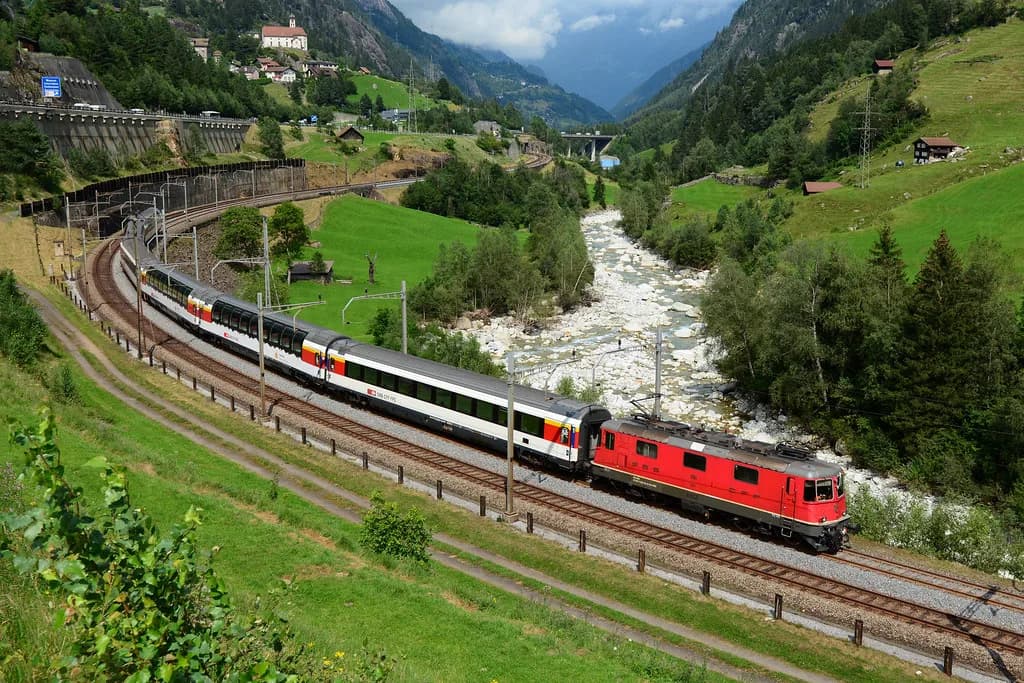
Swiss cities connect by frequent rail, so the practical question is which pairs avoid long days in transit. Bern and Thun are roughly half an hour apart, Bern and Spiez about the same, and Zürich to Rapperswil about 35 minutes. Zürich to Schaffhausen runs around an hour, and Bern to Grindelwald about 1 hour 45 minutes via Interlaken Ost. Those short hops let you keep one hotel and take a town as a day trip.
Longer pairings exist but eat the day: Basel to Lugano or St Gallen to Locarno cross the country. Build the route in one direction instead of backtracking, for example Basel, Bern, Thun and Lausanne, or Zürich, Lucerne and Lugano. Standard journey times for any connection are on the Swiss federal railway timetable, which is the reference to check before booking hotels.
Costs, Museum Days and Sunday Planning
Switzerland is expensive, and city breaks carry the same burden as the rest of the country: meals, museum tickets and rail fares add up quickly. Set a daily budget in Swiss francs for your trip and treat museum admissions as a line item rather than a rounding error. For a detailed breakdown of what a city break actually costs, read [is switzerland expensive](/is-switzerland-expensive).
Museum opening days vary by institution, so check each museum's own website for the dates you plan to visit rather than assuming a national pattern. Factor in the rail passes only after you have a route: the Swiss Travel Pass and the Swiss Half Fare Card are worth pricing against your specific journey. If you are also shopping for gifts, the [swiss souvenirs](/swiss-souvenirs) guide explains what is worth the money.
Common Mistakes First-Timers Make When City-Hopping in Switzerland
The most common mistake is treating Swiss cities like capitals elsewhere and allotting one night each to five of them. The second is planning around sights that require good weather without a backup: if the lake is fogged in, the museum day should be ready to swap in. The third is underestimating how much time a collection visit takes; one big museum plus a walk beats three rushed ones.
Book accommodation in the city you sleep in rather than the one you pass through, since late arrivals waste the evening. Keep one flexible day per week for a small town or a mountain trip. Deciding the [best time to visit switzerland](/best-time-to-visit-switzerland) before fixing dates also helps, because city breaks read very differently in spring and late autumn, when daylight is shorter and terraces are quieter. The same seasonal logic applies to a city stay, so weigh your dates against the best time to visit Switzerland for a city break before locking in hotels.
How to Pick Two Cities (Not Five) for a First Trip
For a first trip, pair Bern with Lucerne. Bern gives you the arcaded capital and its UNESCO Old Town, Lucerne gives you the Kapellbrücke, the ramparts and the lake with mountains behind. Both are compact, both are easy by train, and the combination covers the images most travelers come for without repeating the same experience twice.
For a second trip, choose a region instead: Basel and Zürich for art and shopping in the north, Lausanne and Vevey for Lac Léman in the west, or Lugano and Ascona-Locarno for the Italian-speaking south. St Gallen and Martigny reward travelers who have already seen the classics and want something different. Two well-chosen cities, with one small town between them, make a better Swiss break than a longer list.
Plan Your Two-City Route
Start with Bern and Lucerne for a first visit, then add one of Rapperswil, Schaffhausen or Spiez if a third night is available. Match the second trip to a region rather than collecting cities, and let the rail map decide the order. Base your route on nights, not days: two nights in Basel, two in Lausanne, one in Vevey covers more ground than a five-city dash.
Before booking, confirm museum opening days on each institution's own site, check journey times on the Swiss rail timetable, and set a daily budget in francs that includes admissions and meals. Keep one flexible day per week for weather and small towns. That is enough planning to make a short Swiss city break work.
Frequently Asked Questions
What are the best cities in Switzerland for a first trip?
Bern and Lucerne make the strongest pair for a first visit. Bern has the UNESCO-listed Old Town inside the Aare bend, the Zytglogge clock tower, the Münster and the Lauben arcades. Lucerne has the Kapellbrücke, the medieval ramparts, the Sammlung Rosengart and the KKL on the lake. Both are compact and connected by frequent trains, so two nights in each is a realistic week.
Which Swiss city is best for art?
Basel is the art city. The Fondation Beyeler holds a private collection with Picasso, Klee and Modigliani, the Kunstmuseum is Switzerland's largest public art gallery, and the Museum Tinguely shows Jean Tinguely's mechanical sculptures. Lausanne's Plateforme 10 district and the Collection de l'Art Brut make it the second choice for museum-focused travelers, especially those staying on Lac Léman.
How many days do you need in Bern or Lucerne?
Two nights is the comfortable answer for each. One full day covers the core sights in Bern, the Zytglogge, Münster and the arcaded streets, or Lucerne's Kapellbrücke and lakefront. A second day adds either a museum or an excursion. If you only have one night, spend it in Lucerne and see Bern as a day trip from a nearby base.
Is Basel worth visiting for art alone?
Yes, if you plan around one or two collections rather than trying to see everything. Basel's museum landscape is dense enough to justify two nights, and the city's position near France and Germany gives its food and architecture a distinct character. Each June it hosts Art Basel, which draws large crowds, so book around those dates if you want quieter galleries.
Which city is nicer, Zürich or Geneva?
They serve different trips rather than compete on beauty. Zürich is German-speaking, larger, and the stronger choice for shopping and museums, with Bahnhofstrasse, Niederdorf, Europaallee and Im Viadukt. Geneva anchors the French-speaking end of Lac Léman and is the natural base for Lausanne and Vevey. Pick by language region and by what you want to do, not by reputation.
Do you need a car to visit Swiss cities?
No. Rail connects the cities on this list and the smaller towns around them, and the typical journey times are short: Zürich to Rapperswil around 35 minutes, Bern to Spiez around 30 minutes. A car adds parking and access restrictions in compact old towns. Build the route around trains and use ferries on Lake Thun or Lake Lugano where they fit.
Which smaller Swiss towns are worth adding to a city route?
Rapperswil, Schaffhausen and Spiez each earn one night. Rapperswil has a medieval castle, a rose garden and an 841-meter wooden bridge to Hurden, about 35 minutes from Zürich by train. Schaffhausen has 171 oriel windows and the Munot Fortress, around an hour from Zürich. Spiez has a castle and a castle-topped bay on Lake Thun, about 30 minutes from Bern.
How do you split a week between two Swiss cities?
Give each city two nights and keep one or two nights for a small town between them, with travel moved into the mornings. Bern plus Thun plus Lucerne, or Lausanne plus Vevey plus Bern, keeps the rail hops short. Avoid pairing St Gallen with Ticino, since that crossing uses most of a day. Check journey times on the Swiss rail timetable before locking in hotels.
Sources
Notes for your Swiss city break
Optional updates to our Swiss city guides.
You might also like
Continue reading
More guides you'll find useful